
Loading, please wait...
LOT 0255
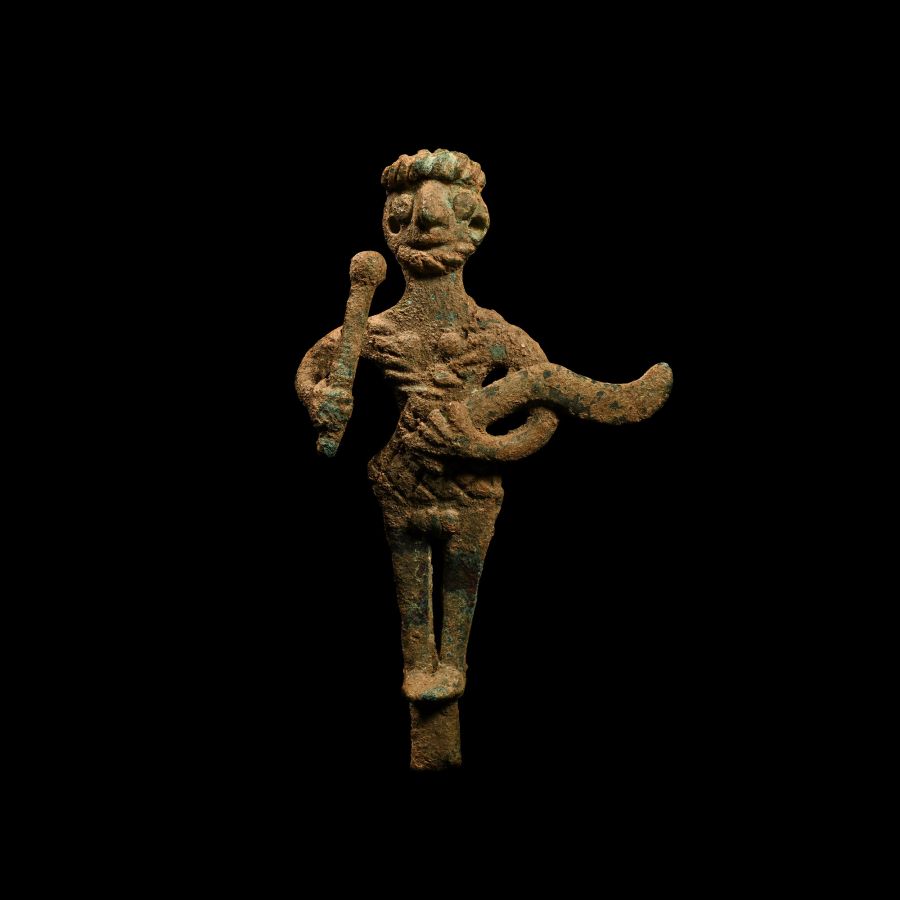
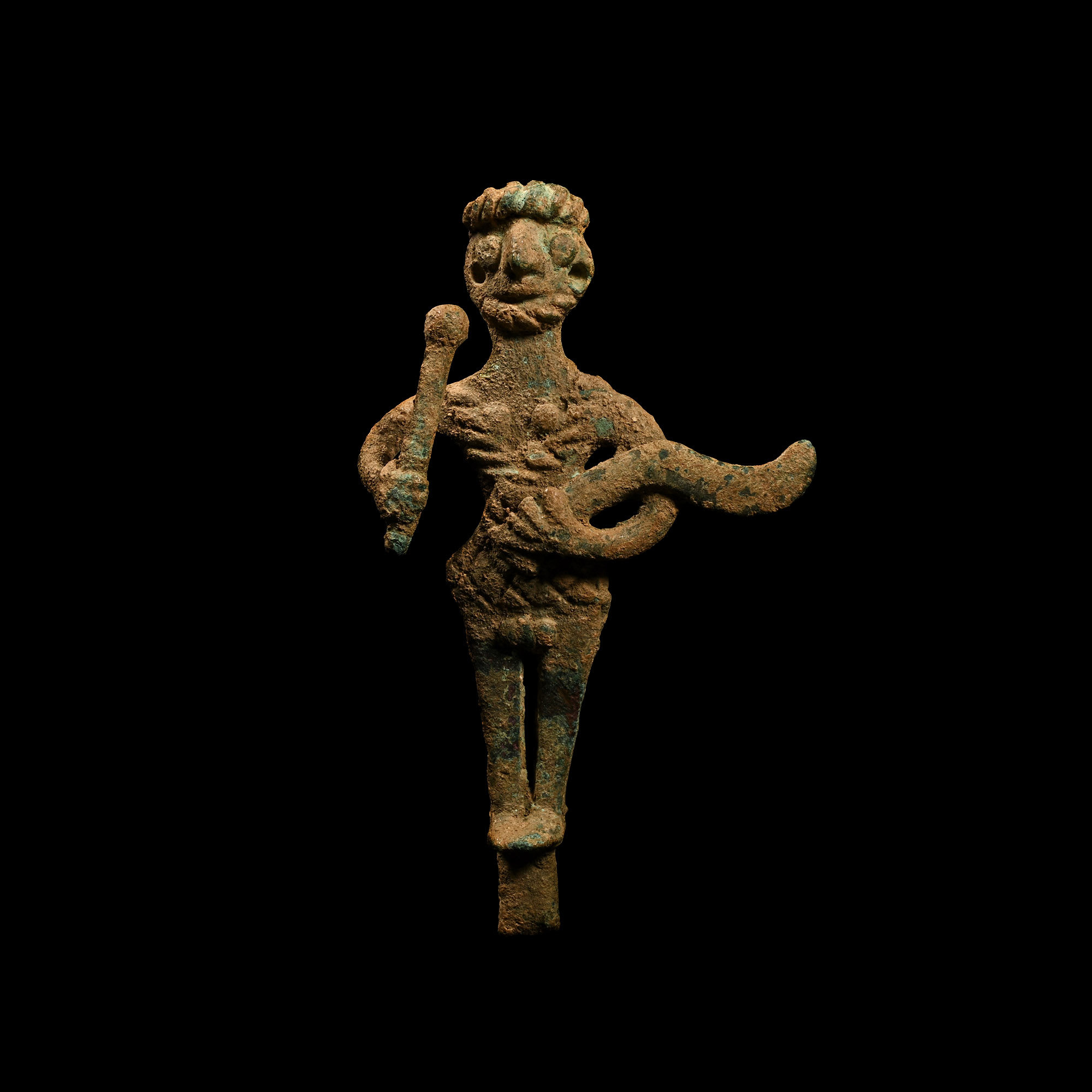
Canaanite Bronze Bearded Warrior God Holding Mace
EARLY 2ND MILLENNIUM B.C.
4 3/4 in. (109 grams, 12 cm).
Modelled in the round with braided headdress and hatched body, mace in the right hand and khopesh cradled in left arm.
ProvenanceAcquired in Paris and London, 1970s.
From a collection of Canaanite gods in bronze, from the collection of a London, UK, gentleman.
This lot has been checked against the Interpol Database of stolen works of art and is accompanied by a search certificate number no.12699-234382.
This lot has been cleared against the Art Loss Register database, and is accompanied by an illustrated lot declaration signed by the Head of the Antiquities Department, Dr Raffaele D'Amato.
For similar examples from the "Syrian" group of flat-cast warrior gods, see no.23 and 27 in Negbi, Canaanite Gods in Metal.
CONDITIONTimeLine Auctions follows a vetting process to ensure the authenticity and legality of all items, reinforcing our commitment to integrity and responsible trading. Each antiquity, antique, and coin lot undergoes thorough examination by a vetting committee of at least ten external specialists, professional trade association members, scientists, and archaeologists: Our Vetting Process
AUCTIONS:
TimeLine is a leading auction house specialising in antiquities, ancient art, collectables, natural history, coins, medals, and books. Our auctions offer museums, collectors, historians, and enthusiasts the opportunity to acquire unique and historically significant pieces.
-
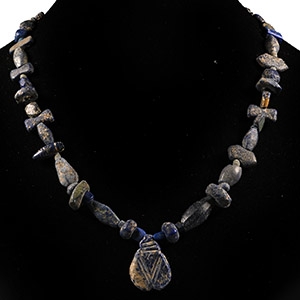
Bactrian Lapis Lazuli Bead Necklace String
1st millennium B.C. and laterSold for (Inc. bp): £130
Restrung assemblage composed of variously shaped beads, some amuletic; central feature a bifacial fly-shaped pendant. 89 grams, 56 cm
From the family collection of a Hampstead gentleman; formerly acquired in the 1980s. This lot has been cleared against the Art Loss Register database, and is accompanied by an illustrated lot declaration signed by the Head of the Antiquities Department, Dr Raffaele D'Amato. -
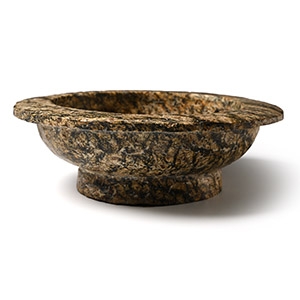
Achaemenid Serpentine Dish
6th-4th century B.C.Estimate: £400 - 600 (‡+bp*)
Opening Bid: £180
With broad bowl and slightly chamfered rim, basal ring. 222 grams, 10.8 cm
Acquired in the mid 1980s-1990s. Private collection, Switzerland, thence by descent. Private collection, since the late 1990s. This lot has been cleared against the Art Loss Register database, and is accompanied by an illustrated lot declaration signed by the Head of the Antiquities Department, Dr Raffaele D'Amato. -
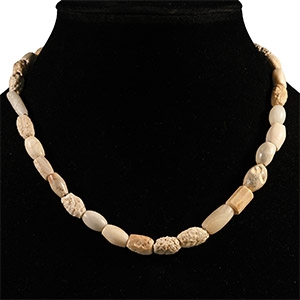
Western Asiatic White Stone Bead Necklace String
1st millennium B.C. and laterSold for (Inc. bp): £13
Restrung group of tubular, fusiform, biconical and other beads. 31.9 grams, 37.5 cm
Ex London, UK, collection, 1990s. This lot has been cleared against the Art Loss Register database, and is accompanied by an illustrated lot declaration signed by the Head of the Antiquities Department, Dr Raffaele D'Amato.
