
Loading, please wait...

LOT 2299
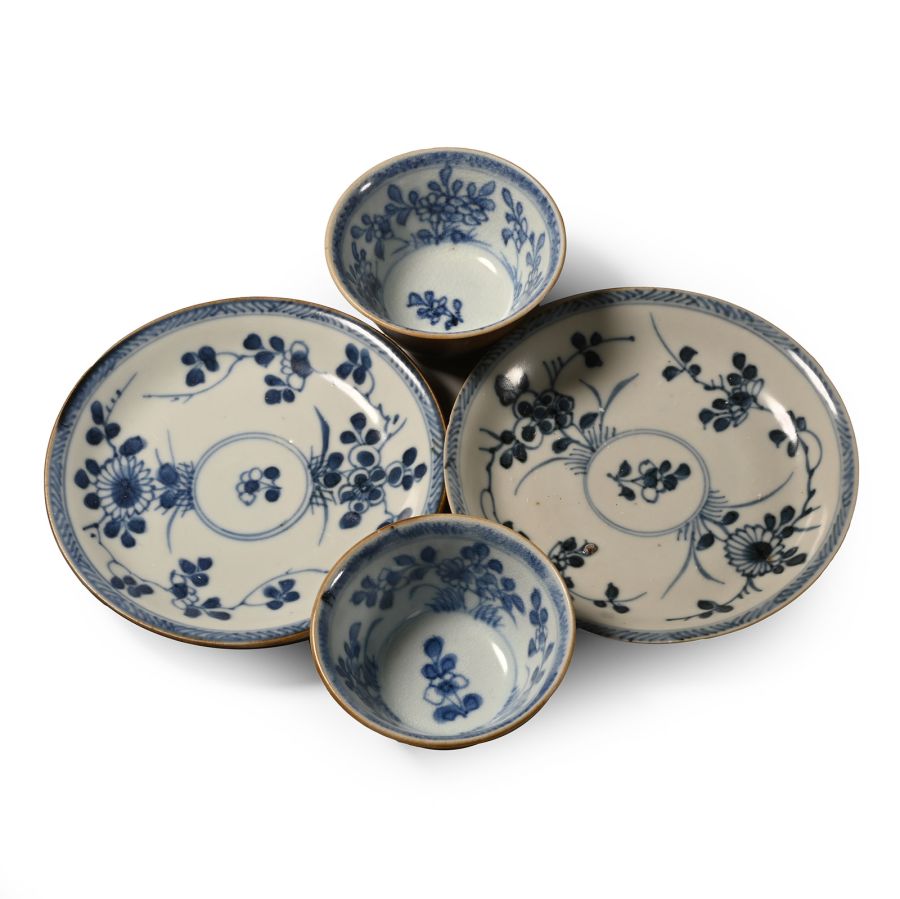
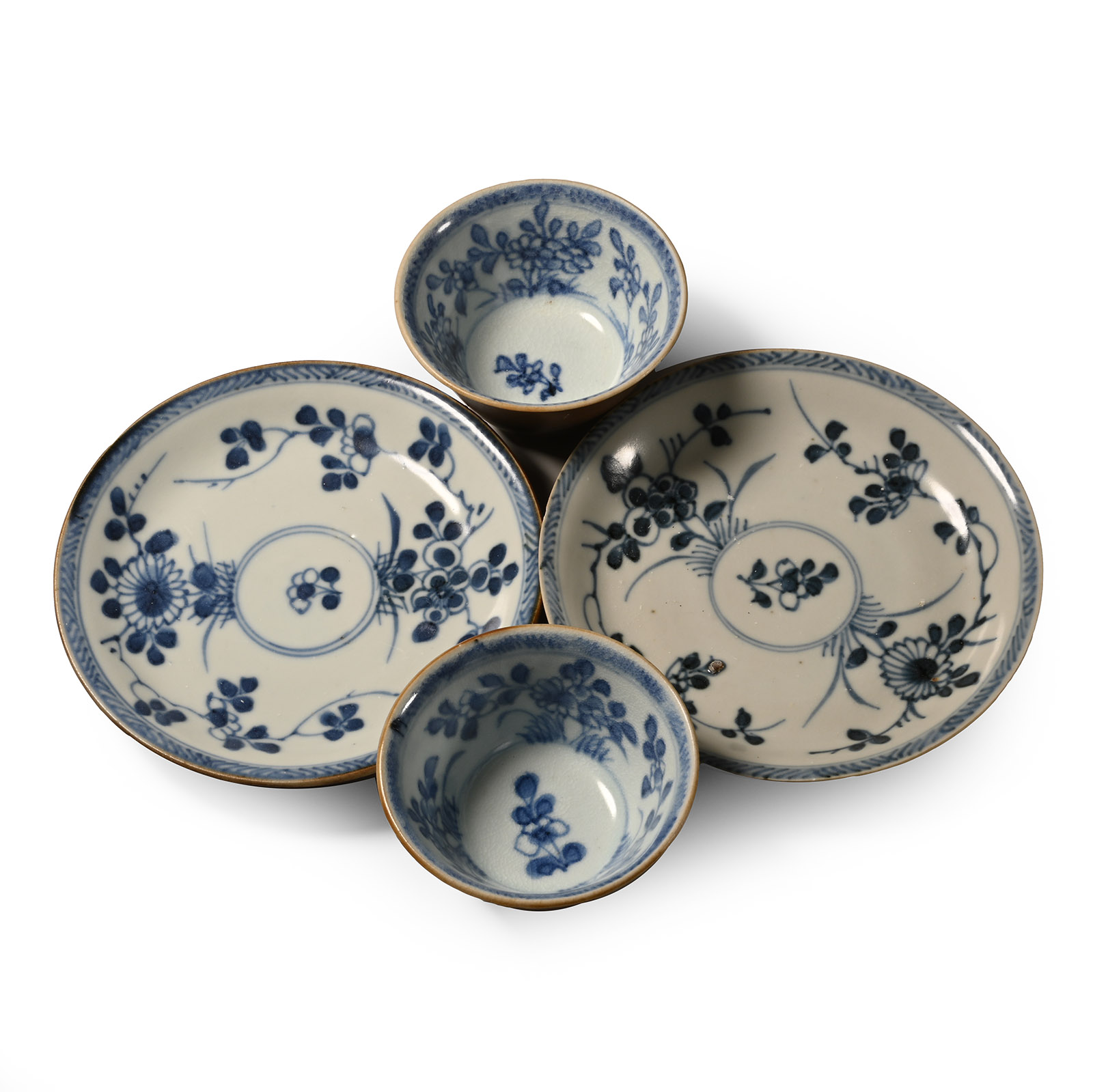
Ca Mau Cargo Shipwreck Glazed Blue and White Tea Bowl and Dish Set Pair
EARLY 18TH CENTURY A.D.
2 5/8 - 4 3/8 in. (216 grams total, 66-112 mm).
Comprising two shallow plates and two conical cups, each with painted floral decoration to the upper face. [4, No Reserve]
ProvenanceEx Sotheby's, Amsterdam, 29-31 January 2007.
Accompanied by an illustrated information sheet about the Ca Mau shipwreck.
The Ca Mau shipwreck refers to a cargo of Chinese porcelain sunk between 1723 and 1735 off the coast of Vietnam. The wreck was discovered by Vietnamese fishermen in 1998. It is believed the wreck was a merchant’s junk on its way from Canton (Guangzhou) to Batavia when it caught fire and sank. The ship was carrying goods destined for Dutch traders who had limited access to China and its ports.
CONDITIONTimeLine Auctions follows a vetting process to ensure the authenticity and legality of all items, reinforcing our commitment to integrity and responsible trading. Each antiquity, antique, and coin lot undergoes thorough examination by a vetting committee of at least ten external specialists, professional trade association members, scientists, and archaeologists: Our Vetting Process
AUCTIONS:
TimeLine is a leading auction house specialising in antiquities, ancient art, collectables, natural history, coins, medals, and books. Our auctions offer museums, collectors, historians, and enthusiasts the opportunity to acquire unique and historically significant pieces.
LOT 2299
Ca Mau Cargo Shipwreck Glazed Blue and White Tea Bowl and Dish Set Pair
Sold for (Inc. bp): £156
-
Chinese Song Terracotta Tile with Traveller
Song Dynasty, 960-1279 A.D. or laterSold for (Inc. bp): £117
Showing a bearded traveller walking over a double-arched bridge, holding luggage over his left shoulder, with foliage behind; the scene enclosed in a roundel with raised edge. 3.5 kg, 27 cm wide
From a West Country, UK, collection, 1990s. -
.jpg)
South East Asian Khmer Bronze Temple Ring Pair
Circa 12th century A.D.Estimate: £400 - 600 (+bp*)
Opening Bid: £167
A matched pair of bronze dragon earrings, each a hollow cone with bands of linear ornament, dragon heads flanking the loop with teardrop wings. 77 grams total, 50 mm each
From the collection of the late Asian art specialist Joseph G. Gerena, New York, U.S.A. Ex Derek J. Content, London, UK. From the private collection of a North London lady. -
Chinese Yuan Glazed Blue and White Jar
Yuan Dynasty, 1271-1368 A.D. or laterSold for (Inc. bp): £156
In Yuan style, provincial ceramic jar with broad shoulder and low rim to the mouth, painted floral ornament. 1.98 kg, 20 cm
From a West Country, UK, collection, 1990s.
