
Loading, please wait...
LOT 0958
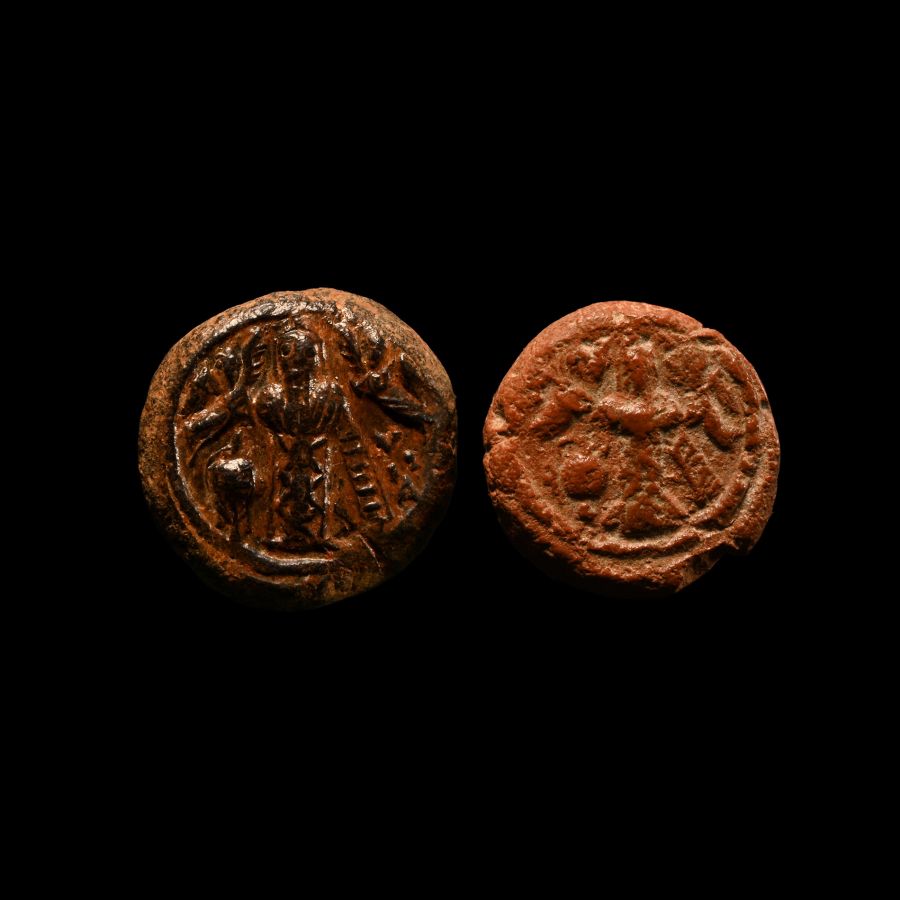
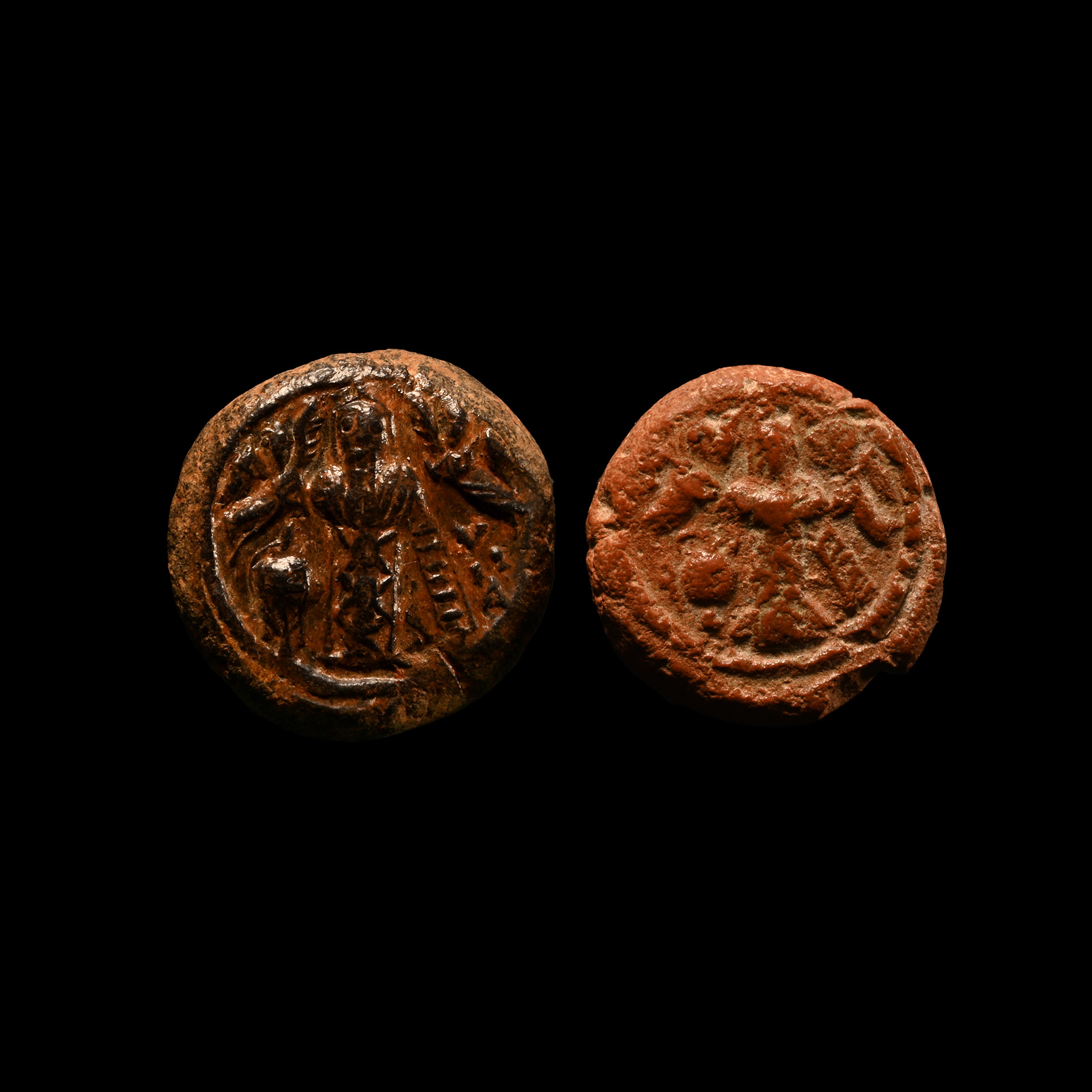
Byzantine Terracotta Pilgrim's Token Group
6TH-7TH CENTURY A.D.
3/4 - 7/8 in. (10.7 grams total, 21-23 mm).
Each plano-convex with low-relief image of Simon Stylites flanked by airborne angels. [2, No Reserve]
ProvenanceAcquired European art market, 1980s.
From the collection of an London antiquarian.
TimeLine Auctions follows a vetting process to ensure the authenticity and legality of all items, reinforcing our commitment to integrity and responsible trading. Each antiquity, antique, and coin lot undergoes thorough examination by a vetting committee of at least ten external specialists, professional trade association members, scientists, and archaeologists: Our Vetting Process
AUCTIONS:
TimeLine is a leading auction house specialising in antiquities, ancient art, collectables, natural history, coins, medals, and books. Our auctions offer museums, collectors, historians, and enthusiasts the opportunity to acquire unique and historically significant pieces.
-
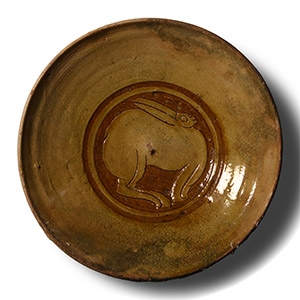
Byzantine Glazed Sgraffito-Ware Shipwreck Bowl
12th-13th century A.D.Sold for (Inc. bp): £2,340
With glazed upper face and basal ring; central reserved motif of a hare within concentric rings, with signs of sea encrustations. 544 grams, 22 cm
Private collection of Mr S.A., Switzerland, 1990s, thence by descent. This lot has been checked against the Interpol Database of stolen works of art and is accompanied by search certificate no.12046-211891. -
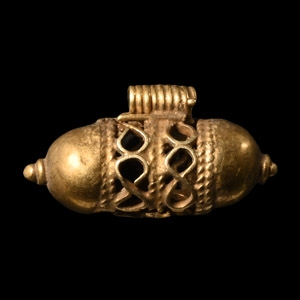
Byzantine Gold Filigree Pendant
6th-8th century A.D.Estimate: £200 - 300 (+bp*)
Opening Bid: £100
Capsule pendant with domed ends and openwork filigree bands between, ribbed suspension tube, granule finials. 0.91 grams, 15 mm
From a late Japanese specialist collector, 1970-2000s. -
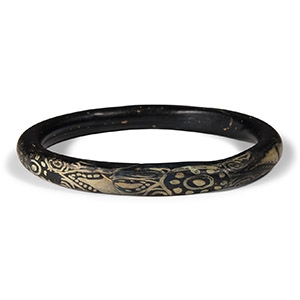
Byzantine Decorated Glass Bracelet
Circa 6th-8th century A.D.Sold for (Inc. bp): £234
In black glass with intricate decorative design in contrasting colour comprising eye motifs, palmettes and pellet designs. 33.3 grams, 84 mm wide
Collected from 1969-1999. From the collection of the late Mr S.M., London, UK.
