
Loading, please wait...
LOT 0924
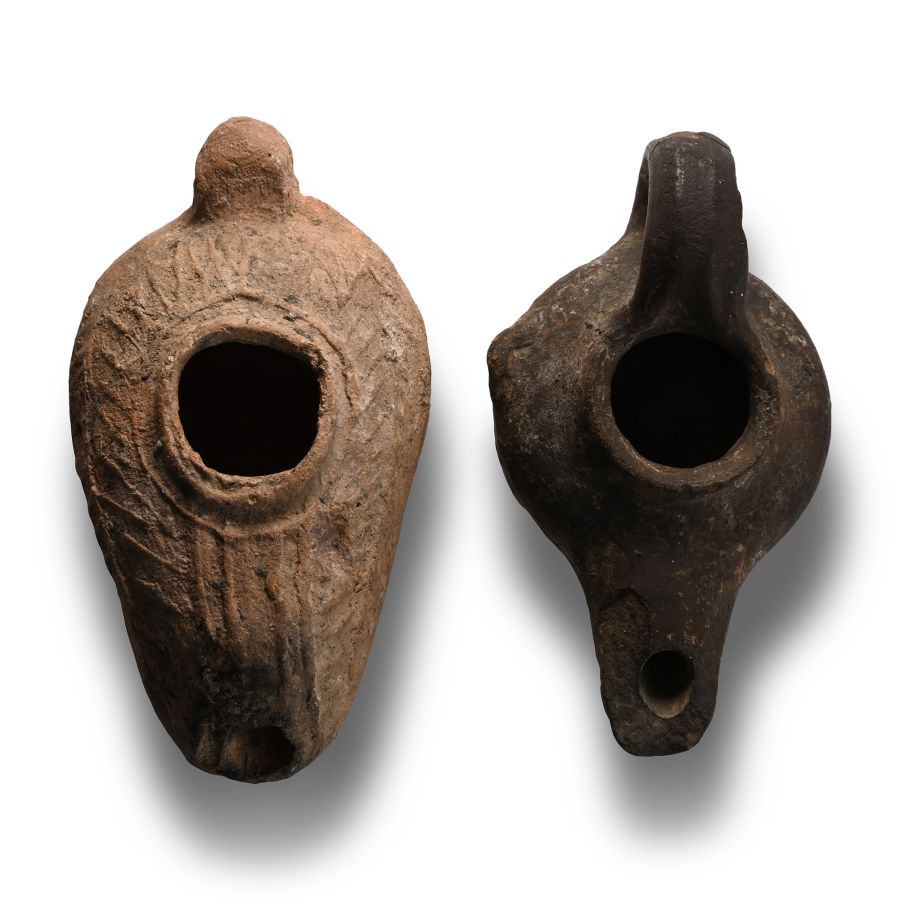
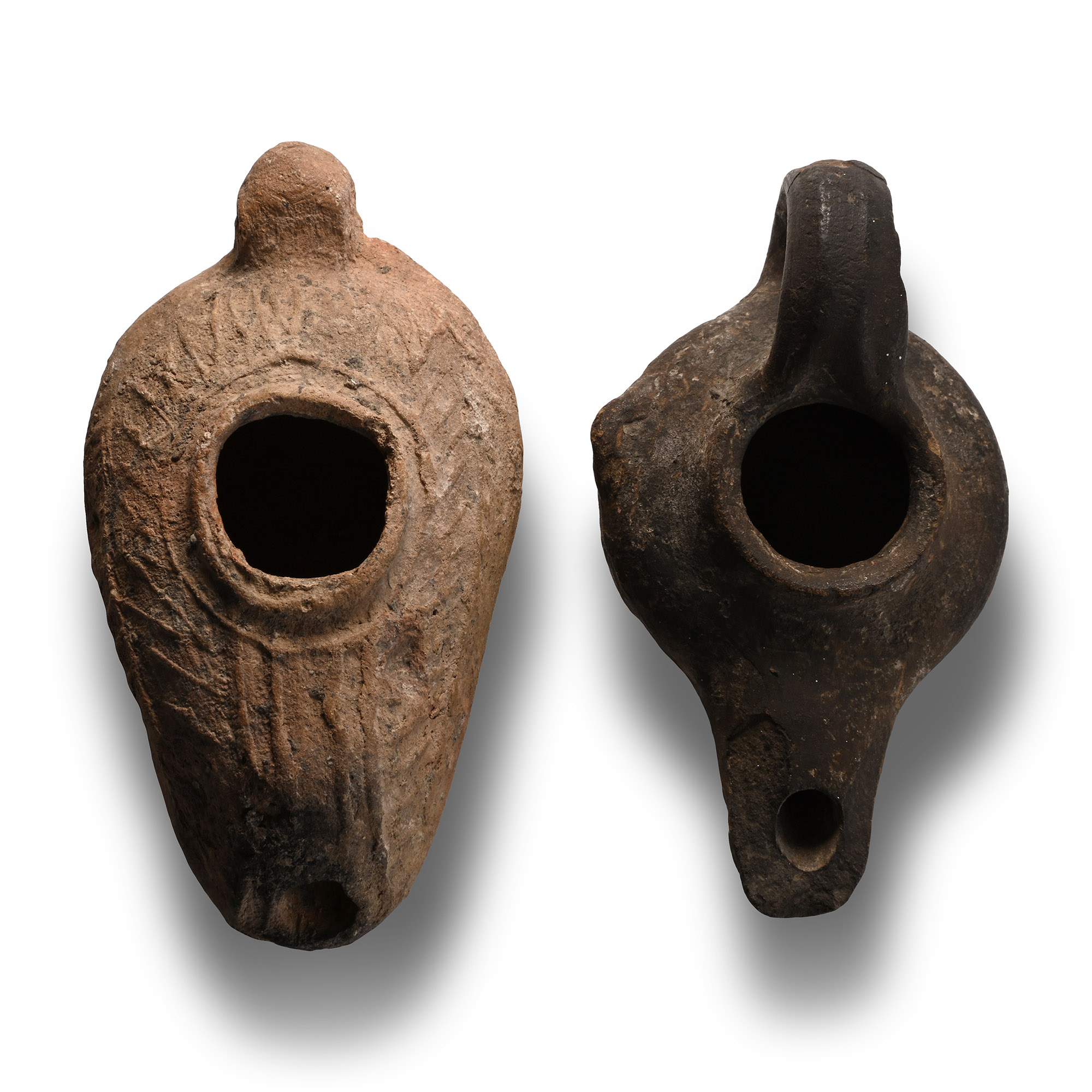
Byzantine Terracotta Oil Lamp Pair
CIRCA 5TH-8TH CENTURY A.D.
3 1/2 - 3 3/4 in. (115 grams total, 90-95 mm).
Comprising: one slipper-shaped with raised hatching to the shoulder, sub handle; one piriform in plan with loop handle. [2, No Reserve]
ProvenanceEx Edinburgh private collection, early 2000s.
CONDITIONTimeLine Auctions follows a vetting process to ensure the authenticity and legality of all items, reinforcing our commitment to integrity and responsible trading. Each antiquity, antique, and coin lot undergoes thorough examination by a vetting committee of at least ten external specialists, professional trade association members, scientists, and archaeologists: Our Vetting Process
AUCTIONS:
TimeLine is a leading auction house specialising in antiquities, ancient art, collectables, natural history, coins, medals, and books. Our auctions offer museums, collectors, historians, and enthusiasts the opportunity to acquire unique and historically significant pieces.
-
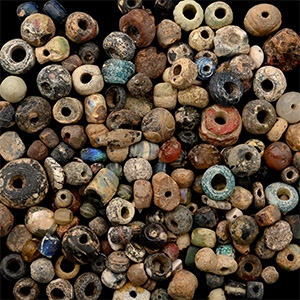
Ancient Glass and Other Bead Collection
Early 1st millennium A.D.Sold for (Inc. bp): £156
Including annular, tabular, polyhedral and other types. 94 grams total, 4-16 mm
From an old deceased estate. Property of an East London lady collector, acquired at auction before 1995. -
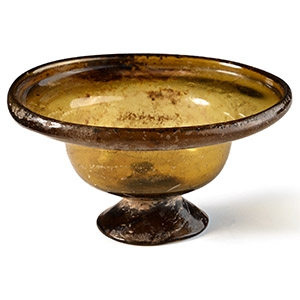
Roman Footed Amber Glass Cup
2nd-3rd century A.D.Sold for (Inc. bp): £715
Comprising a deep body with a wide, upturned rim; applied conical foot. 100 grams, 11.3 cm wide
Previously from a German private collection. Acquired Sotheby's, London, 13 & 14 July 1981, no.482 (illus). From a private Wiltshire, UK, collection. Accompanied by a copy of the relevant Sotheby's catalogue pages. -
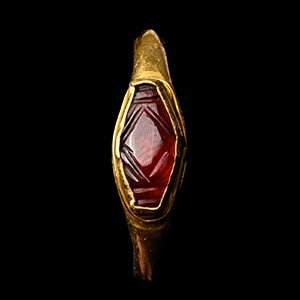
Roman Gold Ring with Elliptical Garnet
1st-3rd century A.D.Estimate: £3,000 - 4,000 (+bp*)
Opening Bid: £1,400
Comprising a substantial keeled hoop and raised bezel set with a garnet, the garnet with a central lozenge flanked by two transverse lines. 8.36 grams, 25.87 mm overall, 19.48 mm internal diameter (approximate size British P 1/2, USA 7 3/4, Europe 16.86, Japan 16)
Private English collection. Private collection, UK. This lot has been checked against the Interpol Database of stolen works of art and is accompanied by search certificate number no.12955-245984.
