
Loading, please wait...
LOT 2202
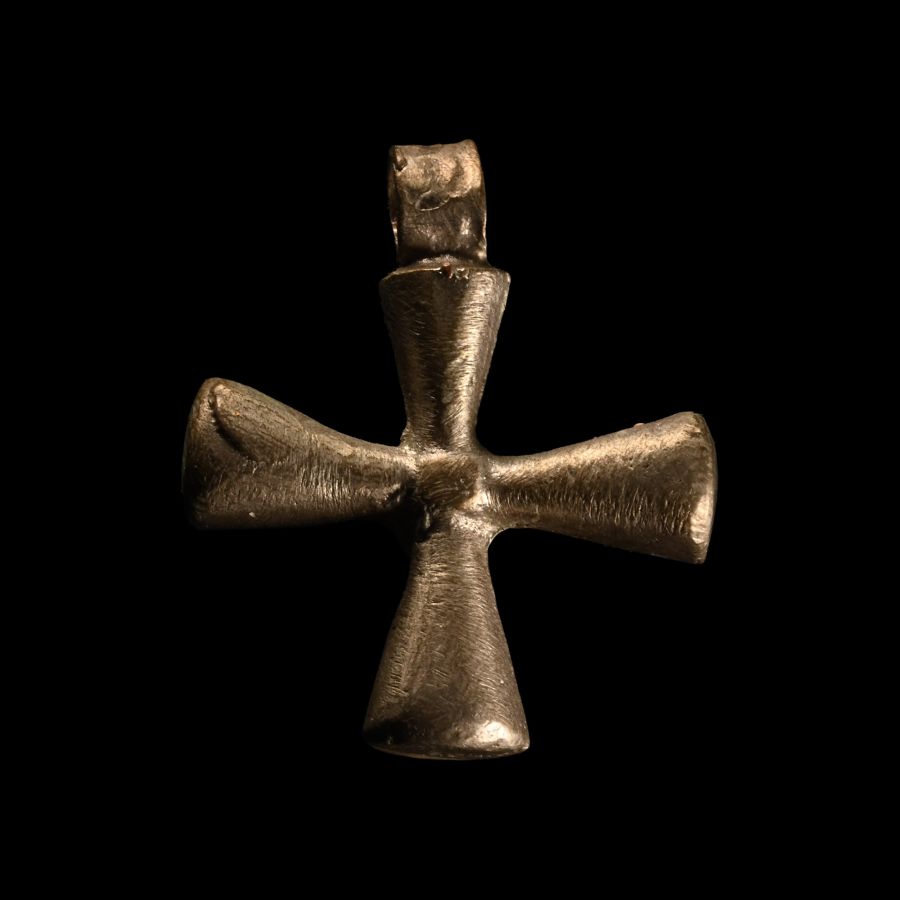
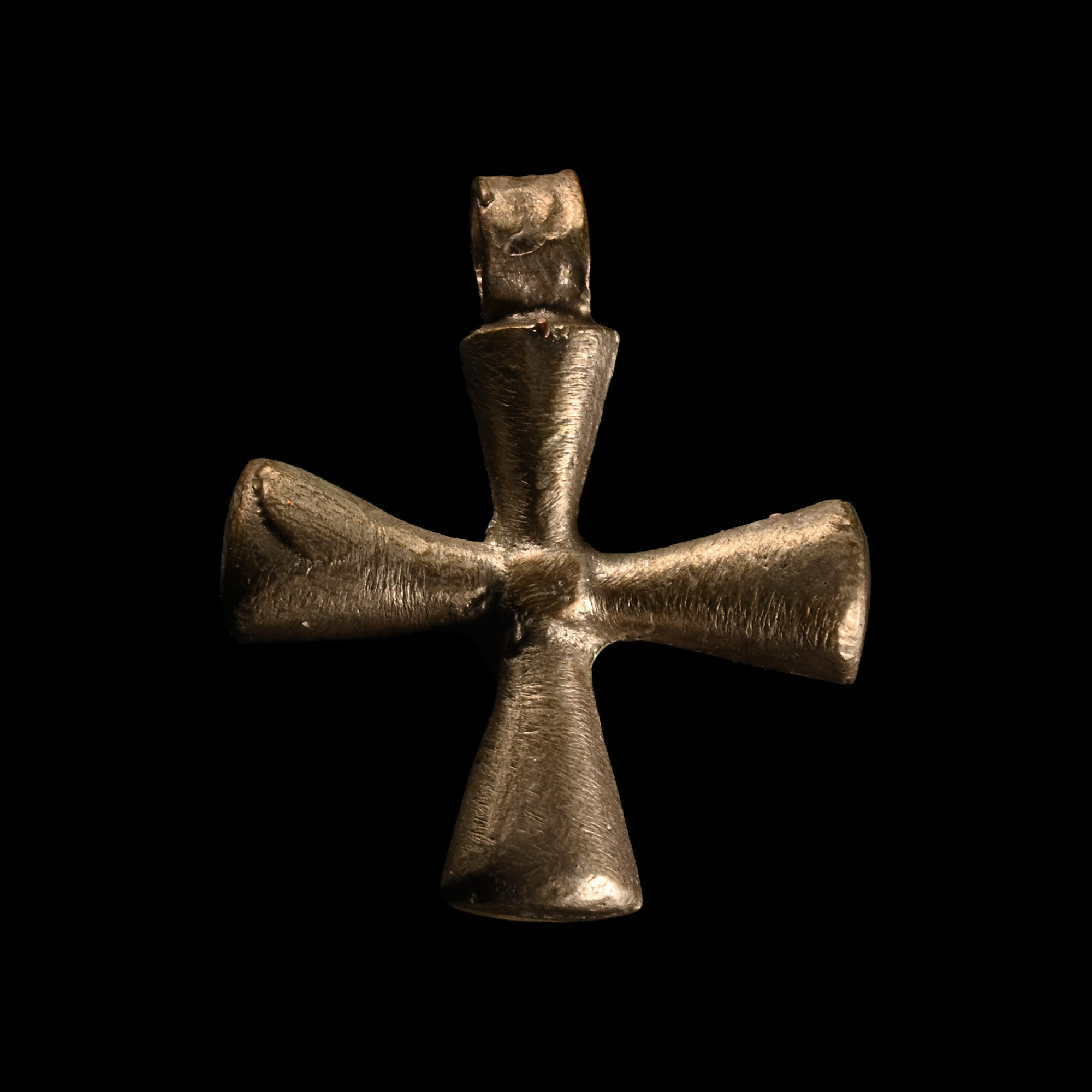
Byzantine Style Bronze Cross Pendant
19TH-20TH CENTURY A.D.
1 1/4 in. (13.2 grams, 32 mm).
Comprising four expanding round-section arms and a broad bale. [No Reserve]
ProvenanceFrom a collection acquired on the UK art market from various auction houses and collections mostly before 2000.
From an important Cambridgeshire estate; thence by descent.
TimeLine Auctions follows a vetting process to ensure the authenticity and legality of all items, reinforcing our commitment to integrity and responsible trading. Each antiquity, antique, and coin lot undergoes thorough examination by a vetting committee of at least ten external specialists, professional trade association members, scientists, and archaeologists: Our Vetting Process
AUCTIONS:
TimeLine is a leading auction house specialising in antiquities, ancient art, collectables, natural history, coins, medals, and books. Our auctions offer museums, collectors, historians, and enthusiasts the opportunity to acquire unique and historically significant pieces.
-

Tie Pin with Gold Finial with Pearls
Mid 20th century A.D.Sold for (Inc. bp): £72
Comprising a slender shank with incised running spiral. perpendicular mounted disc with dentilled rim, and central boss, canetille filigree floral detailing, inset seed pearls and central ruby cabochon; stamped to reverse '15 CT'. 1.66 grams, 61.5 mm
Acquired on the UK art market. Property of an Essex, UK, gentleman. -

Medieval Style 'Billy and Charley' Fantasy Pendant
19th century A.D.Sold for (Inc. bp): £91
By William Smith and Charles Eaton; obverse: head with radiate crown; reverse: crowned figure with dagger and chalice. 112 grams, 10.7 cm
From the collection of the famous author, writer and speaker, Gordon Bailey, Essex, UK; formed since 1968.
"Billy and Charlies", also known as the Shadwell forgeries, refer to a very extensive series of fake antiquities made in Victorian London by William Smith (Billy) and Charles Eaton (Charley). They were mudlarks who searched the Thames for items of value. William Edwards, a London antique dealer, made Billy's acquaintance around about 1845, and he met Charley some years later. He paid them for items of interest that they found. Billy and Charley earned money from this until 1857, when they decided to counterfeit antiquities. They cast objects from lead or pewter, cutting dies into plaster of Paris moulds with nails and knives, and bathing the finished items in acid to simulate aging. Their commonest products were medallions, but others included daggers, statuettes, ampullae and even small shrines; as they were both illiterate the inscriptions on many of the objects are nonsense. They sold their forgeries to very prominent collectors of the time who thought they were genuine. Eventually, due to the large volume of objects that were appearing on the market, they were arrested and tried at court though they could not be found guilty of any crime at the time. They were released and carried on producing fakes but their style of manufacture had become well known and they eventually disappeared from history. -
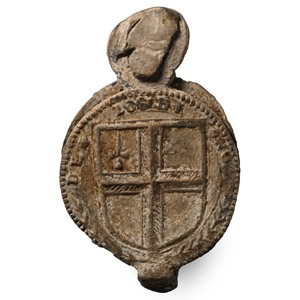
Charles I City of London Lead Seal
1625-1631 A.D.Sold for (Inc. bp): £111
Two-part, four-lobed seal with strap and tag above; obverse with heater shield bearing the arms of the City of London with legend to beaded border 'DE * LO[.]DI ONO' (from London); reverse with angel holding an orb with legend 'GLORIA * IN * EXCELSIS' (glory in the highest); accompanied by a letter from the British Museum, with attachments. 37.5 grams, 57 mm
From the collection of the famous author, writer and speaker, Gordon Bailey, Essex, UK; formed since 1968. Accompanied by the original Museum of London letter by Geoff Egan dated 3rd January 1979.
The item was identified by Geoff Egan (then on secondment from the Museum of London to the British Museum) in 1979 as a four-lobed cloth seal, of a type which had recently been found from a shipwreck off the coast of Norway. The likelihood is that the seal was issued by or in connection with Blackwell Hall, which had a near-monopoly on the cloth trade in 17th c. London. The significance of the angel motif and the motto were not known to Egan, and are still debated.
