
Loading, please wait...
LOT 0789
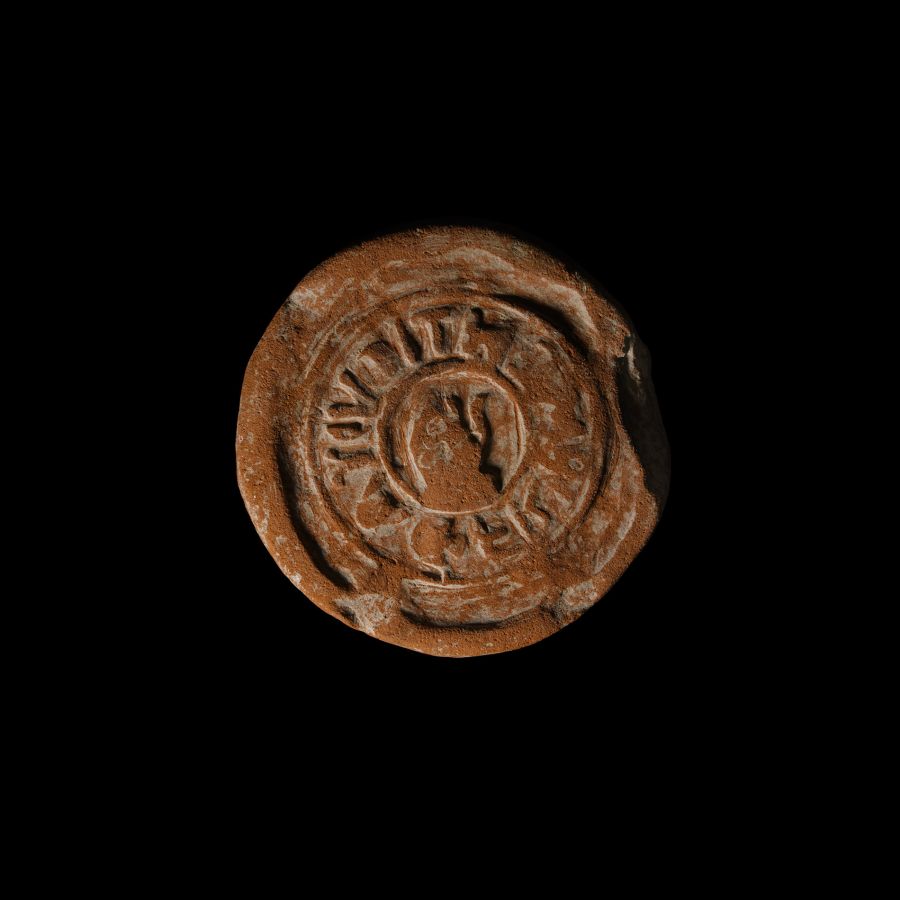
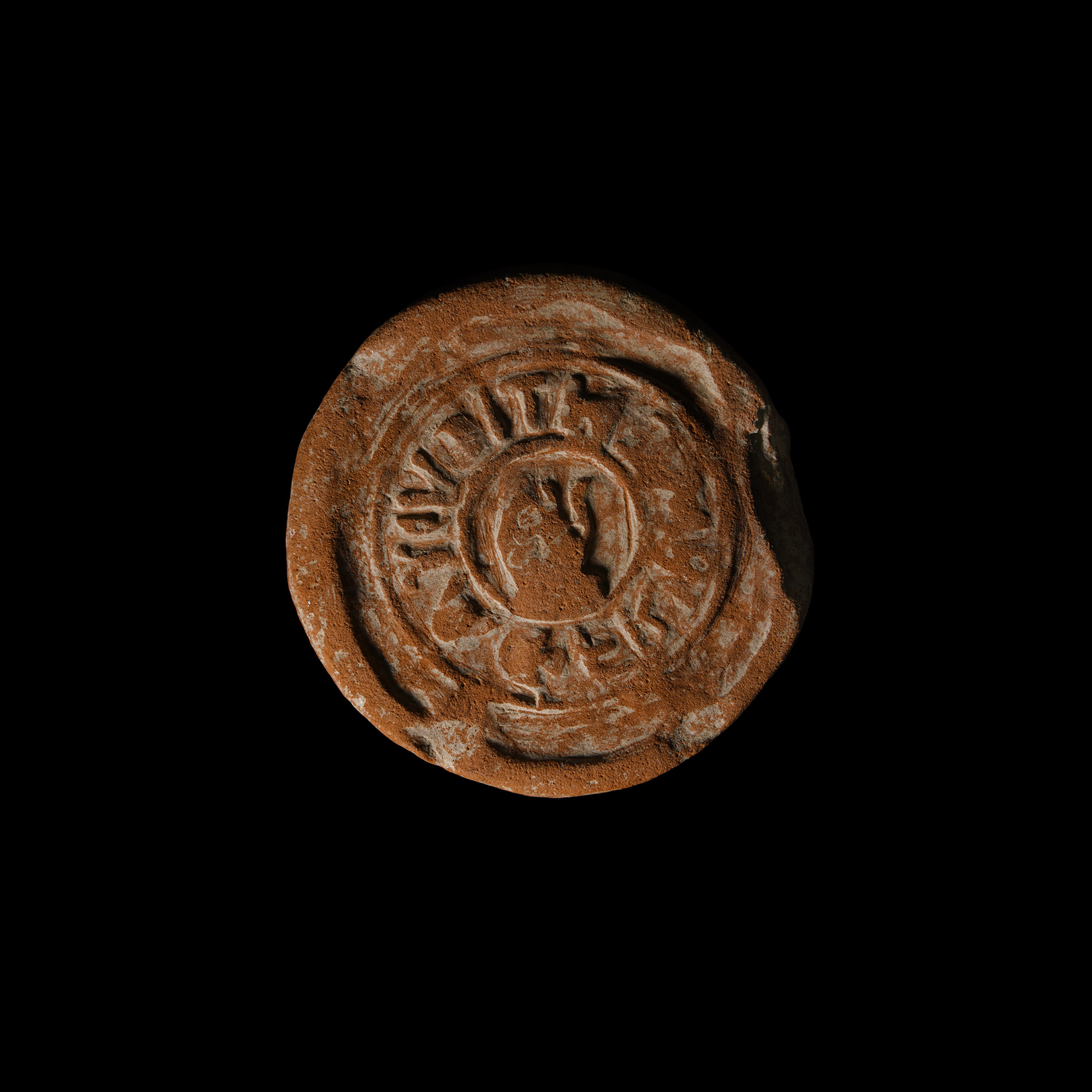
Byzantine Redware Bread Seal
CIRCA 6TH CENTURY A.D.
4 in. (239 grams, 10.2 cm).
Bearing a central hand motif and surrounding inscription in Greek letters 'K E R A Y I O I T H I M (?)' probably the mark of the producer. [No Reserve]
ProvenanceAcquired 1990s-early 2000s.
East Anglian private collection.
Cf. Friedenberg, D.M., ‘The evolution and Uses of Jewish Byzantine Stamp Seals’ in The Journal of the Walters Art Gallery, Vol. 52/53 (1994/1995), pp.1-21, figs. 18,18b, for similar stamps.
FootnotesMuseum collections hold many stamps or seals of different forms, materials and shapes, some bearing inscriptions or images. These could have been used on bread, dough or on fresh clay to stamp amphoras, bricks, lamps and other clay objects.
CONDITIONTimeLine Auctions follows a vetting process to ensure the authenticity and legality of all items, reinforcing our commitment to integrity and responsible trading. Each antiquity, antique, and coin lot undergoes thorough examination by a vetting committee of at least ten external specialists, professional trade association members, scientists, and archaeologists: Our Vetting Process
AUCTIONS:
TimeLine is a leading auction house specialising in antiquities, ancient art, collectables, natural history, coins, medals, and books. Our auctions offer museums, collectors, historians, and enthusiasts the opportunity to acquire unique and historically significant pieces.
-
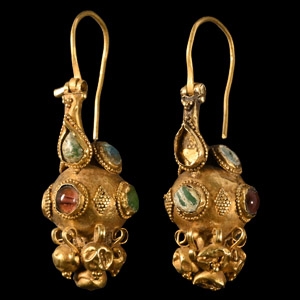
Byzantine Inlaid Gold Earrings
4th-9th century A.D.Sold for (Inc. bp): £910
Each composed of a large bulb, hinged hoop above adorned with three granulated cells set with glass (one insert absent); four circular cells to the equator set with stones of alternating blue and red colour, granulated lozenges between, pyramid bulbs below adorned with granule clusters, collar of suspension loops above; articulate hinges. 8.87 grams total, 42 mm each
Acquired 1980-2015. Ex Abelita family collection. -
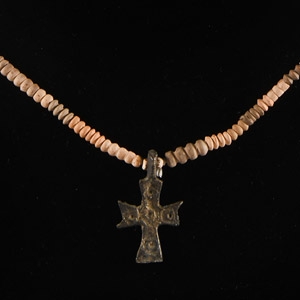
Byzantine Bronze Cross Pendant with Bead Necklace
Circa 10th century A.D. and laterSold for (Inc. bp): £104
Composed of later restrung ceramic beads together with a central cruciform pendant displaying punched ring-and-dot motifs to one face, possibly representing the Five Wounds of Christ. 6.1 grams, 50 cm long
Acquired 1980-2015. Ex Abelita family collection. -
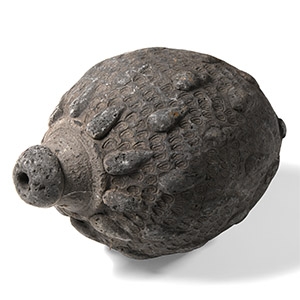
Byzantine Ceramic 'Greek Fire' Fire Bomb or Hand Grenade
9th-11th century A.D.Sold for (Inc. bp): £234
Of piriform shape, with raised inverted tear-shaped bulbs over the body; intended to be filled with explosive liquid and wick, used as a hand grenade. 824 grams, 15.5 cm
Acquired 1990s-early 2000s. East Anglian private collection. Accompanied by an academic paper by military specialist Dr Raffaele D'Amato, dated 15 July 2019 and titled 'Eastern Roman Empire - Greek Fire Bomb or Hand Grenade (μεσαίον kακάβιον) 9th-11th century AD'.
Apart from the use of siphons or manual flame-throwers called cheirosiphona, special corps of Roman soldiers employed terracotta grenades, in the form of small jars, abundantly evidenced in archaeological excavations. Such were the γανωτα, vessels (sometimes also of bronze) used for Greek fire. They were called μεσαία kακαβιά or κυτροκακάβια where the former had a bulbous shape and the latter a more cylindrical form.
