
Loading, please wait...
LOT 0800
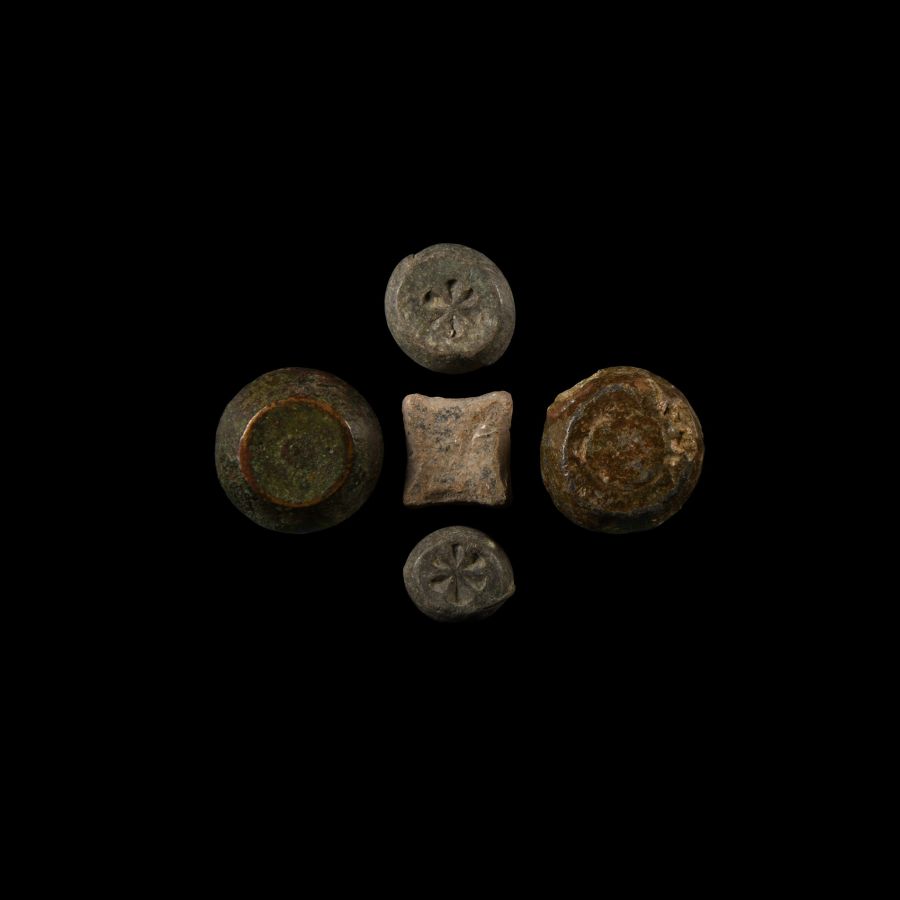
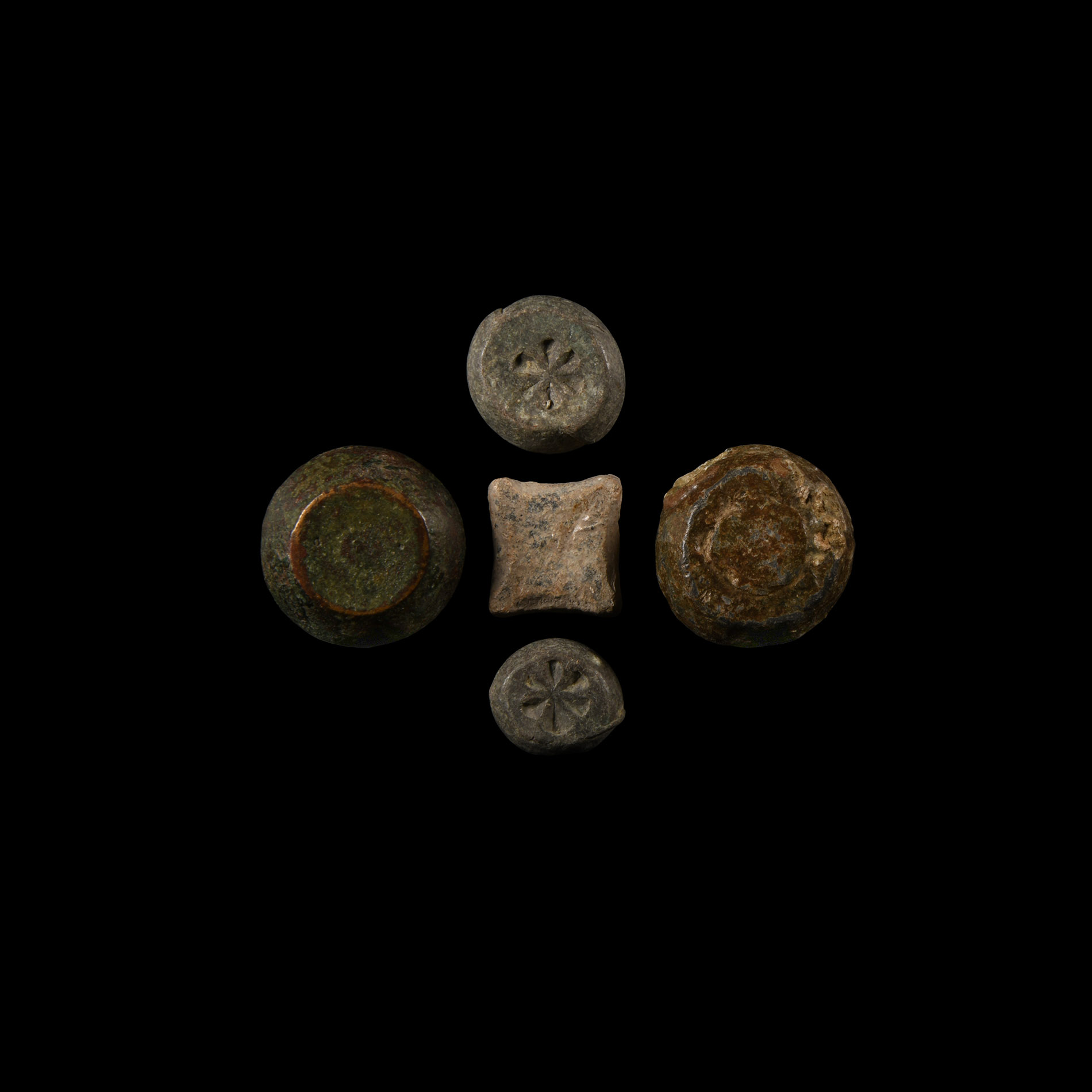
Byzantine Period Bronze Weight Collection
8TH-12TH CENTURY A.D.
1/2 - 1 in. (179 grams total, 16-24 mm).
Composed of weights of different types and sizes, including examples stamped with rosette motifs. [5, No Reserve]
ProvenanceFrom the collection of H.N., Milton Keynes, 1980s-1990s.
CONDITIONTimeLine Auctions follows a vetting process to ensure the authenticity and legality of all items, reinforcing our commitment to integrity and responsible trading. Each antiquity, antique, and coin lot undergoes thorough examination by a vetting committee of at least ten external specialists, professional trade association members, scientists, and archaeologists: Our Vetting Process
AUCTIONS:
TimeLine is a leading auction house specialising in antiquities, ancient art, collectables, natural history, coins, medals, and books. Our auctions offer museums, collectors, historians, and enthusiasts the opportunity to acquire unique and historically significant pieces.
-
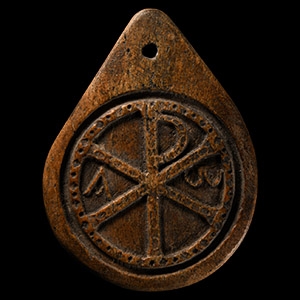
Byzantine Bone Pendant with Chi Rho
14th-15th century A.D. or laterSold for (Inc. bp): £176
Tear-shaped, carved with Chi Rho monogram within a central dimpled roundel, Greek letters 'Λ - ώ' in left and right field; pierced for suspension. 24.7 grams, 70 mm
From the collection of an EU gentleman formed in the 1990s. Acquired on the UK market. -
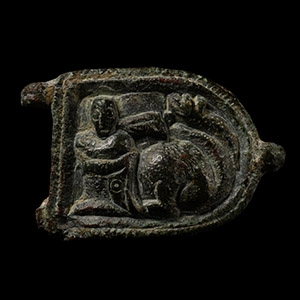
Byzantine Bronze Buckle Plate with Man and Beast
10th-12th century A.D.Sold for (Inc. bp): £117
Heater-shaped with attachment lugs to the reverse; high-relief figural design, possibly 'Daniel in the Lion's Den'. 16.01 grams, 35 mm
Acquired 1960s-1990s. From the late Alison Barker collection, a retired London barrister. -
.jpg)
Byzantine Gold Coin Bead Necklace
Coin dated 527-565 A.D.Sold for (Inc. bp): £338
Composed of carnelian and perhaps glass rounded oval beads, featuring a gold Solidus coin pendant of Emperor Justinian I; modern screw clasp. 14.3 grams, 37 cm long
Acquired in the 1970s. Ex property of a North London collector.
