
Loading, please wait...
LOT 0963
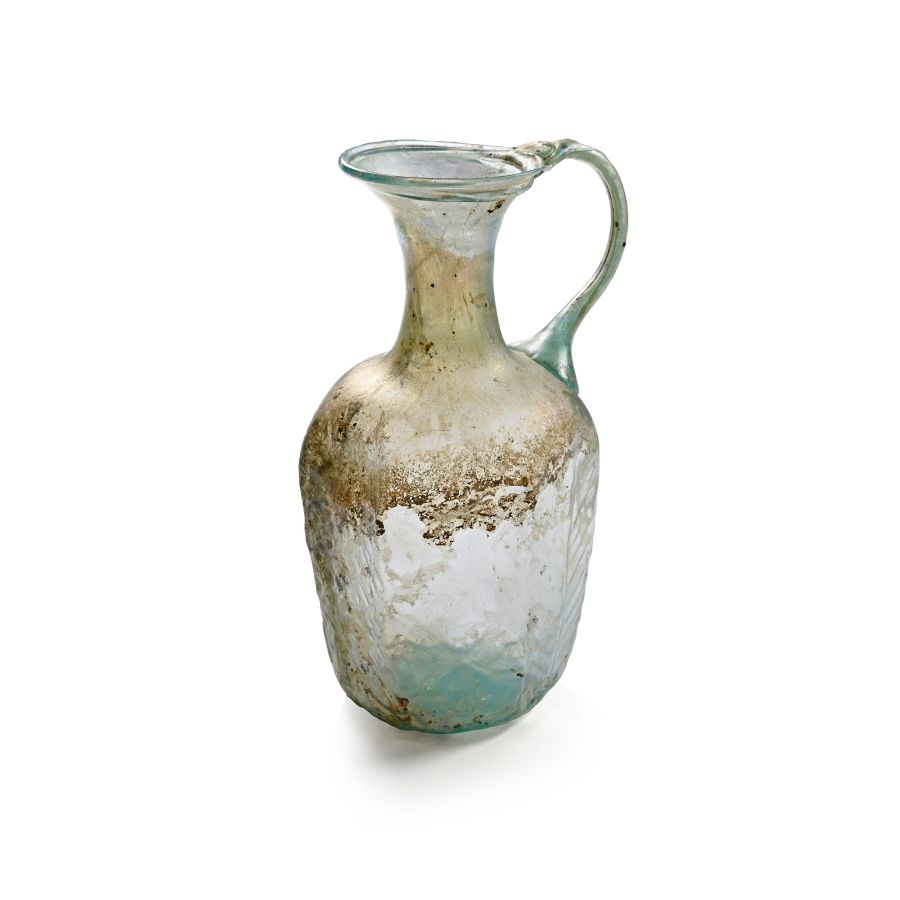
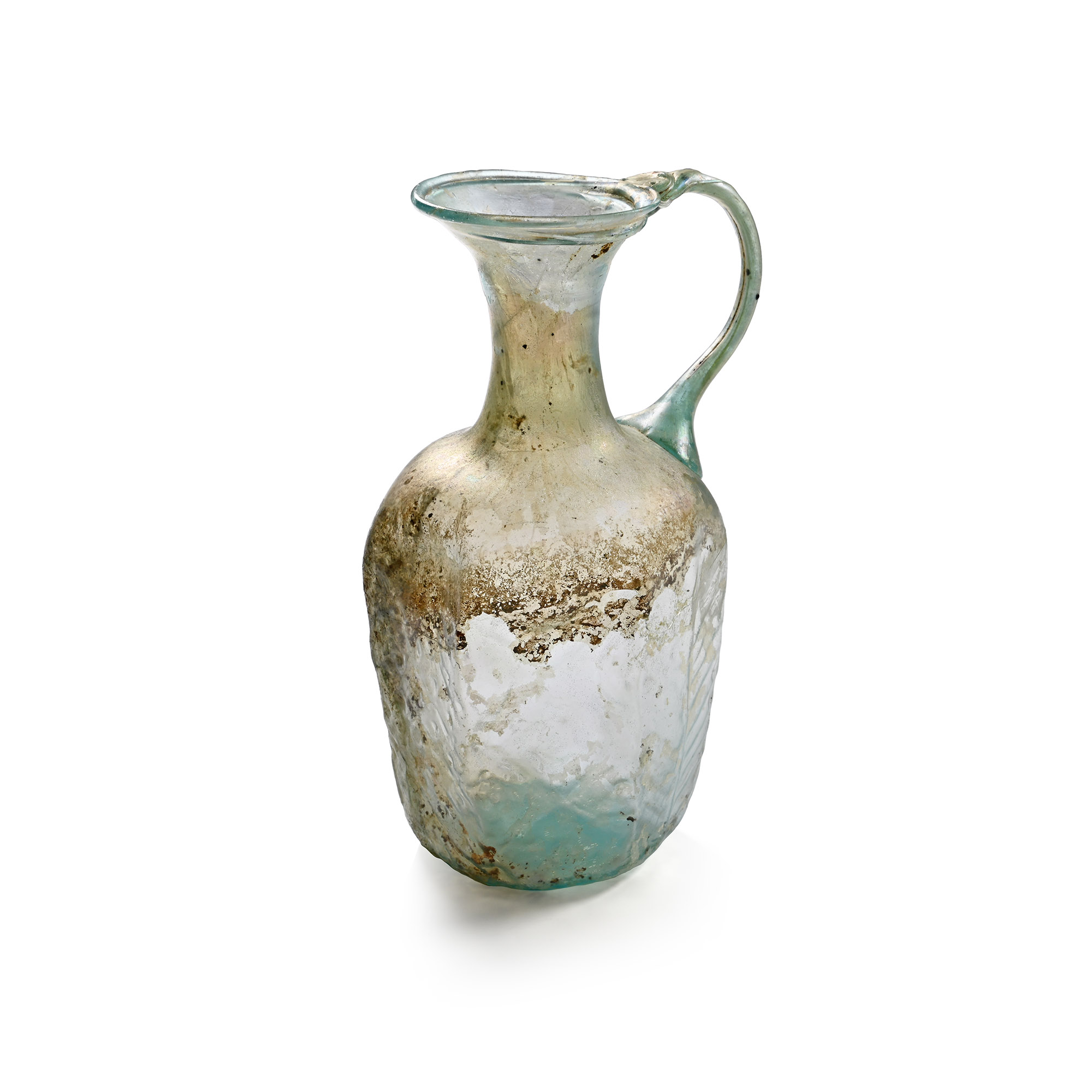
Byzantine Mould-Blown Christian Glass Vessel
LATE 6TH-EARLY 7TH CENTURY A.D.
6 1/4 in. (90 grams, 16 cm).
Comprising a pale-blue hexagonal body with cylindrical neck and rolled rim, applied tubular handle; rosette to base, the side panels with alternating motifs: two of the panels with a palm-leaf, two with large conjoining lozenges with bosses, and the other two with crosshatching, each small lozenge with a pellet to the centre.
ProvenanceFrom an important London collection of glass, 1990s.
This lot is accompanied by an illustrated lot declaration signed by the Head of the Antiquities Department, Dr Raffaele D'Amato.
Cf. Whitehouse, D., Roman Glass in the Corning Museum of Glass, Volume two, New York, 2001, pp.106-108, items 599-601.
CONDITIONTimeLine Auctions follows a vetting process to ensure the authenticity and legality of all items, reinforcing our commitment to integrity and responsible trading. Each antiquity, antique, and coin lot undergoes thorough examination by a vetting committee of at least ten external specialists, professional trade association members, scientists, and archaeologists: Our Vetting Process
AUCTIONS:
TimeLine is a leading auction house specialising in antiquities, ancient art, collectables, natural history, coins, medals, and books. Our auctions offer museums, collectors, historians, and enthusiasts the opportunity to acquire unique and historically significant pieces.
LOT 0963
Byzantine Mould-Blown Christian Glass Vessel
Estimate £600 - 800€700 - 930 (for guidance only)$810 - 1,080 (for guidance only)
-
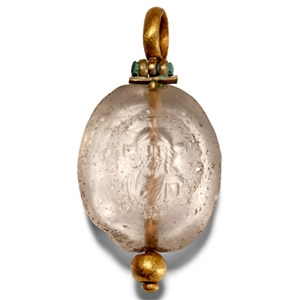
Byzantine Rock Crystal Pendant
Circa 8th-12th century A.D.Sold for (Inc. bp): £3,900
Biconvex crystal bead mounted on a gold rod with bulb below, hinged bale above; obverse with intaglio nimbate bust of Christ, reverse with nimbate bust of Mary. 18.87 grams, 50 mm
Acquired from a London, UK, gallery, 1980s. From a North American gentleman's collection, 1980-1990s. This lot has been checked against the Interpol Database of stolen works of art and is accompanied by a search certificate number no.12692-235761. This lot has been cleared against the Art Loss Register database, and is accompanied by an illustrated lot declaration signed by the Head of the Antiquities Department, Dr Raffaele D'Amato. -
.jpg)
Byzantine Group of Three Gold Filigree Beads
Circa 6th-8th century A.D.Sold for (Inc. bp): £208
Each with openwork filigree decoration, and two with applied granules. 1.98 grams total, 6-9 mm
Ex property of a late Japanese collector, 1970-2000s. This lot is accompanied by an illustrated lot declaration signed by the Head of the Antiquities Department, Dr Raffaele D'Amato. -
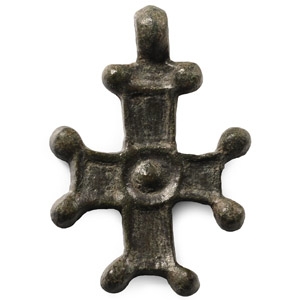
Byzantine Bronze Cross Pendant
10th-12th century A.D.Sold for (Inc. bp): £117
A pair of knops to each arm, a low-relief ring-and-dot motif to the centre. 8.19 grams, 39 mm
Ex German art market, 2000s. Acquired from an EU collector living in London. From the collection of a Surrey, UK, gentleman. This lot is accompanied by an illustrated lot declaration signed by the Head of the Antiquities Department, Dr Raffaele D'Amato.
