
Loading, please wait...
LOT 0180
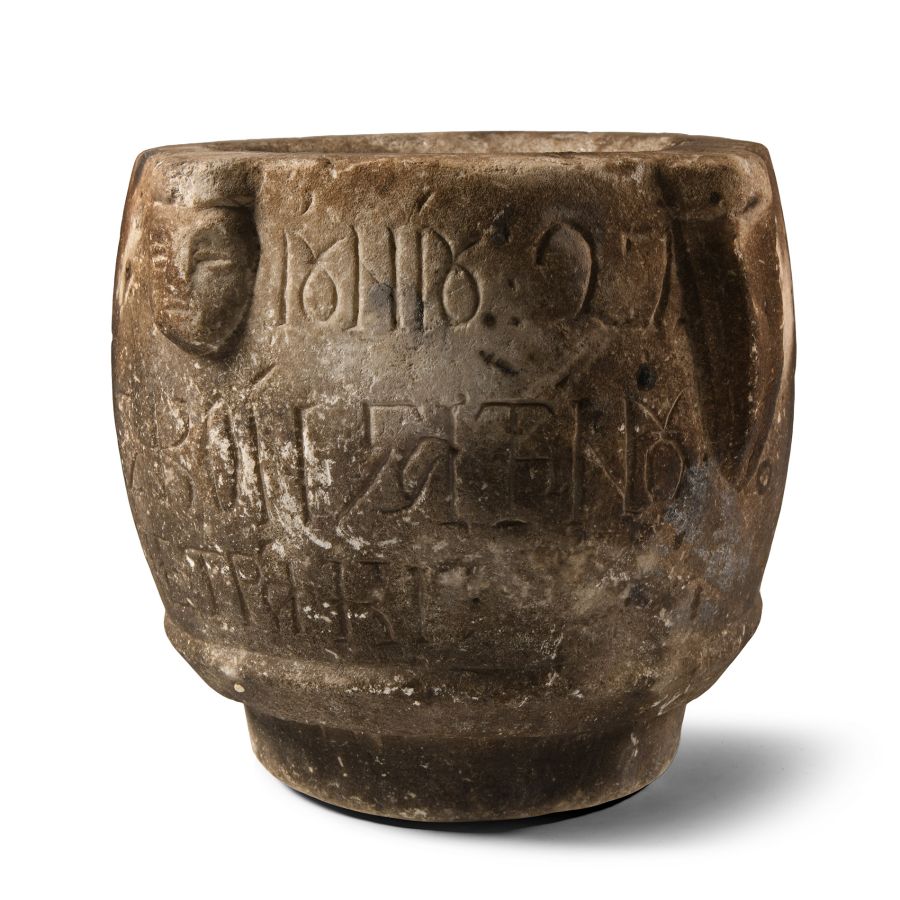
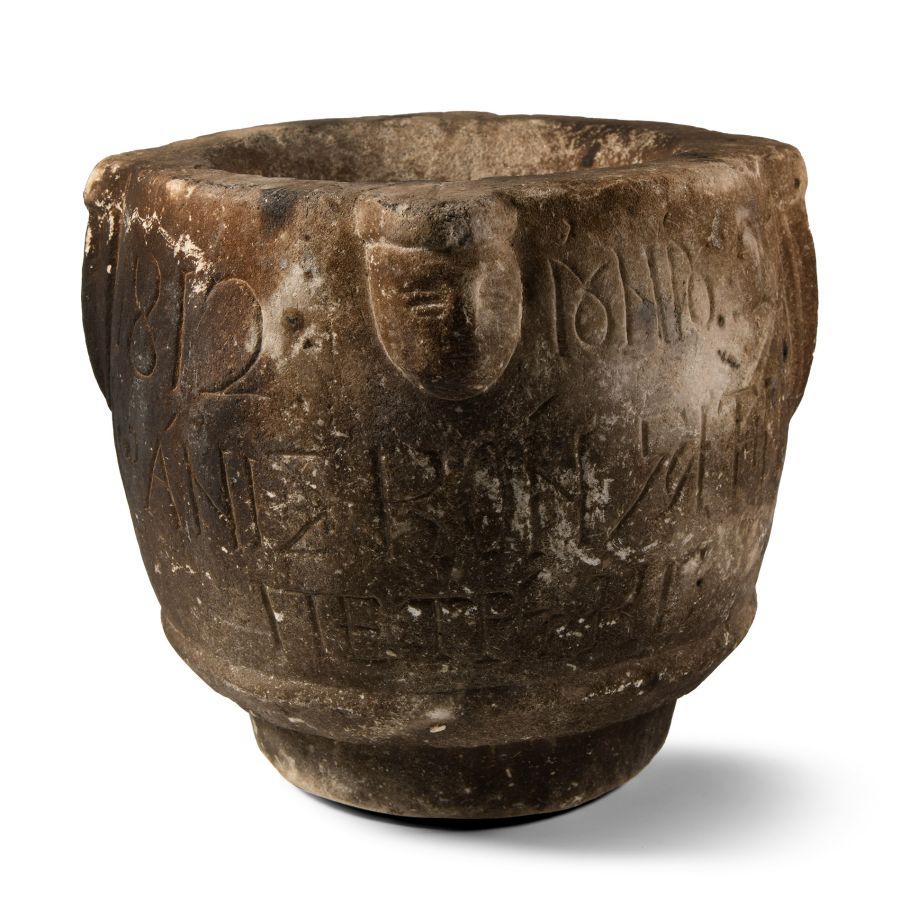
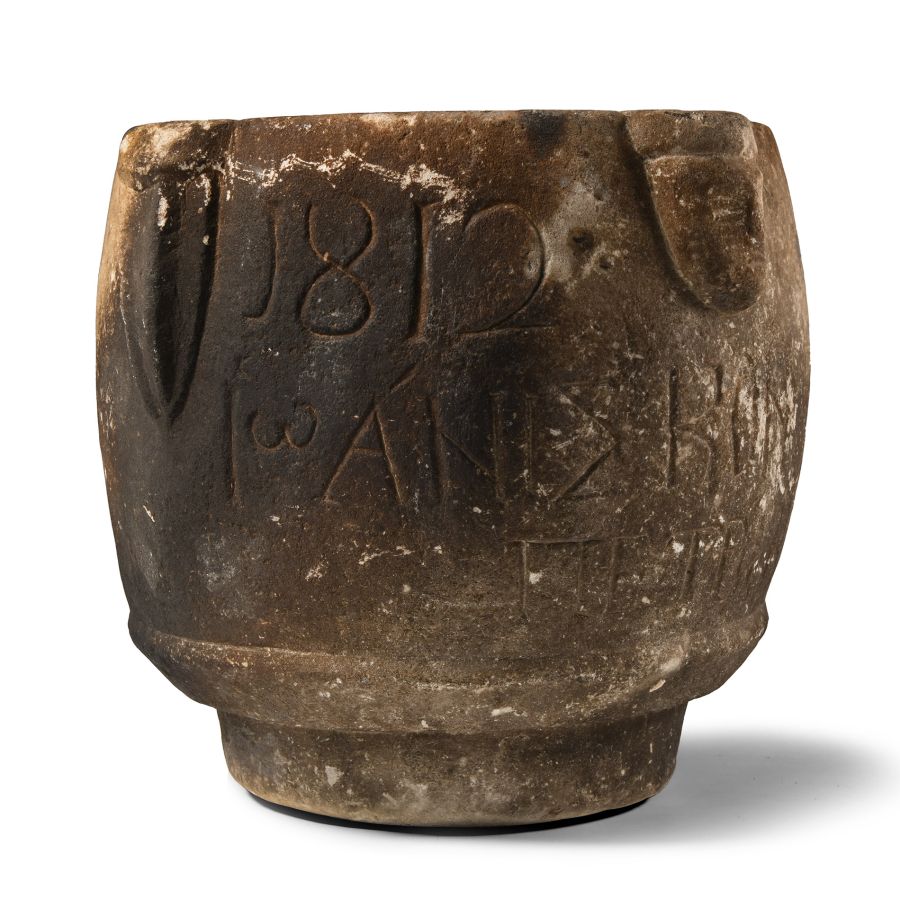
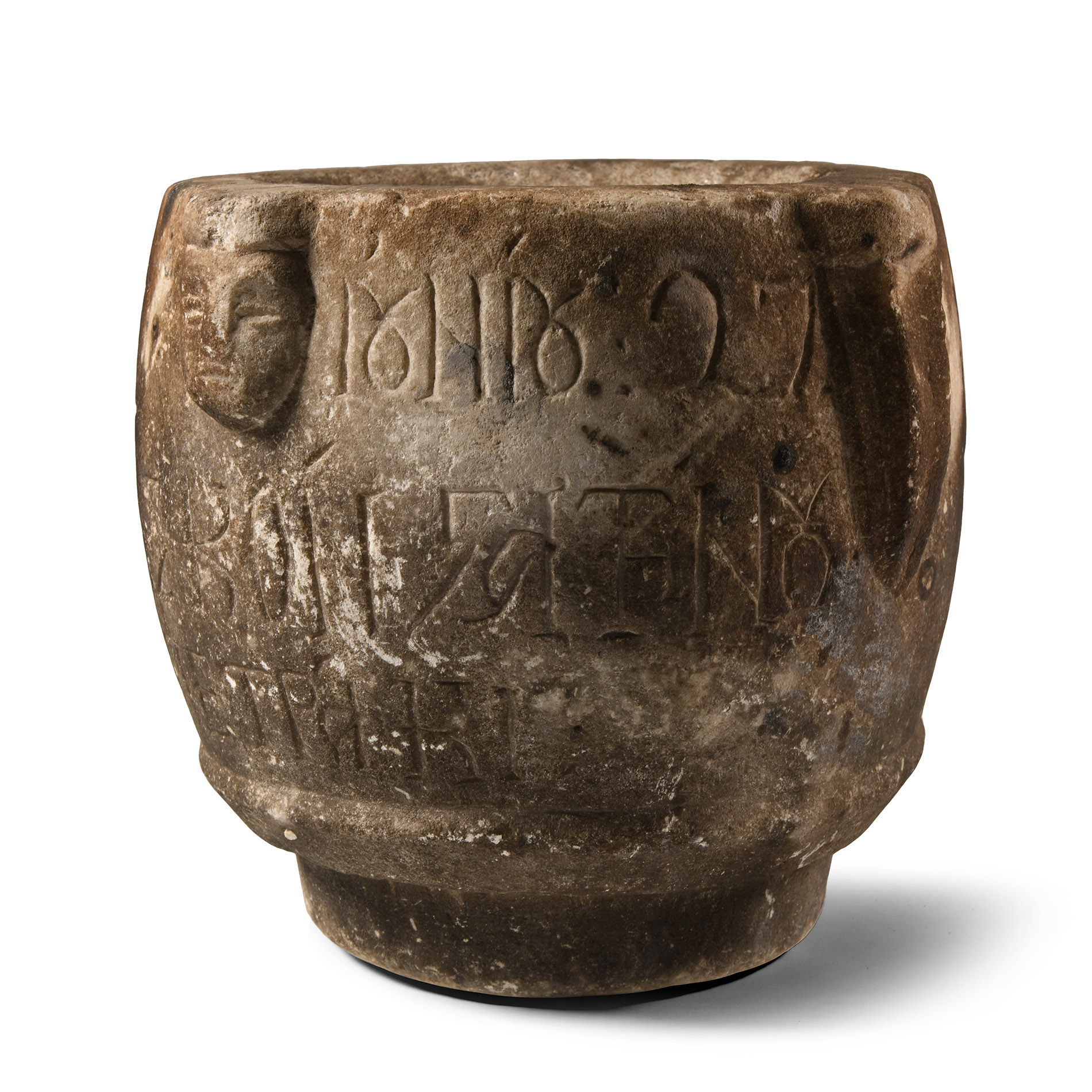
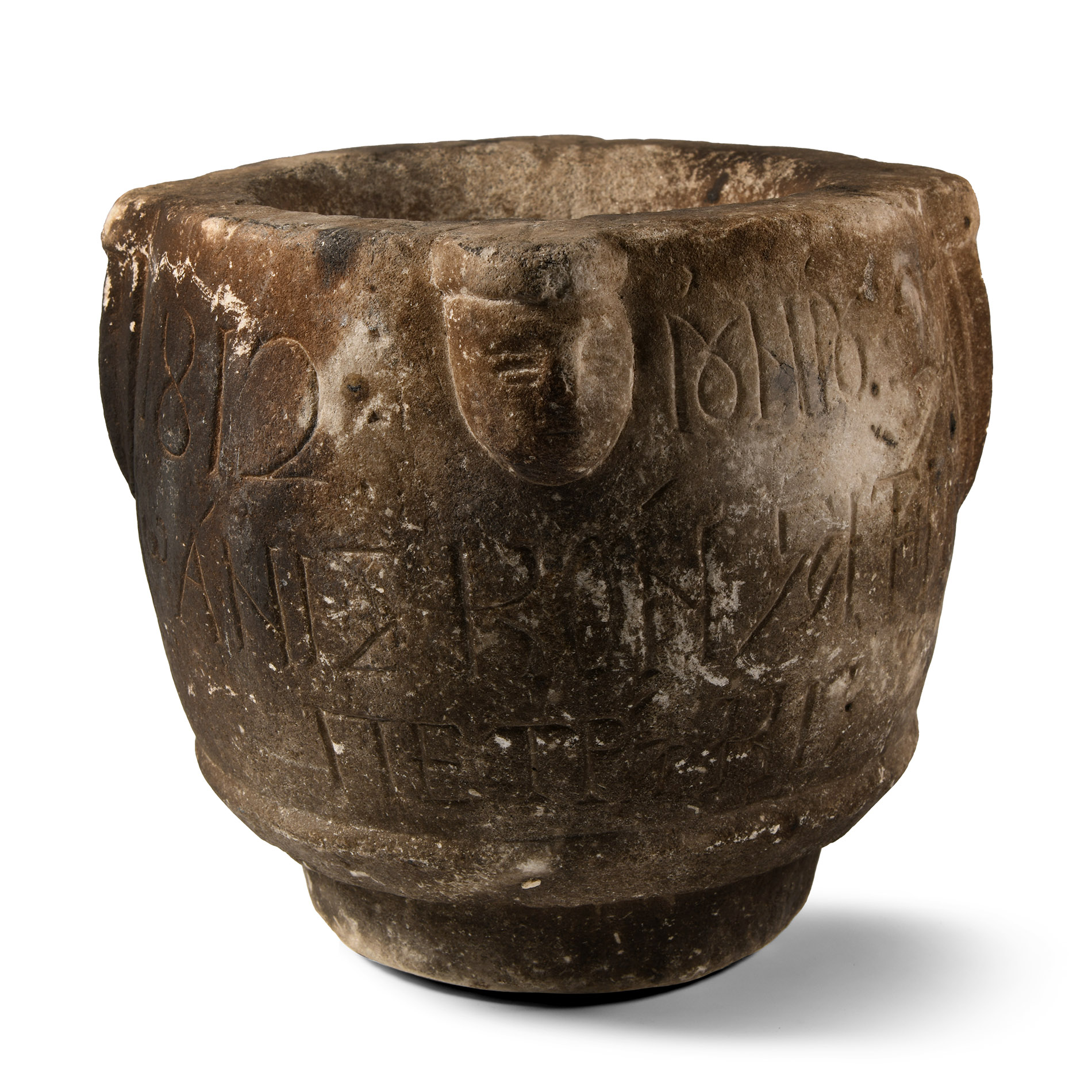
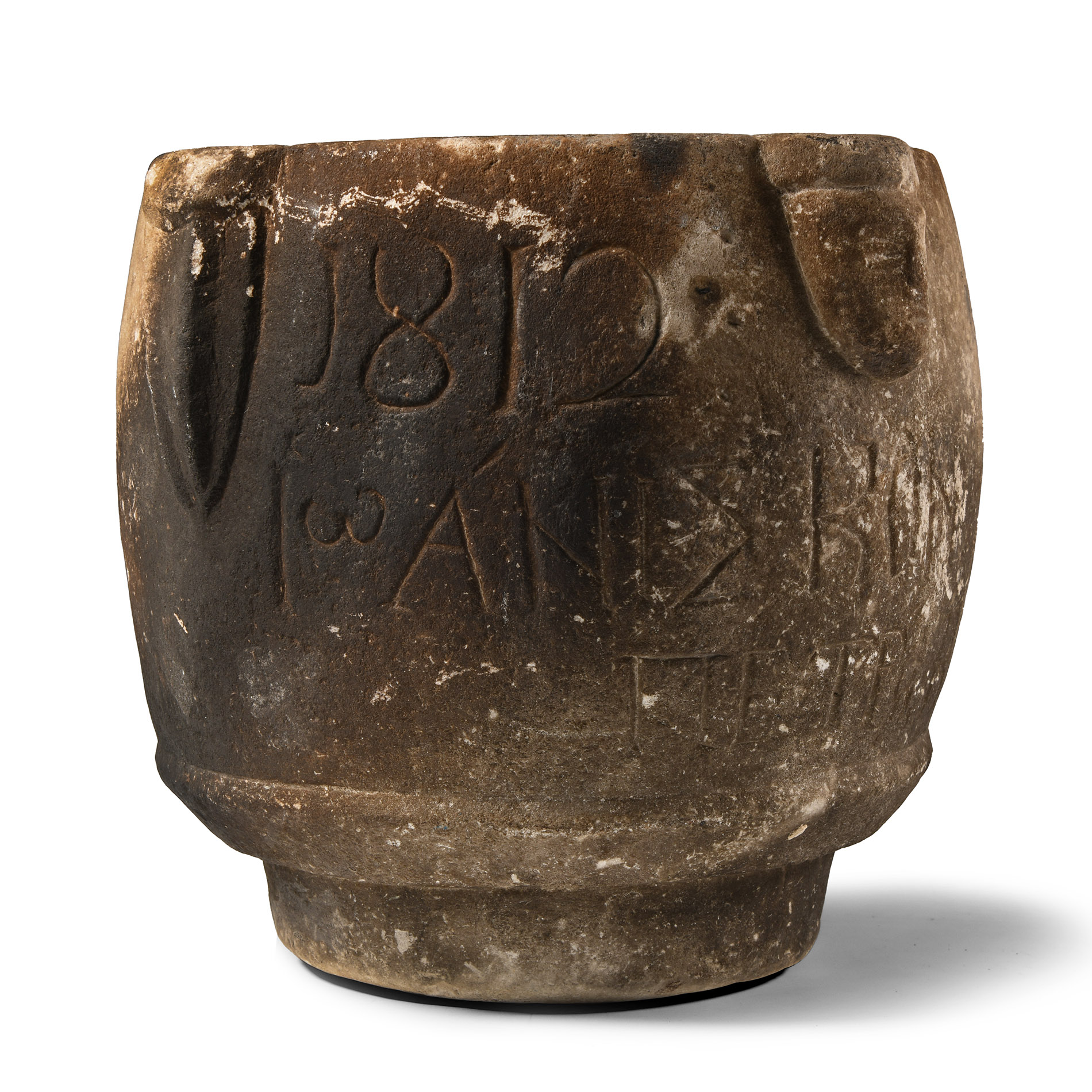
Byzantine Limestone Mortar with Faces and Later Dedication
CIRCA 14TH-15TH CENTURY A.D. AND LATER
8 5/8 in. (11.15 kg, 22 cm wide).
Drum-shaped body with narrow base, two vertical flanges running from the rim and between them two D-shaped male masks with low discoid caps; later inscribed: '1812 [ΕΤ]ΟΥ IΟΥ[ΛIΟΥ] 27 ІωÁΝΙΣ ΚΟΝΣΤΑΝΤΙΝΟΥ ΠΕΤΡΙΚΙ' (July the 27, year 1812 of Iohannes Konstantinos Petrikos). [No Reserve]
ProvenanceFrom a collection acquired on the UK art market from various auction houses and collections mostly before 2000.
From an important Cambridgeshire estate; thence by descent.
TimeLine Auctions follows a vetting process to ensure the authenticity and legality of all items, reinforcing our commitment to integrity and responsible trading. Each antiquity, antique, and coin lot undergoes thorough examination by a vetting committee of at least ten external specialists, professional trade association members, scientists, and archaeologists: Our Vetting Process
AUCTIONS:
TimeLine is a leading auction house specialising in antiquities, ancient art, collectables, natural history, coins, medals, and books. Our auctions offer museums, collectors, historians, and enthusiasts the opportunity to acquire unique and historically significant pieces.
LOT 0180
Byzantine Limestone Mortar with Faces and Later Dedication
Sold for (Inc. bp): £390
-
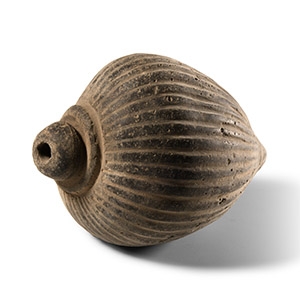
Byzantine 'Greek Fire' Ceramic Fire Bomb or Hand Grenade
9th-11th century A.D.Sold for (Inc. bp): £182
Piriform body with vertical ribbing along the whole length, domed filler-hole, intended to be filled with explosive liquid and wick, used as a hand grenade. 556 grams, 13.1 cm
From a specialist collection of militaria, London, UK, collected 1990s onwards. Accompanied by an academic paper by military specialist Dr Raffaele D'Amato, dated 15 July 2019 and titled 'Eastern Roman Empire - Greek Fire Bomb or Hand Grenade (μεσαίον kακάβιον) 9th-11th century AD'.
Apart from the use of siphons or manual flame-throwers called cheirosiphona, special corps of Roman soldiers employed terracotta grenades, in the form of small jars, abundantly evidenced in archaeological excavations. They were called μεσαία kακαβιά or κυτροκακάβια where the former had a bulbous shape and the latter a more cylindrical form. -
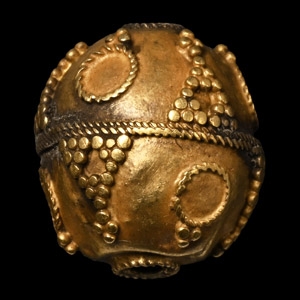
Byzantine Gold Bead with Granular Decoration
Circa 6th-10th century A.D.Estimate: £150 - 200 (+bp*)
Opening Bid: £75
Hollow-formed, decorated with a central filigree band from which granulated triangles radiate, alternating with filigree circular motifs; piercing occluded. 2.12 grams, 12 mm
From the property of late Mr SM, London, UK, 1969-1999. -
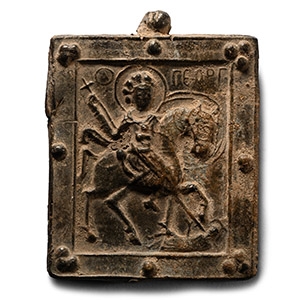
Byzantine Lead Icon with St George
Circa 7th century A.D.Sold for (Inc. bp): £1,300
Bifacial lead plaque with figurative decoration: obverse with Saint George, nimbate, on his horse killing a fallen foe with his spear; 'ΓΕΟΡΓ' label above the horse's neck, raised border with pellets and pellet clusters; reverse with relief pattern of a double circle decorated with double arcs forming a cross pellet to the centre. 48.8 grams, 64 mm
Private collection Mr S.A., Switzerland, before 1992, thence by descent.
According to the Christian tradition, Saint George would have lived between the end of the 3rd century and the beginning of the 4th century: born into a noble Christian family, he became an officer in the Roman army and was then named a prefect by Diocletian. But when the same emperor decided to resume the persecutions, Saint George became a victim despite his important political rank. His role in the development of the faith is so important that he is included among the Great Martyrs of the Eastern Church and his fight against the dragon becomes a symbol par excellence of the fight for Good which defeats Evil. In the Christian symbolism of the Middle Ages, the circle, a perfect geometric shape which has neither beginning nor end, designates the universe whose centre is the source and thus evokes Jesus, the man-light.
