
Loading, please wait...
LOT 0305
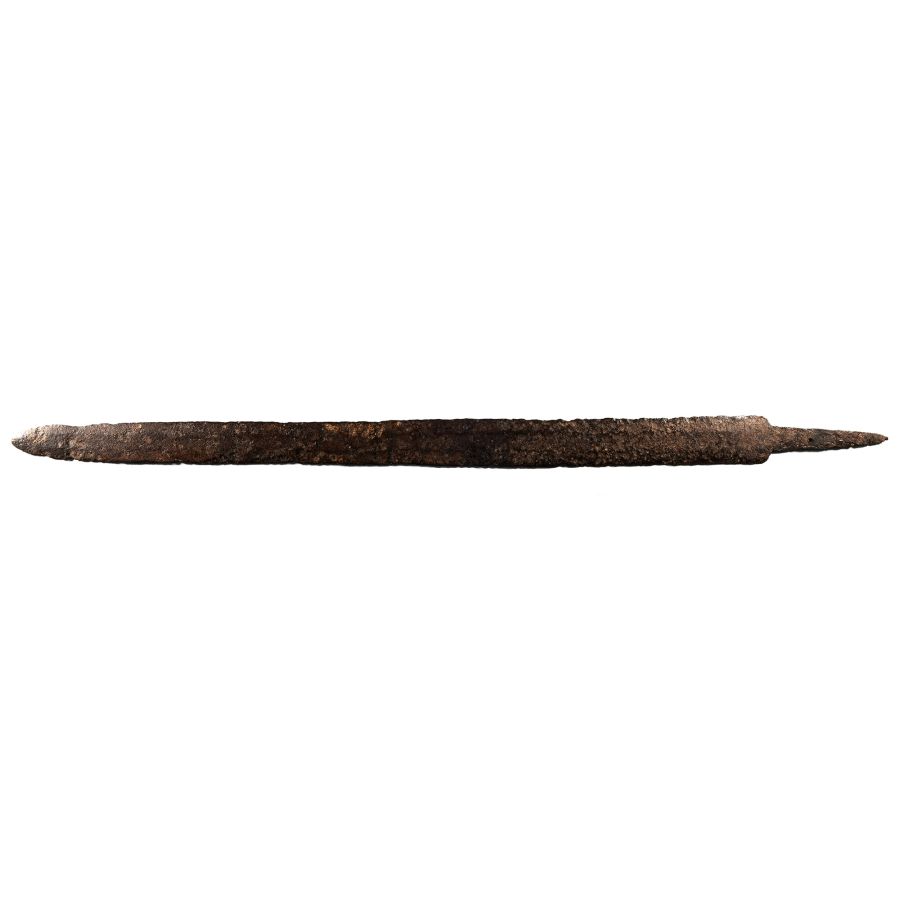
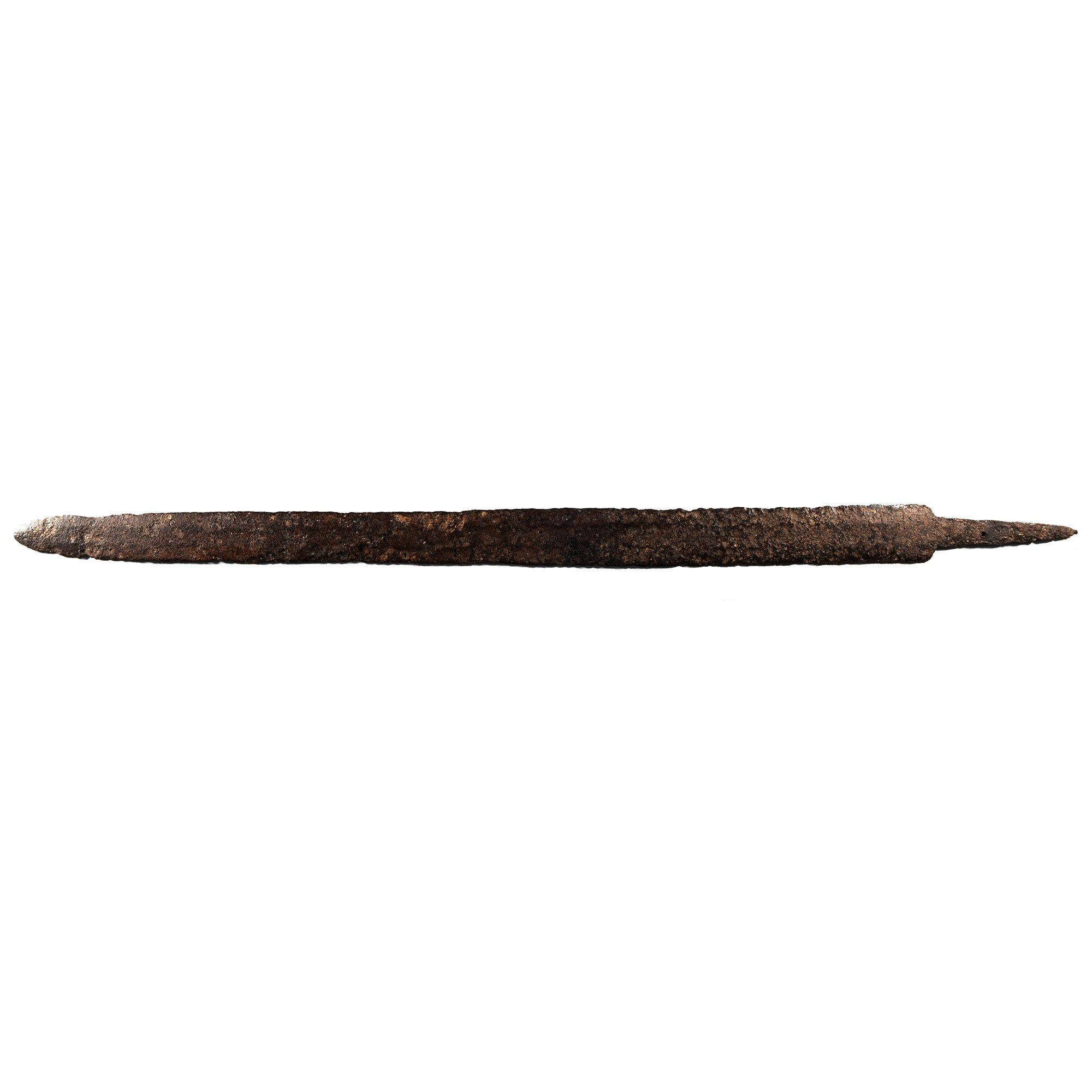
Byzantine Iron Spathion Sword
9TH-11TH CENTURY A.D.
31 7/8 in. (698 grams, 81cm).
An Eastern Roman spathion with long, double-edged parallel blade, a tapering, medium length tang, retaining possible remains of the fabrica mark in the middle, near the rivet hole for the handle. [No Reserve]
ProvenanceAcquired 1970-1980.
From the collection of a Surrey gentleman.
See Popov, S., 'Four Swords from the National Archaeological Museum in Sofia' in Lazarenko, I., Acta Musei Varnaensis X, 1–2, Varna, 2018, pp.137-142.
CONDITIONTimeLine Auctions follows a vetting process to ensure the authenticity and legality of all items, reinforcing our commitment to integrity and responsible trading. Each antiquity, antique, and coin lot undergoes thorough examination by a vetting committee of at least ten external specialists, professional trade association members, scientists, and archaeologists: Our Vetting Process
AUCTIONS:
TimeLine is a leading auction house specialising in antiquities, ancient art, collectables, natural history, coins, medals, and books. Our auctions offer museums, collectors, historians, and enthusiasts the opportunity to acquire unique and historically significant pieces.
-
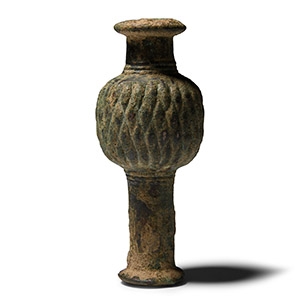
Luristan Bronze 'Pineapple' Macehead
13th-7th century B.C.Estimate: £400 - 600 (+bp*)
Opening Bid: £200
Of Sara Gorz type with cylindrical shaft extended over the top, rounded knobs around the swollen head, flanked by horizontal grooved bands. 272 grams, 12.5 cm high
Fine condition.
Acquired mid 1980s to early 1990s. Private family collection formed in London, UK. -
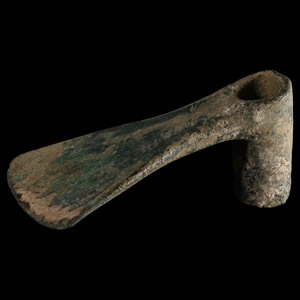
Luristan Bronze Socketted Adze
13th-7th century B.C.Sold for (Inc. bp): £117
With short tubular socket and flared cutting edge perpendicular to the socket. 590 grams, 14.5 cm
From an old English collection formed in the 1980s. Property of an Essex gentleman; acquired on the UK art market. -
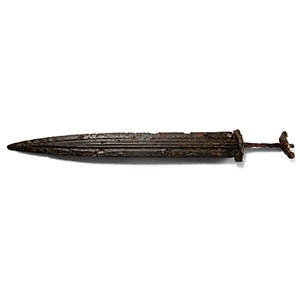
Iron Age Celtiberian Dagger
Circa 2nd-1st century B.C.Sold for (Inc. bp): £975
Hand-forged with leaf-shaped blade and three pronounced midribs, rounded shoulder, stepped lower guard square-section tang, upper guard with stepped upper face. 186 grams, 37.5 cm
Ex Mayfair gallery, London, UK, before 1999. Property of a London, UK, gentleman. Accompanied by a copy of a previous catalogue information page.
