
Loading, please wait...
LOT 1155
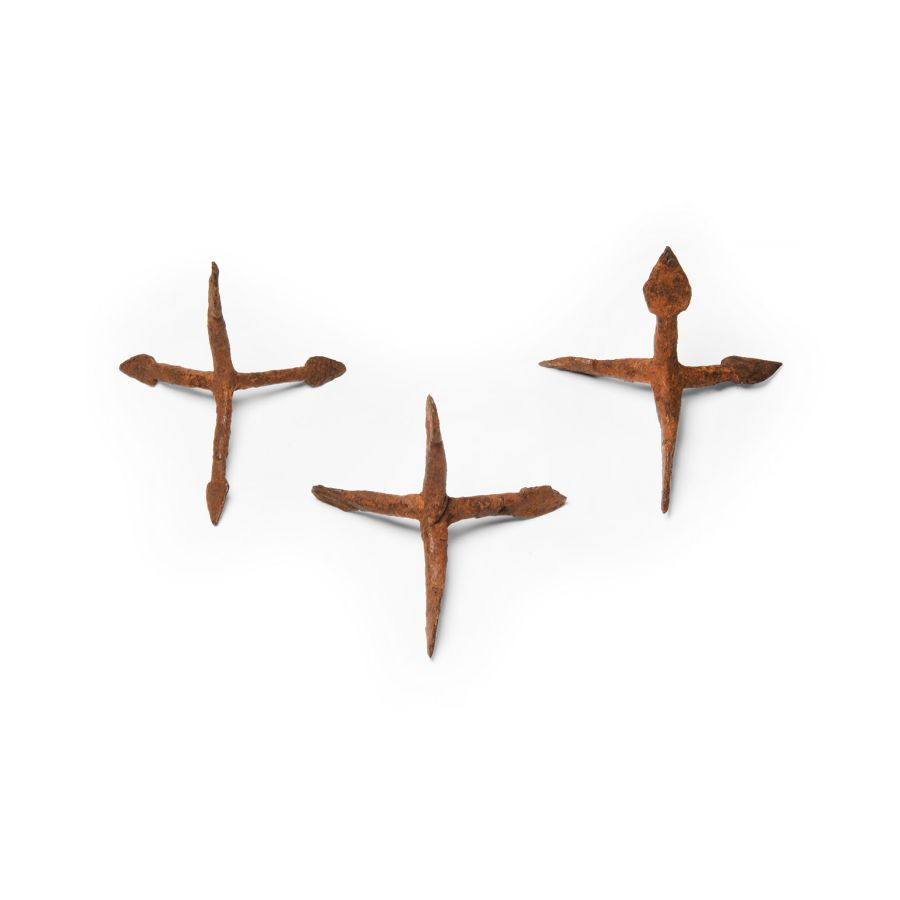
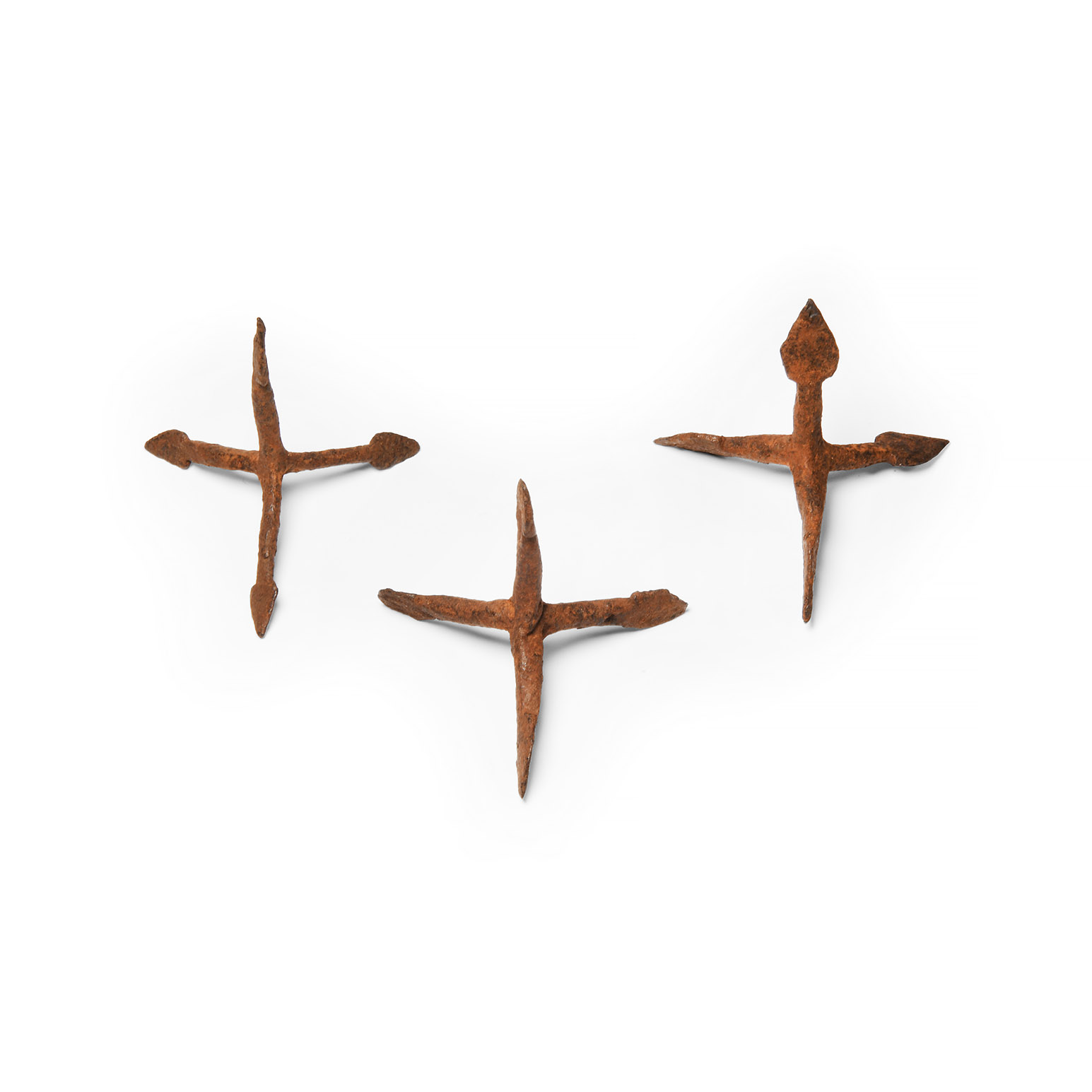
Byzantine Iron Anti-Cavalry Caltrop Trivoloi Group
11TH-14TH CENTURY A.D.
2 in. (34 grams total, 50 mm each).
Comprising three caltrops, hand-forged with square-section in the form of four welded arrowheads. [3]
ProvenanceAcquired on the German art market around 2000.
From the collection of Surrey, UK, gentleman.
Cf. Tsurtsumia, M., 'Tribolos, a Byzantine Landmine' in Byzantion, 2012, pp.413-422, fig.1, for identical specimen.
FootnotesCaltrops were a kind of 'landmine' of the ancient world an mentioned in the Classical period. Nevertheless, they turned into real military weapons only in Dark Ages. Their systematic and wide use by the Eastern Romans, who called it tribolos, is noticeable. In 1082, Emperor Alexios Komnenos used caltrops against the Norman cavalry in the Balkans. Anna Komnena tells us in detail of her father’s intentions: ‘He marched against Bohemond with a new idea for victory. He had iron caltrops made and since he expected the battle to take place on the next day, the evening before scattered them over the plain between the two armies at the point where he guessed that the Kelts (the Normans) would make a heavy cavalry attack. The plan was to frustrate the first and irresistible charge when the caltrops pierced the horses’ hooves.’ Unfortunately for the Romans the Normans avoided battle on the ‘minefield’, outflanked the enemy and gained victory.
CONDITIONTimeLine Auctions follows a vetting process to ensure the authenticity and legality of all items, reinforcing our commitment to integrity and responsible trading. Each antiquity, antique, and coin lot undergoes thorough examination by a vetting committee of at least ten external specialists, professional trade association members, scientists, and archaeologists: Our Vetting Process
AUCTIONS:
TimeLine is a leading auction house specialising in antiquities, ancient art, collectables, natural history, coins, medals, and books. Our auctions offer museums, collectors, historians, and enthusiasts the opportunity to acquire unique and historically significant pieces.
-
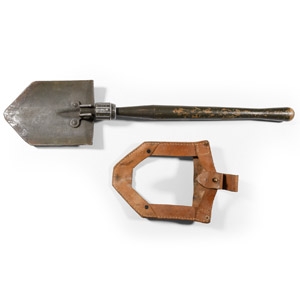
WWII Entrenching Spade
1939-1945 A.D.Sold for (Inc. bp): £33
Of folding type, composed of a wooden shaft, steel head; with leather sheath with loop. 1.23 kg, 58 cm
The Kusmirek Collection, UK. -
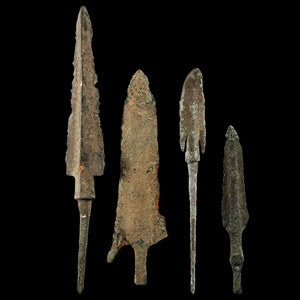
Luristan Bronze Arrowhead Group
2nd-1st millennium B.C.Sold for (Inc. bp): £13
Four tanged arrowheads of barbed and leaf-shaped types, including examples with pronounced midribs. 90 grams total, 8.7-14.5 cm
Ex G. White collection, 1990s. -
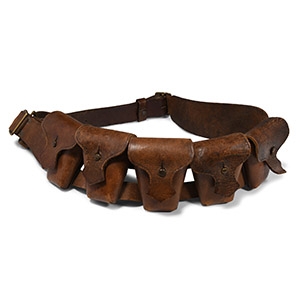
British Leather Ammunition Pouch Belt
1940s A.D.Sold for (Inc. bp): £26
A leather belt with brass buckles to which are rivetted five leather cartridge holders each with internal retaining strap and cover; the reverse of the belt stamped '2575665'. 591 grams, 90 cm long
The Kusmirek Collection, UK.
