
Loading, please wait...

LOT 1001
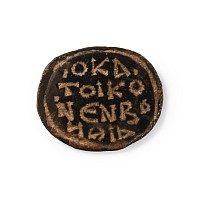
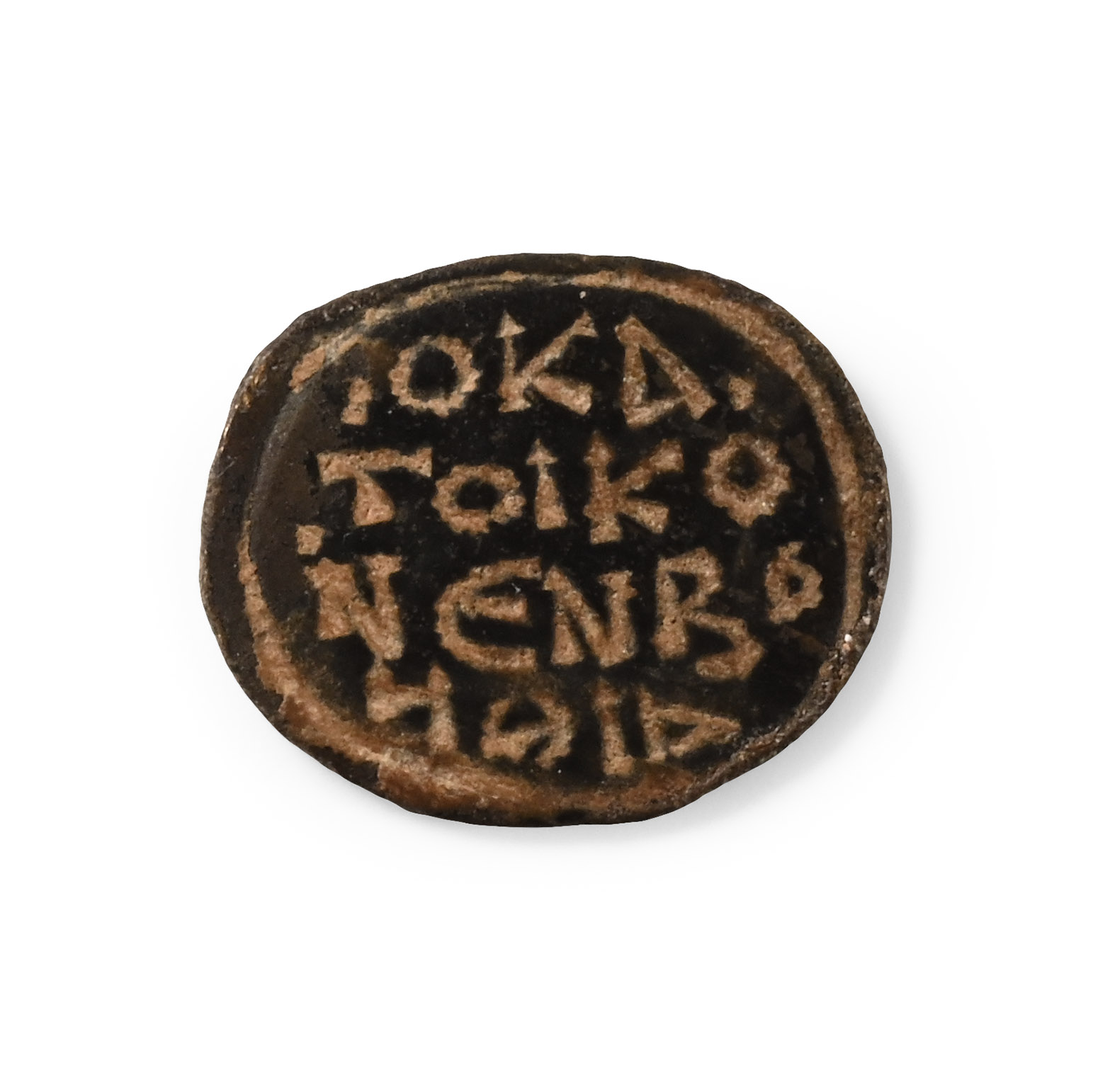
Byzantine Intaglio Gemstone
CIRCA 6TH-12TH CENTURY A.D.
5/8 in. (1.3 grams, 17 mm).
With incised legend '+OKA / TOIKO / NENBO / HΘIA' (for 'O KATOIKΩN EN BOHΩEIA' "Whoever dwells in the shelter (of the most high)' from Psalm 90.
ProvenanceFrom an important collection formed before 1988, London and Geneva.
CONDITIONTimeLine Auctions follows a vetting process to ensure the authenticity and legality of all items, reinforcing our commitment to integrity and responsible trading. Each antiquity, antique, and coin lot undergoes thorough examination by a vetting committee of at least ten external specialists, professional trade association members, scientists, and archaeologists: Our Vetting Process
AUCTIONS:
TimeLine is a leading auction house specialising in antiquities, ancient art, collectables, natural history, coins, medals, and books. Our auctions offer museums, collectors, historians, and enthusiasts the opportunity to acquire unique and historically significant pieces.
-
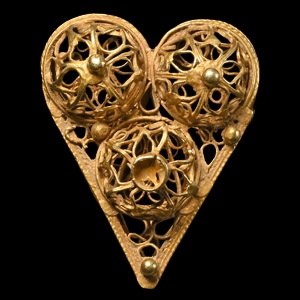
Byzantine Gold Filigree Heart-Shaped Pendant
5th-7th century A.D.Sold for (Inc. bp): £598
Hollow with three filigree circles to the underside each with scrolled filigree fill, pierced sidewall, three openwork filigree domes to the obverse with granules and a tubular cell to the apex of the lower one. 2.92 grams, 24 mm
Ex property of a late Japanese collector, 1970s-2000s. -
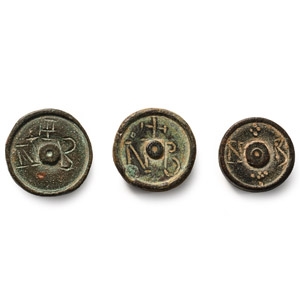
Byzantine Set of Engraved Bronze Weights
Circa 6th-12th century A.D.Sold for (Inc. bp): £130
Comprising three discoid weights with recessed upper face, two with incised cross above and 'N B' flanking the central boss, one with 'N B' and pellets above and below. 26.19 grams total, 17-20 mm
Acquired 1980-2015. Ex Abelita family collection. -
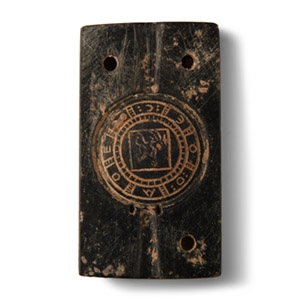
Byzantine Stone Jewellery Mould
10th-11th century A.D.Sold for (Inc. bp): £221
Fitted with two channels running to a central circlet with the image of a saint cavalryman in the centre, surrounded by Greek letters A, O, O, E, C, OS, E, O; small holes to three of the corners for insertion of pegs. 136 grams, 79 mm
UK private collection before 2000. Acquired on the UK art market. Property of a London gentleman.
Plates from mid-period jewellery moulds (10th-12th centuries) with the imprint of the jewellery to be made carved into one or both of the surfaces (earrings, buckles, clasps, beads of necklaces, etc.) were usually made of graphite schist, or other rocks. The plates were bound together in twos or threes by lead pins and the liquid metal was injected via conical openings. Similar tools were found in the 10th-12th levels of Thessaloniki.
