
Loading, please wait...
LOT 1082
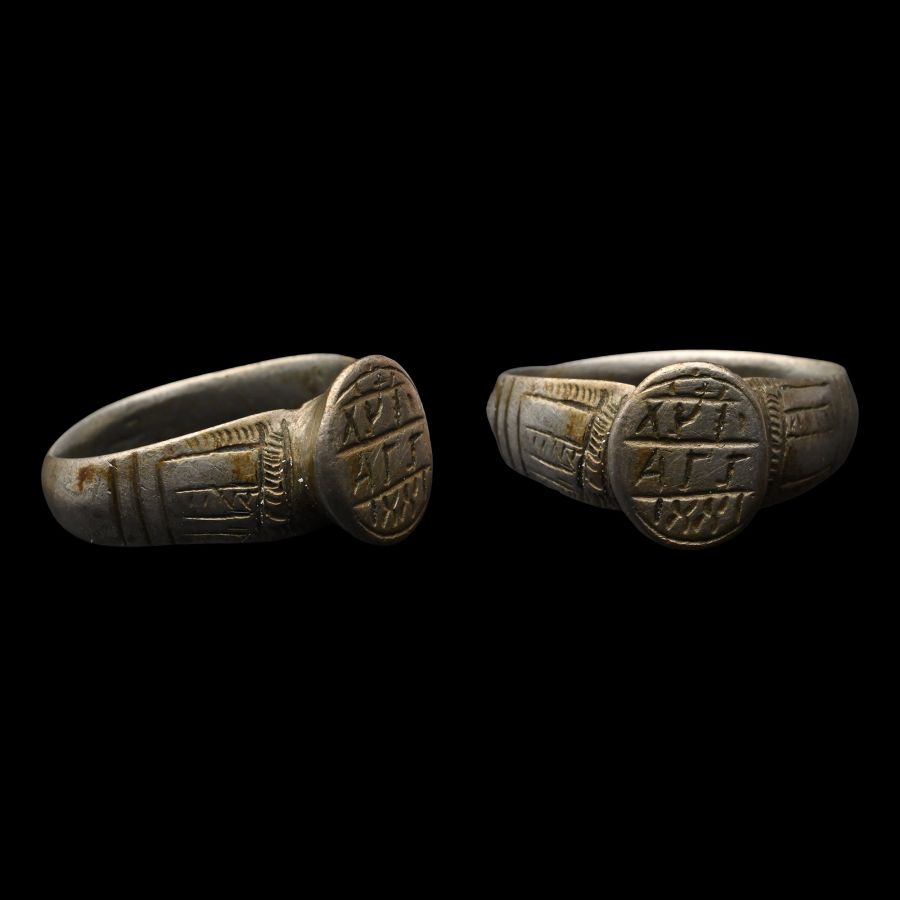
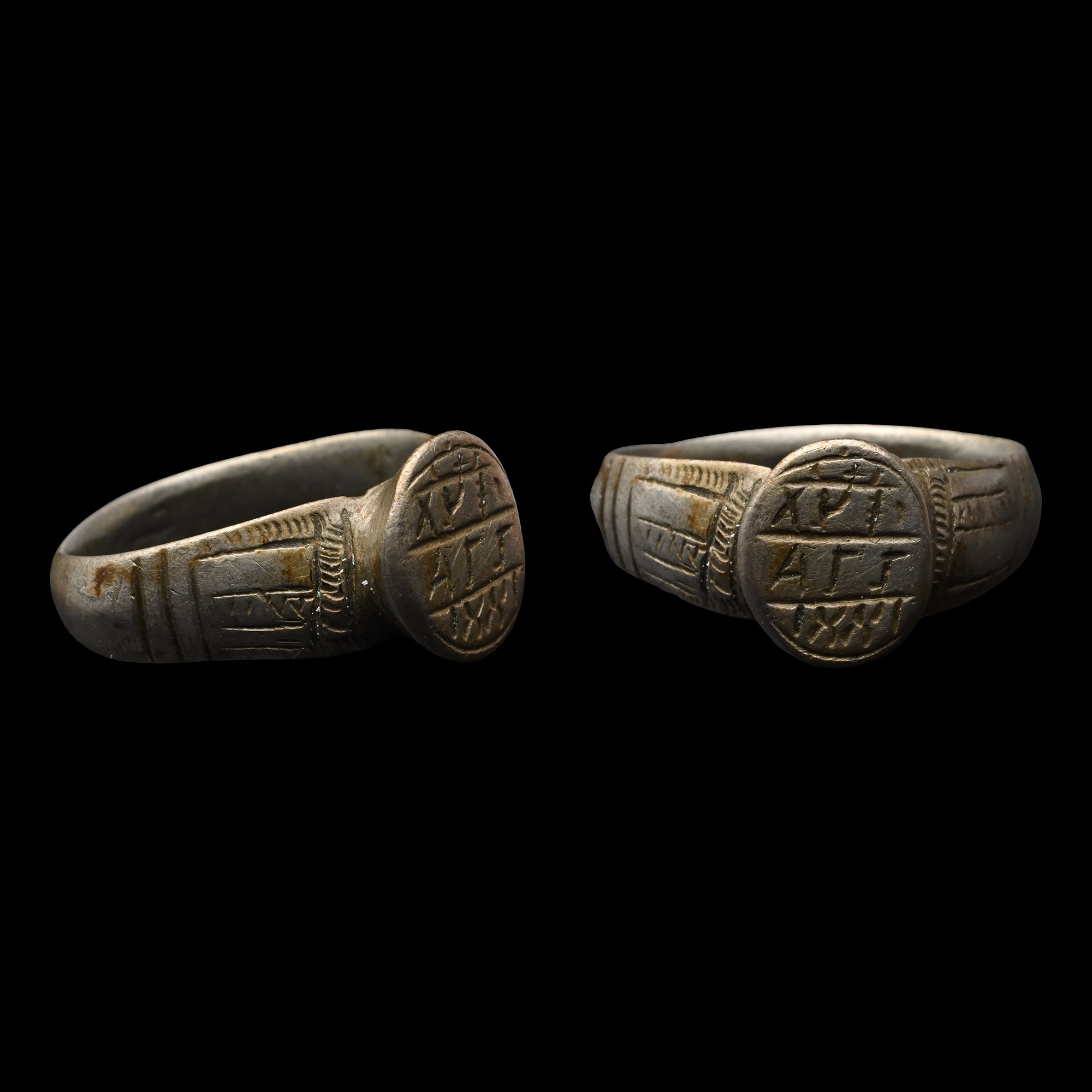
Byzantine Inscribed Silver Ring
CIRCA 6TH-8TH CENTURY A.D.
1 in. (7.53 grams, 27.13 mm overall, 21.06 mm internal diameter (approximate size British V, USA 10 1/2, Europe 23.77, Japan 22)).
A D-section hoop with slightly flared shoulders and trumpet-shaped discoid bezel; hatched bands to the shoulders, four lines of enigmatic Greek text [ΧΥΙ ΑΓΓ ΙΧXΙ] to the bezel. [No Reserve]
ProvenanceProperty of a private collector; acquired before 1975.
LiteratureCf. Chadour, A.B., Rings. The Alice and Louis Koch Collection, volume I, Leeds, 1994, item 480.
CONDITIONTimeLine Auctions follows a vetting process to ensure the authenticity and legality of all items, reinforcing our commitment to integrity and responsible trading. Each antiquity, antique, and coin lot undergoes thorough examination by a vetting committee of at least ten external specialists, professional trade association members, scientists, and archaeologists: Our Vetting Process
AUCTIONS:
TimeLine is a leading auction house specialising in antiquities, ancient art, collectables, natural history, coins, medals, and books. Our auctions offer museums, collectors, historians, and enthusiasts the opportunity to acquire unique and historically significant pieces.
-
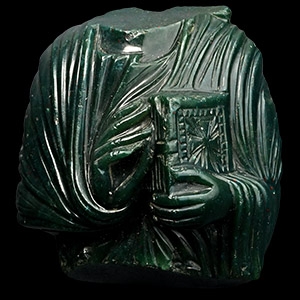
Byzantine Nephrite Icon Fragment with Christ Blessing
11th century A.D.Estimate: £12,000 - 17,000 (+bp*)
Opening Bid: £6,000
Fragment of a figure carved in the half-round, with pleated garment, holding a book with a cross in the left hand and touching its edge with the right hand; to the reverse, a low-relief cross with knops to the angles, abbreviated legends 'IC / XC / NI / KA' for 'Jesus Christ is Victorious' in seriffed capitals in the spandrels of the cross, each with a superscript macron. 38 grams, 40 mm
New Forest, UK, collection, 1950s. Alexander Cotton collection, UK, 1970-1980s. London gallery 1990s, latterly a London gentleman's collection, 2000s. Accompanied by an academic report by Dr Raffaele D’Amato. This lot has been checked against the Interpol Database of stolen works of art and is accompanied by a search certificate number no.12912-244440.
This magnificent, if fragmentary, icon belongs to the most florid period of Byzantium’s renaissance, when, under the aegis of the Macedonian Dynasty, the political, military, cultural and economic power of the Roman Empire reached the last apex of its glory. The figure detailed in bloodstone here represents Christ, as is clear not only from the cross engraved on the back, but also from the garments he is wearing. It is likely that it is Christ as Pantocrator who is represented, maybe originally forming part of a more complex icon representing the Deesis. While this subject in Eastern Roman art is usually reserved for monumental decoration, it is sometimes found on smaller-scale objects as well, such as cameos and steatite icons. -
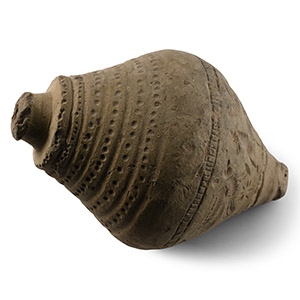
Byzantine 'Greek Fire' Ceramic Fire Bomb or Hand Grenade
9th-11th century A.D.Sold for (Inc. bp): £117
Biconical in profile with pointillé and linear decoration; intended to be filled with explosive liquid and a wick, and used as a hand grenade. 544 grams, 13 cm
From an important specialist collection, London, UK, 1990s onwards. Accompanied by an academic paper by military specialist Dr Raffaele D'Amato, dated 15 July 2019 and titled 'Eastern Roman Empire - Greek Fire Bomb or Hand Grenade (μεσαίον kακάβιον) 9th-11th century AD'.
Apart from the use of siphons or manual flame-throwers called cheirosiphona, special corps of Roman soldiers employed terracotta grenades, in the form of small jars, abundantly evidenced in archaeological excavations. They were called μεσαία kακαβιά or κυτροκακάβια where the former had a bulbous shape and the latter a more cylindrical form. -
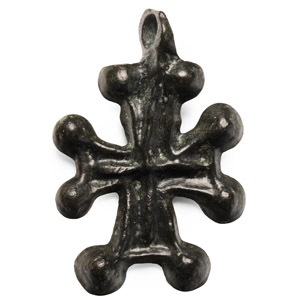
Byzantine Bronze Cross Pendant
10th-14th century A.D.Sold for (Inc. bp): £78
Expanding arms with a pellet to each corner, raised cross motif at the centre. 4.54 grams, 32 mm
Ex German art market, 2000s. Acquired from an EU collector living in London. From the collection of a Surrey, UK, gentleman.
