
Loading, please wait...
LOT 0205
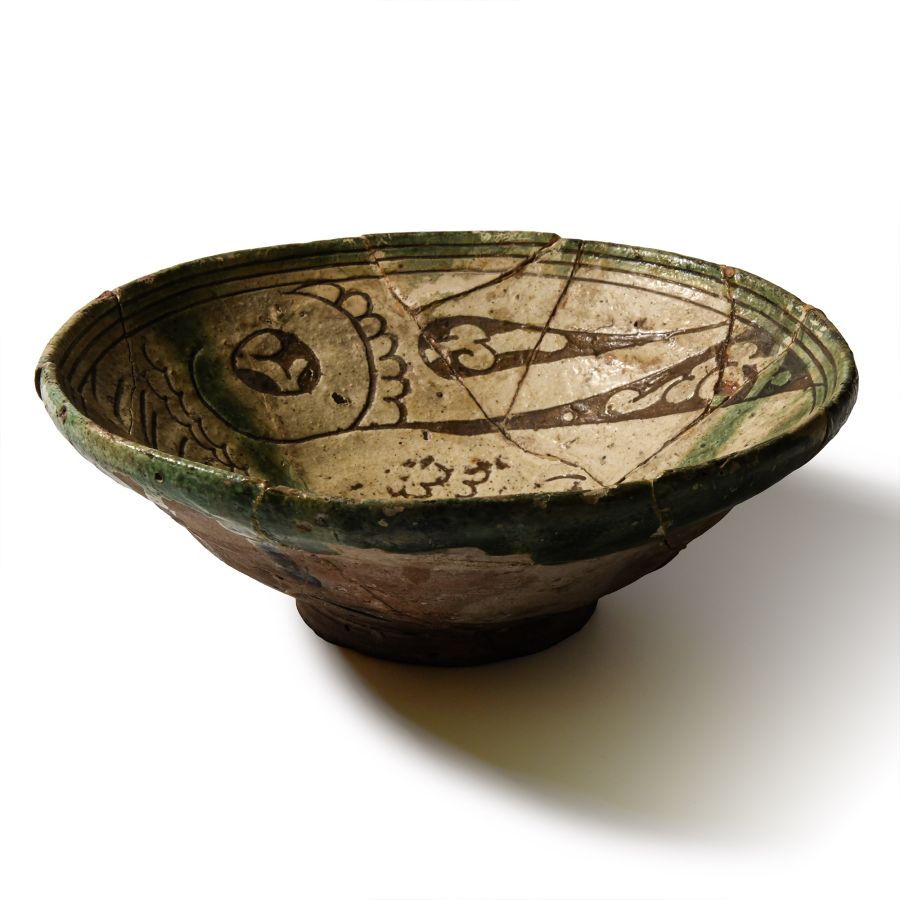
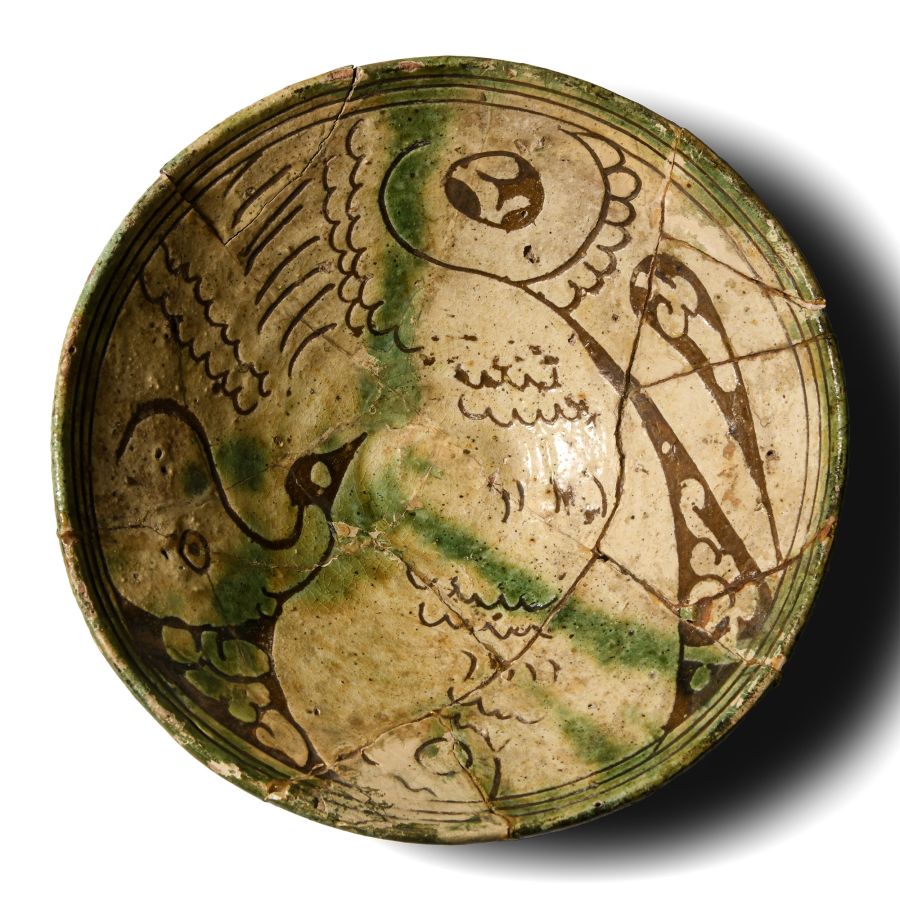
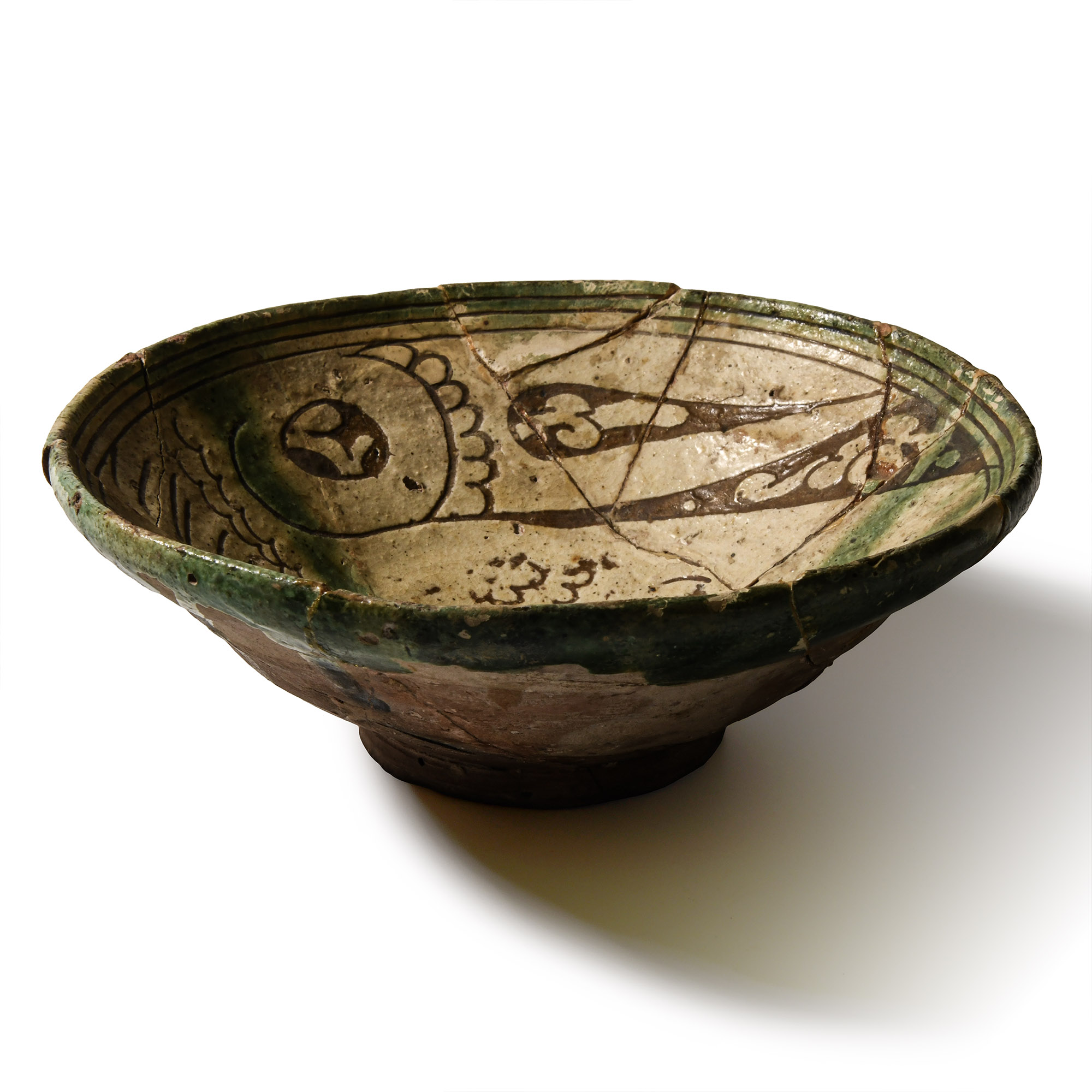
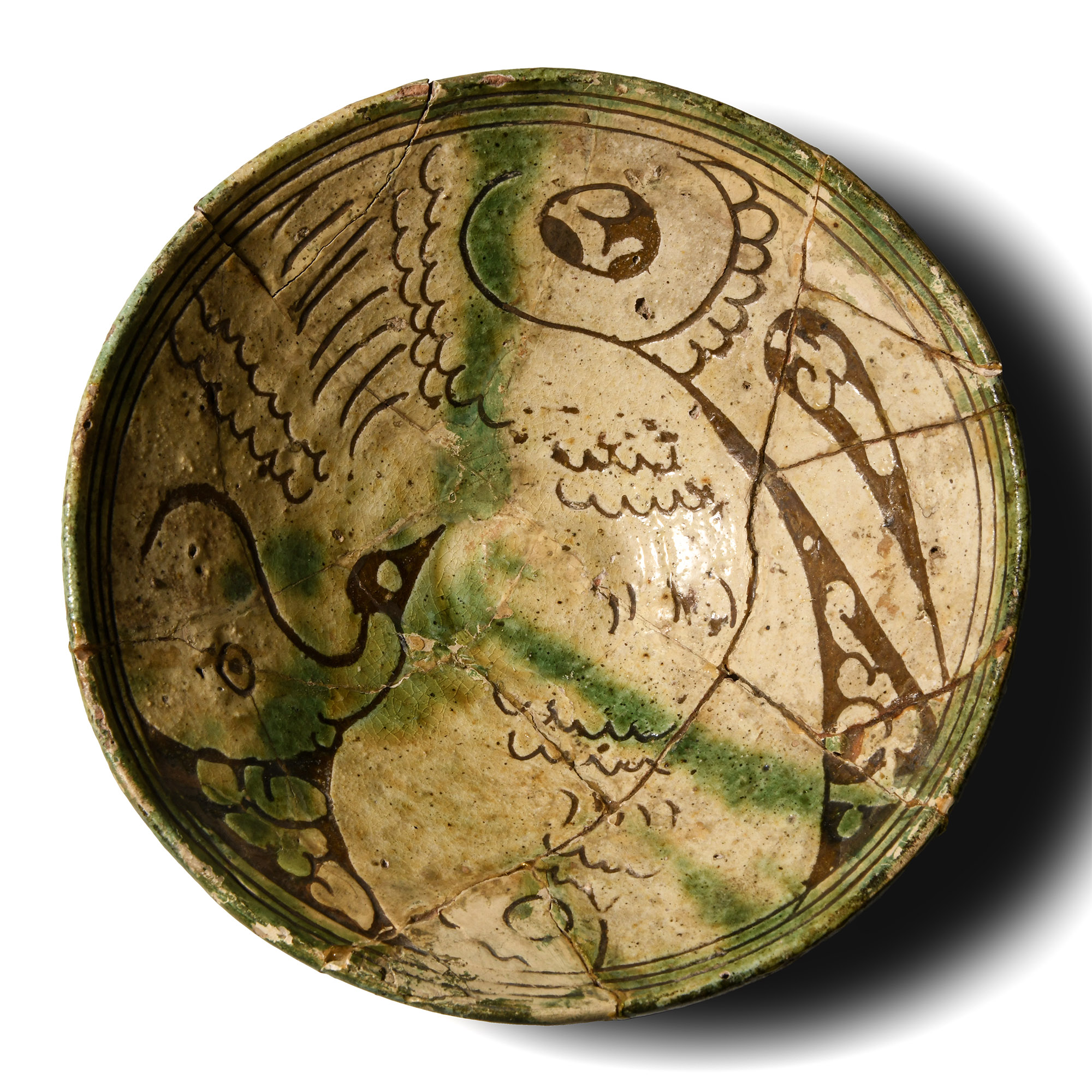
Byzantine Green Glazed Sgraffito-Ware Bowl
12TH-14TH CENTURY A.D.
7 in. (402 grams, 18 cm).
With reserved image of a bird with wings folded against the body, with old label to verso '5164 / 3.200 fm'.
ProvenancePrivate collection of Mr S.A., Switzerland, 1990s, thence by descent.
LiteratureCf. for a bowl of similar type in the Metropolitan Museum of Art, New York, under accession no.33.141.
CONDITIONTimeLine Auctions follows a vetting process to ensure the authenticity and legality of all items, reinforcing our commitment to integrity and responsible trading. Each antiquity, antique, and coin lot undergoes thorough examination by a vetting committee of at least ten external specialists, professional trade association members, scientists, and archaeologists: Our Vetting Process
AUCTIONS:
TimeLine is a leading auction house specialising in antiquities, ancient art, collectables, natural history, coins, medals, and books. Our auctions offer museums, collectors, historians, and enthusiasts the opportunity to acquire unique and historically significant pieces.
-
Byzantine Green Glazed Sgraffito-Ware Bowl
12th-14th century A.D.Sold for (Inc. bp): £715
With inturned rim and three-colour (yellow, brown and green) glaze, incised foliage design. 343 grams, 18 cm
with Cuvreau Expertise Encheres S.A.S, Vente No.60, 21 June 2009, no.149. European private collection. -
Byzantine 'Greek Fire' Ceramic Fire Bomb or Hand Grenade
9th-11th century A.D.Sold for (Inc. bp): £143
Piriform body decorated from concentric circles, with domed filler-hole, intended to be filled with explosive liquid and wick, used as a hand grenade. 1.01 kg, 15 cm
Acquired 1980-2015. Ex Abelita family collection. Accompanied by an academic paper by military specialist Dr Raffaele D'Amato, dated 15 July 2019 and titled 'Eastern Roman Empire - Greek Fire Bomb or Hand Grenade (μεσαίον kακάβιον) 9th-11th century AD'.
Apart from the use of siphons or manual flame-throwers called cheirosiphona, special corps of Roman soldiers employed terracotta grenades, in the form of small jars, abundantly evidenced in archaeological excavations. They were called μεσαία kακαβιά or κυτροκακάβια where the former had a bulbous shape and the latter a more cylindrical form. -
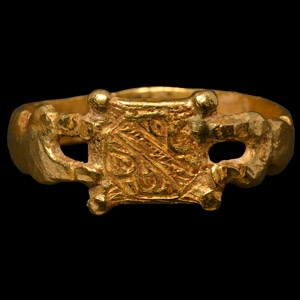
Byzantine Gold Ring with Foliate Motifs
Circa 11th-12th century A.D.Estimate: £1,500 - 2,000 (+bp*)
Opening Bid: £800
Comprising a flat-section hoop with a starburst motif to the base; openwork shoulders and a square bezel with a pellet to each corner, the bezel engraved with foliate motifs. 3.65 grams, 19.99 mm overall, 18.00 mm internal diameter (approximate size British L, USA 5 3/4, Europe 11.24, Japan 10)
Acquired from London galleries during the 1990s. From the jewellery collection of a London, UK, gentleman.
Some rings from the Balkan territories of the Eastern Empire (for example the ring from Dobrača) bear a square thickened bezel engraved with schematic representations. What sets them apart are the widened shoulders emphasised by a plastic rib and the raised and flattened head, which places them in the group of rings which dates mainly to the 11th century (from the end of the 10th to the first decades of the 12th century).
