
Loading, please wait...
LOT 0204
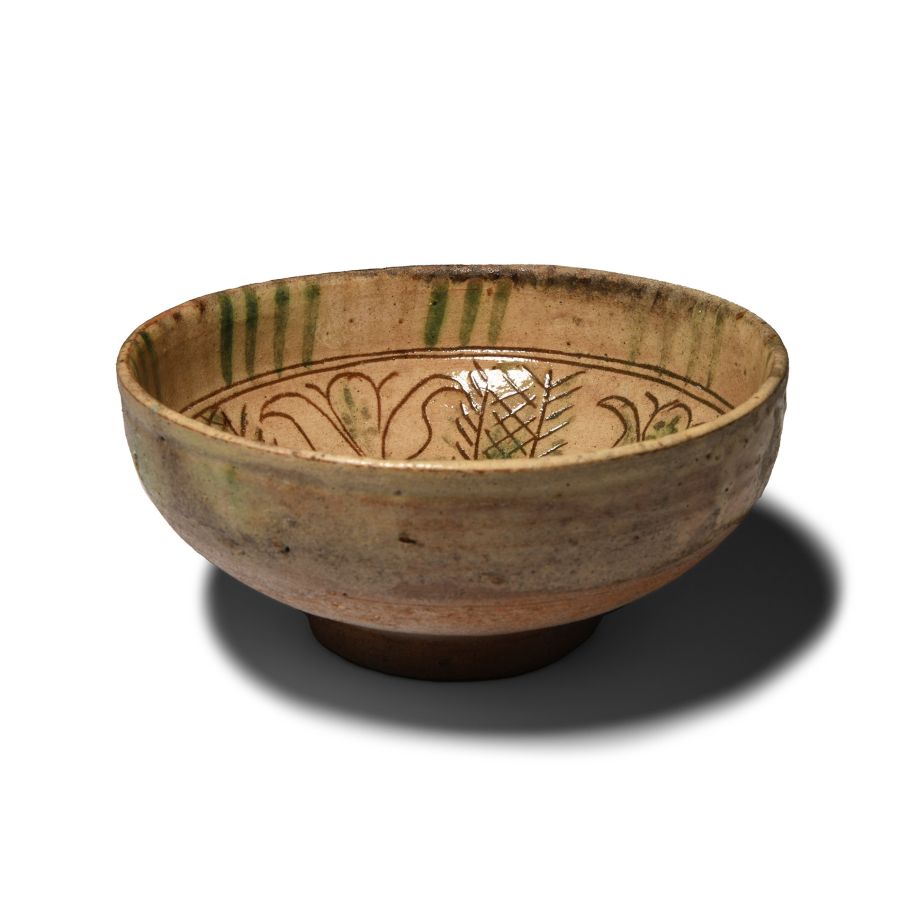
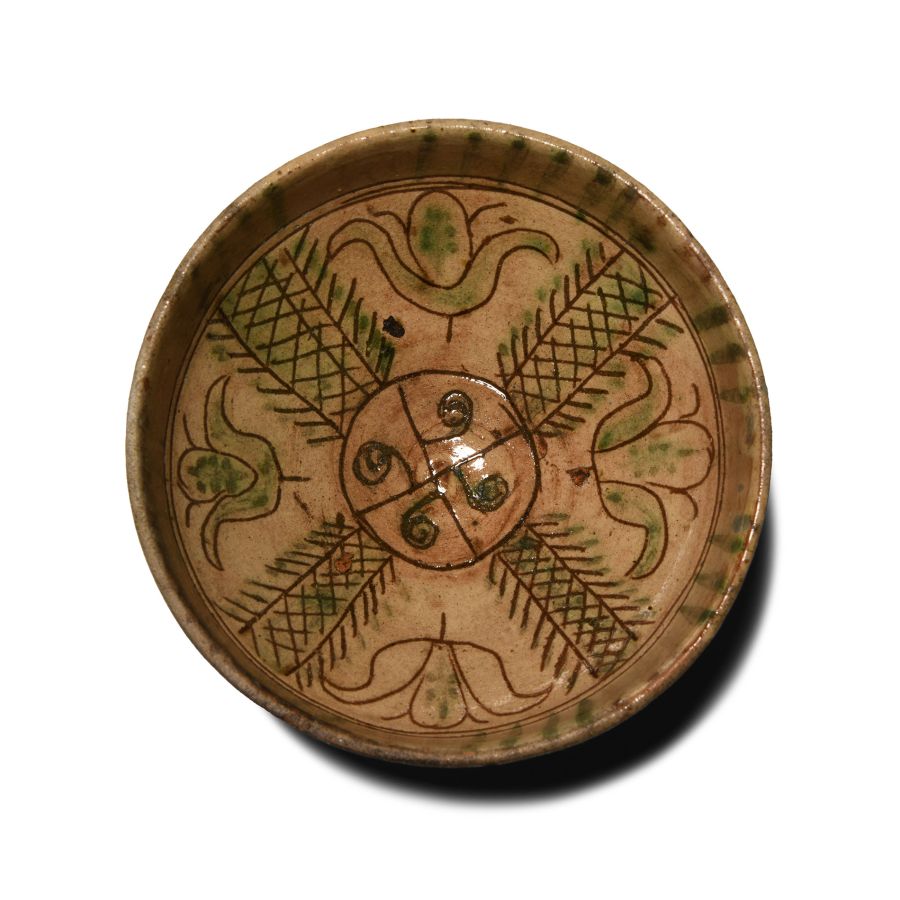
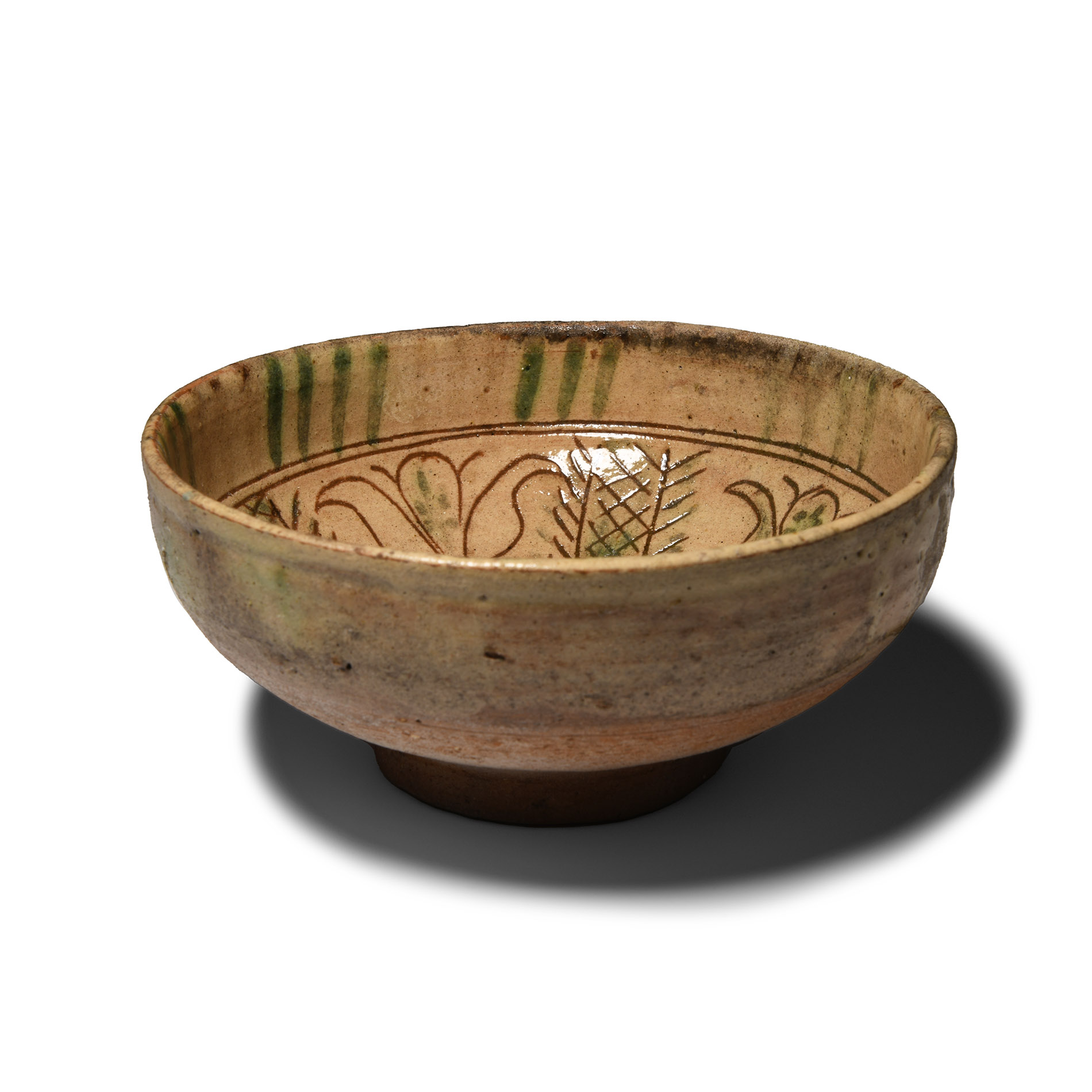
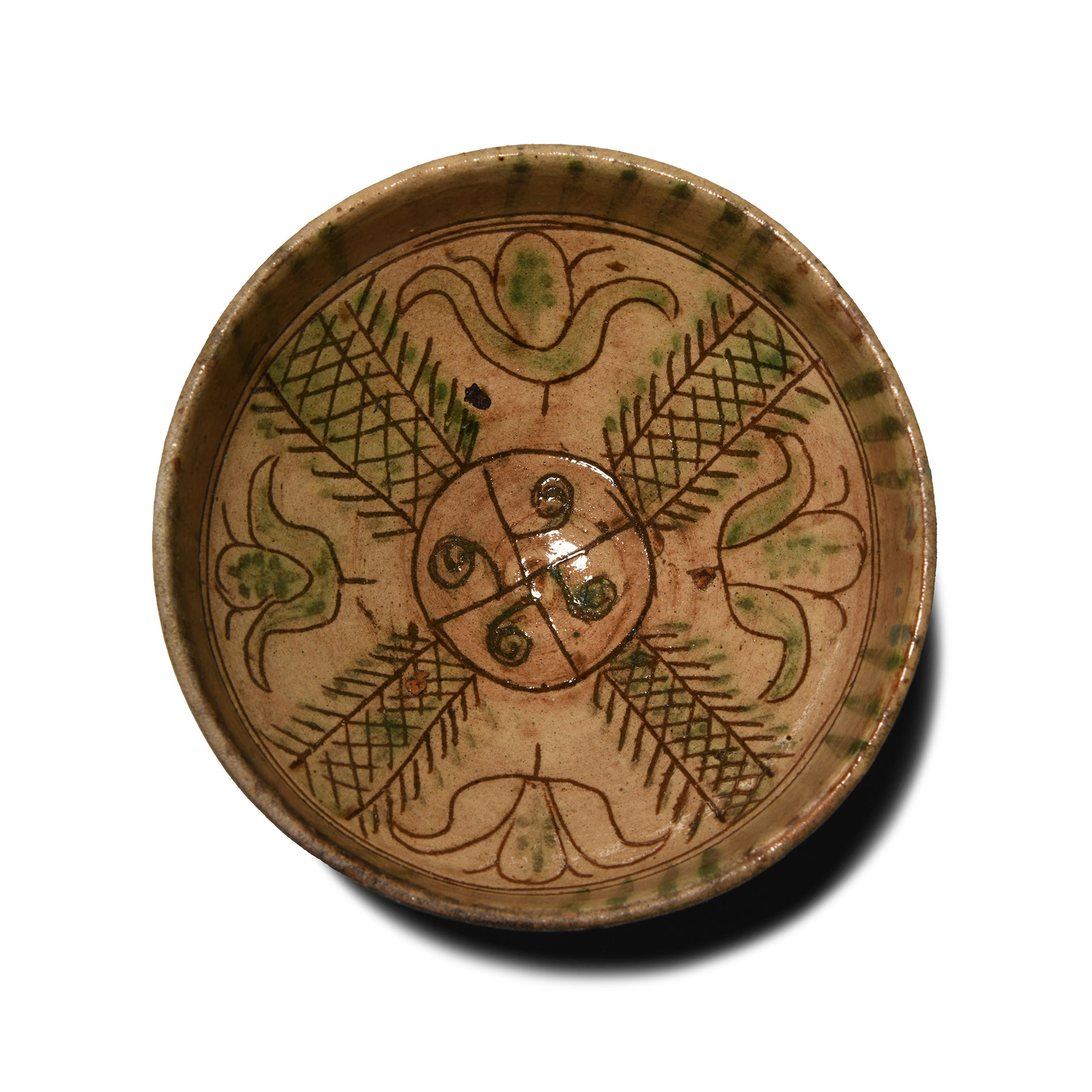
Byzantine Green-Glazed Sgraffito Bowl
CIRCA 12TH-15TH CENTURY A.D.
6 in. (322 grams, 15.2 cm).
Broad with basal disc, cream-glazed inner face with green detailing, sgraffito design of tulip flowers and hatched bands. [No Reserve]
ProvenanceFrom a collection acquired on the UK art market from various auction houses and collections mostly before 2000.
From an important Cambridgeshire estate; thence by descent.
Cf. similar item in the Metropolitan Museum of Art, New York, under accession no.10.15.1.
CONDITIONTimeLine Auctions follows a vetting process to ensure the authenticity and legality of all items, reinforcing our commitment to integrity and responsible trading. Each antiquity, antique, and coin lot undergoes thorough examination by a vetting committee of at least ten external specialists, professional trade association members, scientists, and archaeologists: Our Vetting Process
AUCTIONS:
TimeLine is a leading auction house specialising in antiquities, ancient art, collectables, natural history, coins, medals, and books. Our auctions offer museums, collectors, historians, and enthusiasts the opportunity to acquire unique and historically significant pieces.
-
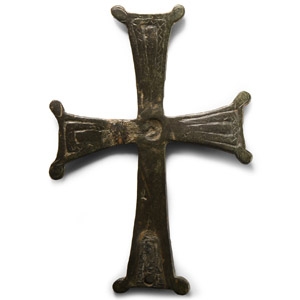
Byzantine Bronze Expanding-Arm Cross Mount
6th-7th century A.D.Sold for (Inc. bp): £195
Finial from a processional or altar cross, with incised guilloche bands to the obverse and central socket for a cabochon, lobes to the angles; pierced lower arm with attachment scars to both faces. 56.4 grams, 98 mm
Belgium collection, 1980s. From the collection of an London antiquarian.
These kind of crosses were mainly used for religious purposes. However, in 6th and 7th centuries A.D., they could be fixed at the top of the standards of the Roman Christian Army, as clearly described from the Arab sources speaking about the battle of Yarmouk. For this battle the Arab sources give a detailed description of the Roman standards, with at the top a golden cross, a golden cross tied to a silver chain, a cross with glittering jewels, a golden cross encrusted with jewels. The cross at the top of the standards, also of small dimensions like this one, is visible on miniature statuette of Roman Cavalrymen/Military Saints from Roman Egypt. -
.jpg)
Byzantine Silver-Gilt Ring with Saint
Circa 6th-8th century A.D.Estimate: £400 - 600 (+bp*)
Opening Bid: £200
With round-section hoop and integral discoid plaque, tondo with intaglio of a robed nimbate figure with one arm raised facing a similar figure, all between fronds. 3.13 grams, 24.45 mm overall, 20.03 mm internal diameter (approximate size British T, USA 9 1/2, Europe 21.26, Japan 20)
Ex M.N. London collection, 2000s. -
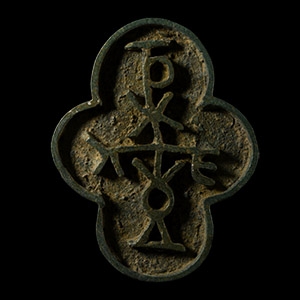
Large Byzantine Bronze Bread Stamp
Circa 7th-11th century A.D.Sold for (Inc. bp): £1,560
Featuring a crucifix-shaped monogram with reversed inscription in Greek letters written in two intersecting lines 'ΠET PX Y', translating to 'Peter, servant of God' most likely a benefaction to Jesus Christ from an individual; large applied handle to the reverse. 361 grams, 12.7 cm
Previously in a German collection. Ex Austrian collection. In a London collection from the 1990s. Accompanied by a previous catalogue information slip.
