
Loading, please wait...
LOT 1390
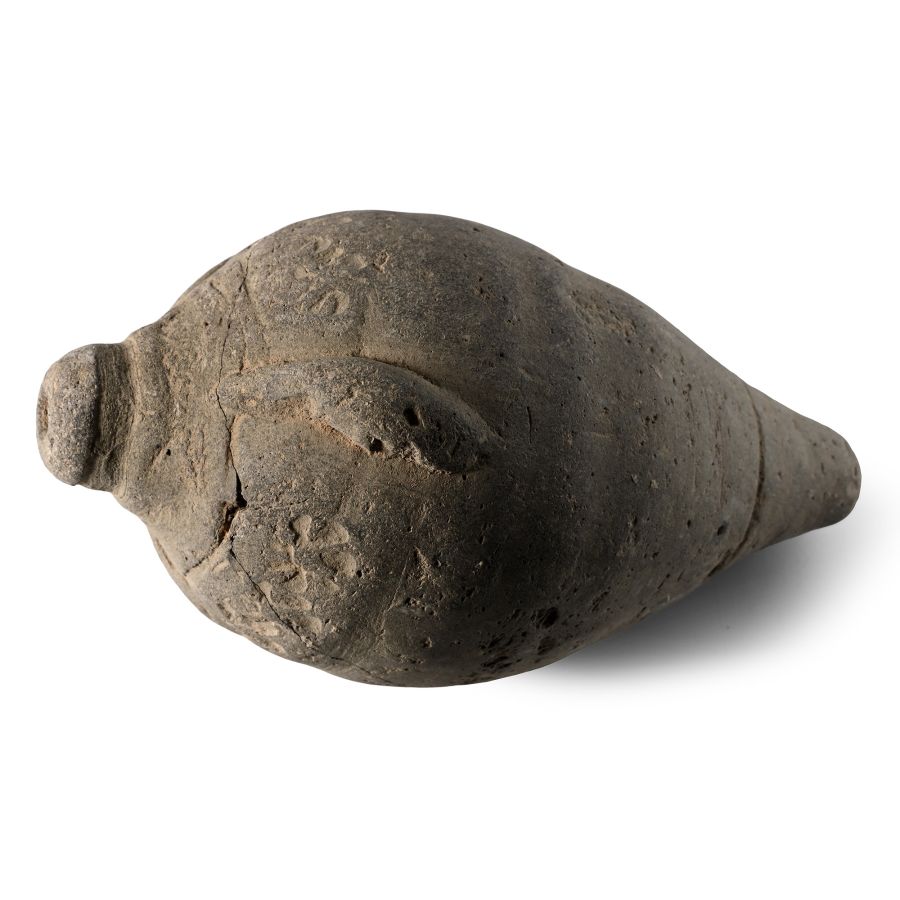
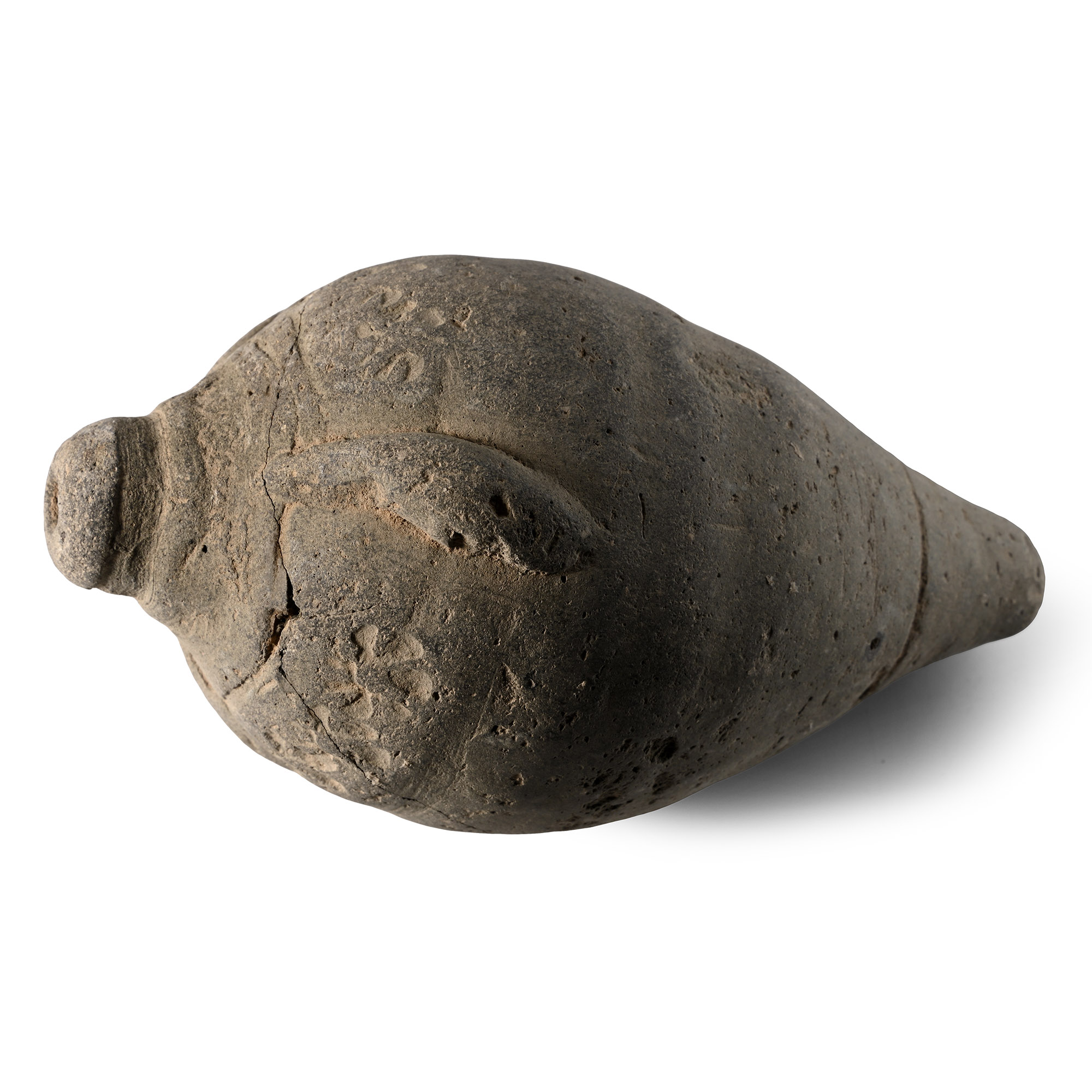
Byzantine 'Greek Fire' Ceramic Fire Bomb or Hand Grenade
9TH-11TH CENTURY A.D.
5 7/8 in. (445 grams, 15 cm).
A piriform missile with domed filler-hole, and lugs to the shoulder; intended to be filled with explosive liquid and a wick, and used as a hand grenade.
ProvenanceFrom an important specialist collection, London, UK, 1990s onwards.
Accompanied by an academic paper by military specialist Dr Raffaele D'Amato, dated 15 July 2019 and titled 'Eastern Roman Empire - Greek Fire Bomb or Hand Grenade (μεσαίον kακάβιον) 9th-11th century AD'.
Cf. Arendt, W. I., Granaten des 13-14. Jahrhunderts, die an der Wolga gefunden sind, Zeitschrift fur Historische Waffen-und Kostumkunde, 11 (1926-8), p.42; cf. Arendt, W., Die Spharisch-konischen Gefäße aus Gebranntem Ton, ibid; cf. Ayalon, D., Gunpowder and Firearms in the Mamluk Kingdom, London, 1956, p.16.
FootnotesApart from the use of siphons or manual flame-throwers called cheirosiphona, special corps of Roman soldiers employed terracotta grenades, in the form of small jars, abundantly evidenced in archaeological excavations. They were called μεσαία kακαβιά or κυτροκακάβια where the former had a bulbous shape and the latter a more cylindrical form.
CONDITIONTimeLine Auctions follows a vetting process to ensure the authenticity and legality of all items, reinforcing our commitment to integrity and responsible trading. Each antiquity, antique, and coin lot undergoes thorough examination by a vetting committee of at least ten external specialists, professional trade association members, scientists, and archaeologists: Our Vetting Process
AUCTIONS:
TimeLine is a leading auction house specialising in antiquities, ancient art, collectables, natural history, coins, medals, and books. Our auctions offer museums, collectors, historians, and enthusiasts the opportunity to acquire unique and historically significant pieces.
LOT 1390
Byzantine 'Greek Fire' Ceramic Fire Bomb or Hand Grenade
Sold for (Inc. bp): £117
-
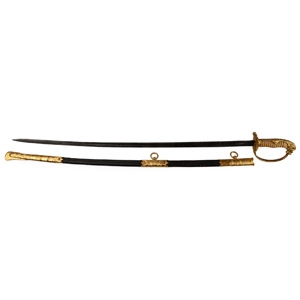
Kriegsmarine WWI German Naval Officer's Sword and Scabbard
Early 20th century A.D.Sold for (Inc. bp): £286
Comprising a slender single-edged blade with etched designs; the hilt composed of a wire-bound ribbed bone handle, a lion-head pommel with inset eyes, and an ornate guard with folding edges, one side with a socket for securing the scabbard; accompanied a leather scabbard with ornate metal fittings. 778 grams total, 91 cm
From the private collection of author and historian Dr DeWitt Bailey, one of the global authorities on the confederate army in the US civil war; thence by descent to his grandson. -
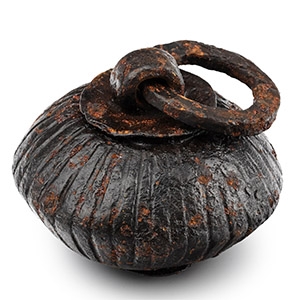
Medieval Iron Flail Head
14th-15th century A.D.Sold for (Inc. bp): £195
Biconvex in profile with loop and ring, segmented surface. 277 grams, 50 mm
From the family collection of a London gentleman; formed in the late 1940s-1950s; thence by descent. From the property of a late Lincolnshire, UK, gentleman. -
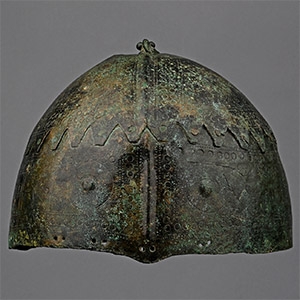
Highly Decorated Caucasian Bronze Helmet
6th century B.C.Estimate: £40,000 - 60,000 (+bp*)
Opening Bid: £20,000
Formed as a domed bowl with a rivetted overlay on the top, a bird of prey finial at the crown with a raised vertical ridge before the beak; extensive decoration on the body comprising annulets, lines, ring-and-dot motifs and pointillé borders, a circumferential border of rectangular panels on the lower part of the helmet, each rectangle divided into four triangular panels with herringbone and ring-and-dot decoration; a short nose-guard beneath the raised ridge, four raised bosses flanking the ridge, depicting apotropaic eyes; the lower rim pierced for the attachment of internal lining. 650 grams, 21 cm wide
Ex German private collection, M.B., Mainz, 1980s. Acquired from the above by the current owner. Accompanied by an academic report by Dr Raffaele D’Amato. This lot has been checked against the Interpol Database of stolen works of art and is accompanied by search certificate number no.12902-242697.
The helmet belongs to a limited series of helmets found in the Caucasus, discovered in archaeological complexes of the Colchis-Koban Culture, adding another chapter to the history of a series of important Caucasian helmets. Its decoration rivals that of a helmet of the Krasnodar Museum, until now the most complete and decorated in this category. All the helmets of this typology were decorated according to a certain scheme, but the present helmet and the one from Krasnodar are richer in terms of symbols and ornaments. The decoration and similarity with other helmets in this series suggest that the present helmet could have been made for the military elite of the North-West Caucasus in Central Caucasian workshops. Most likely, the owner was part of the elite of the local tribes of the North-West Caucasus of the Maeotic circle.
