
Loading, please wait...
_900x900.jpg "Byzantine 'Greek Fire' Ceramic Fire Bomb or Hand Grenade")
_200x200.jpg "Byzantine 'Greek Fire' Ceramic Fire Bomb or Hand Grenade")
.jpg "Byzantine 'Greek Fire' Ceramic Fire Bomb or Hand Grenade")
LOT 1428
Byzantine 'Greek Fire' Ceramic Fire Bomb or Hand Grenade
9TH-11TH CENTURY A.D.
4 3/4 in. (510 grams, 11.9 cm).
Piriform in profile with narrow point and domed mouth; the body decorated with regularly arranged annulets and concentric circles; intended to be filled with explosive liquid and wick, used as a hand grenade. [No Reserve]
ProvenanceFrom an important specialist collection, London, UK, 1990s onwards.
Accompanied by an academic paper by military specialist Dr Raffaele D'Amato, dated 15 July 2019 and titled 'Eastern Roman Empire - Greek Fire Bomb or Hand Grenade (μεσαίον kακάβιον) 9th-11th century AD'.
This lot is accompanied by an illustrated lot declaration signed by the Head of the Antiquities Department, Dr Raffaele D'Amato.
Cf. Arendt, W. I., Granaten des 13-14. Jahrhunderts, die an der Wolga gefunden sind, Zeitschrift fur Historische Waffen-und Kostumkunde, 11 (1926-8), p.42; cf. Arendt, W., Die Spharisch-konischen Gefäße aus Gebranntem Ton, ibid; cf. Ayalon, D., Gunpowder and Firearms in the Mamluk Kingdom, London, 1956, p.16.
FootnotesApart from the use of siphons or manual flame-throwers called cheirosiphona, special corps of Roman soldiers employed terracotta grenades, in the form of small jars, abundantly evidenced in archaeological excavations. They were called μεσαία kακαβιά or κυτροκακάβια where the former had a bulbous shape and the latter a more cylindrical form.
CONDITIONTimeLine Auctions follows a vetting process to ensure the authenticity and legality of all items, reinforcing our commitment to integrity and responsible trading. Each antiquity, antique, and coin lot undergoes thorough examination by a vetting committee of at least ten external specialists, professional trade association members, scientists, and archaeologists: Our Vetting Process
AUCTIONS:
TimeLine is a leading auction house specialising in antiquities, ancient art, collectables, natural history, coins, medals, and books. Our auctions offer museums, collectors, historians, and enthusiasts the opportunity to acquire unique and historically significant pieces.
LOT 1428
Byzantine 'Greek Fire' Ceramic Fire Bomb or Hand Grenade
Sold for (Inc. bp): £91
-
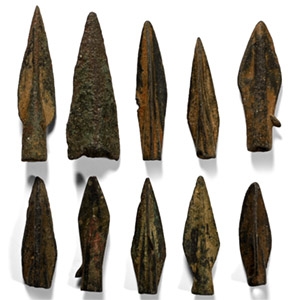
Greek Period High Quality Large Bronze Arrowhead Collection
5th-3rd century B.C.Sold for (Inc. bp): £65
Mostly long leaf-shaped types with short socket. 50 grams total, 30-45 mm
From an English collection formed before 2000. This lot is accompanied by an illustrated lot declaration signed by the Head of the Antiquities Department, Dr Raffaele D'Amato. -
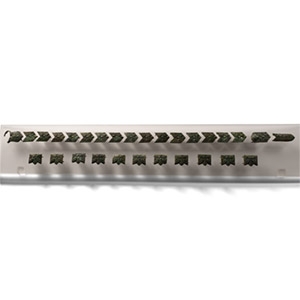
Viking Age Volga Bulgar Bronze Belt Mount Collection
10th-11th century A.D.Estimate: £1,800 - 2,400 (+bp*)
Opening Bid: £900
Comprising: twenty-seven fittings of polygonal shape with reserved stylised vegetal forms; one belt buckle of similar shape and decoration on the preserved part of the barb; a roundel; a narrow polygonal belt-tip; attachment rivets to reverse; mounted on a custom-made display stand. 525 grams total, mounts: 21-34 mm
Acquired on the London art market, 1990s. Private collection, London. This lot has been checked against the Interpol Database of stolen works of art and is accompanied by search certificate number no.12621-234052. This lot has been cleared against the Art Loss Register database, and is accompanied by an illustrated lot declaration signed by the Head of the Antiquities Department, Dr Raffaele D'Amato.
Pentagonal strap mounts decorated with schematic plant ornaments, cast in bronze, characterised the population of Volga Bulgars, often in commercial relations with the Viking world. A belt-set with pentagonal and rectangular mounts decorated with plant ornaments, along with its strap end and buckle, were excavated by V.D. Sokolov in Slavic-Scandinavian graves in Russian territory. -
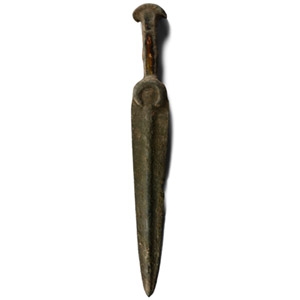
Marlik Type Bronze Dagger with Integral Hilt
14th-10th century B.C.Sold for (Inc. bp): £247
The blade with raised mid-rib and penannular guard, integral flanged hilt with organic inserts for the grip and crescentic pommel. 368 grams, 31.5 cm
Ex London art market, 1980-1990s. This lot is accompanied by an illustrated lot declaration signed by the Head of the Antiquities Department, Dr Raffaele D'Amato.
These daggers were cast in one-piece mould. Some scholars (Negahban) states that blade and grip were cast in one piece mould, and that the penannular guard was later cast onto the blade. However the main characteristic was the hilt and pommel open to accept organic inlays, here preserved.
