
Loading, please wait...
LOT 1366
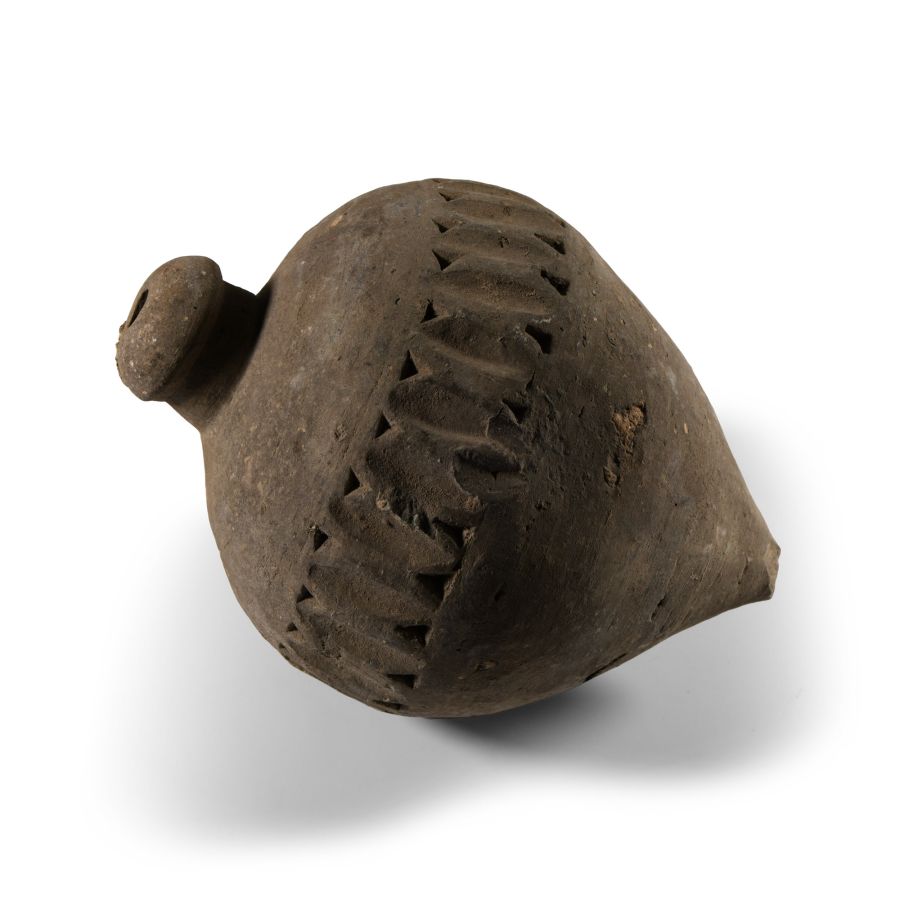
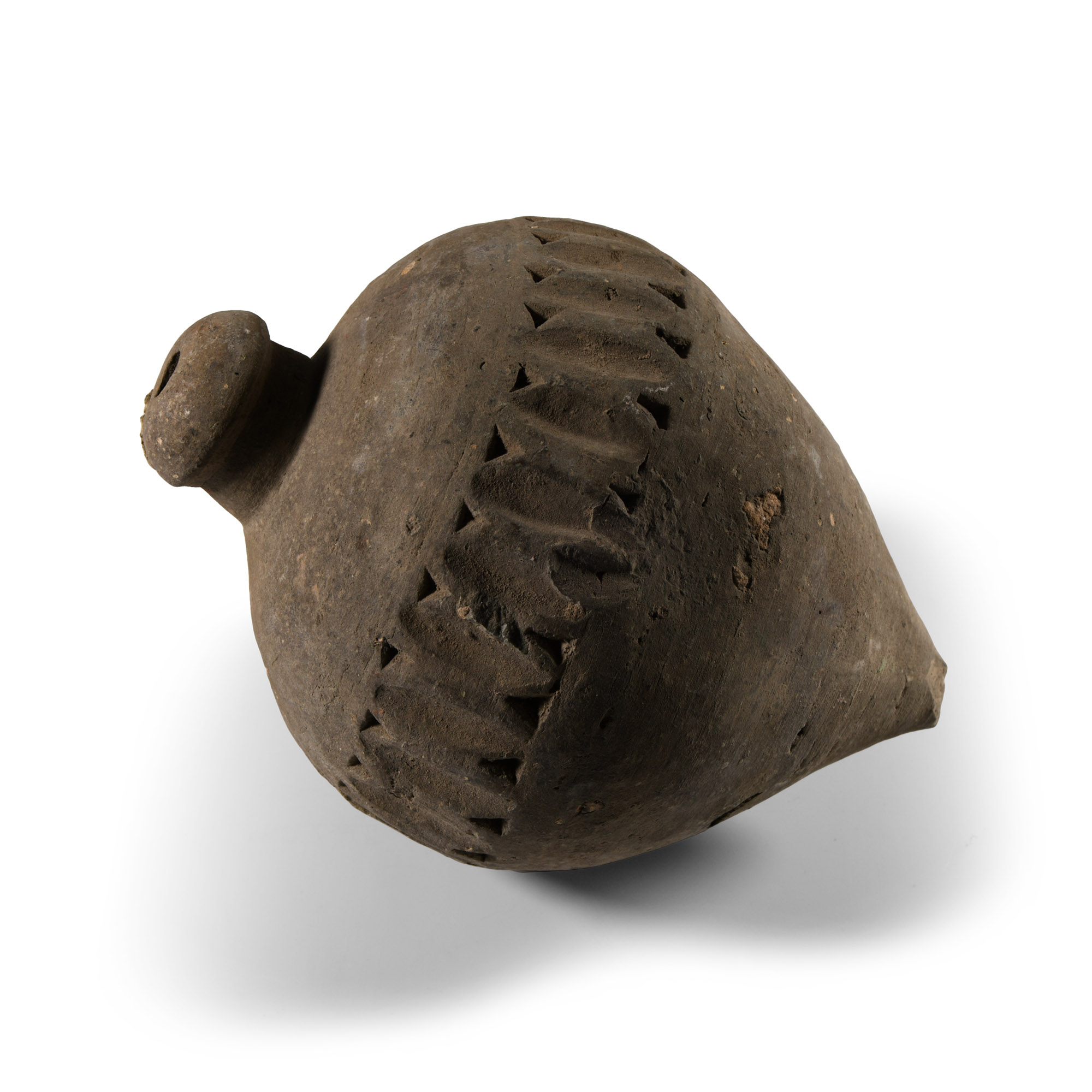
Byzantine 'Greek Fire' Ceramic Fire Bomb or Hand Grenade
9TH-11TH CENTURY A.D.
5 3/8 in. (913 grams, 13.5 cm).
A piriform ceramic missile with a band of impressed bars and triangles, with domed filler-hole, intended to be filled with explosive liquid and wick, used as a hand grenade. [No Reserve]
ProvenanceFrom a military inspired collection formed from the 1990s.
Accompanied by an academic paper by military specialist Dr Raffaele D'Amato, dated 15 July 2019 and titled 'Eastern Roman Empire - Greek Fire Bomb or Hand Grenade (μεσαίον kακάβιον) 9th-11th century AD'.
Cf. Arendt, W. I., Granaten des 13-14. Jahrhunderts, die an der Wolga gefunden sind, Zeitschrift fur Historische Waffen-und Kostumkunde, 11 (1926-8), p.42; cf. Arendt, W., Die Spharisch-konischen Gefäße aus Gebranntem Ton, ibid; cf. Ayalon, D., Gunpowder and Firearms in the Mamluk Kingdom, London, 1956, p.16.
FootnotesApart from the use of siphons or manual flame-throwers called cheirosiphona, special corps of Roman soldiers employed terracotta grenades, in the form of small jars, abundantly evidenced in archaeological excavations. They were called μεσαία kακαβιά or κυτροκακάβια where the former had a bulbous shape and the latter a more cylindrical form.
CONDITIONTimeLine Auctions follows a vetting process to ensure the authenticity and legality of all items, reinforcing our commitment to integrity and responsible trading. Each antiquity, antique, and coin lot undergoes thorough examination by a vetting committee of at least ten external specialists, professional trade association members, scientists, and archaeologists: Our Vetting Process
AUCTIONS:
TimeLine is a leading auction house specialising in antiquities, ancient art, collectables, natural history, coins, medals, and books. Our auctions offer museums, collectors, historians, and enthusiasts the opportunity to acquire unique and historically significant pieces.
LOT 1366
Byzantine 'Greek Fire' Ceramic Fire Bomb or Hand Grenade
Sold for (Inc. bp): £98
-
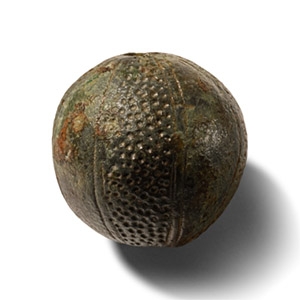
Medieval Bronze Sword Pommel
Circa 14th century A.D.Sold for (Inc. bp): £182
Hollow-formed spherical pommel with rectangular slot to the underside to accept the tang, and smaller slot above to accommodate the piebed end; segmented outer face with alternating plain and pointillé surfaces. 119 grams, 39 mm
Found Suffolk, UK. -
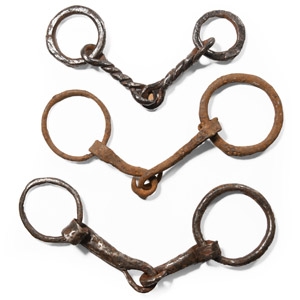
Medieval Iron Horse Bit Collection
14th-16th century A.D.Sold for (Inc. bp): £130
Snaffle bits with linked-ring joints, curb-bit ring to each end; many of these objects are published in the Detector Finds book series. 284 grams total, 17-20.5 cm
From the collection of the famous author, writer and speaker, Gordon Bailey, Essex, UK; formed since 1968. -
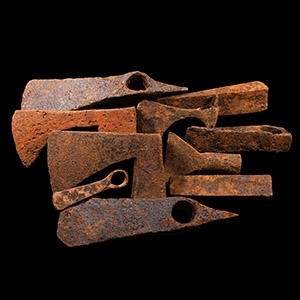
Viking Age and Later Iron Axehead Group
10th-18th century A.D.Sold for (Inc. bp): £286
Mainly comprising socketted axeheads and adzes, adze-axes, wedges and other items. 8.45 kg total, 12-30 cm
Acquired 1990s-early 2000s. East Anglian private collection.
Slavic battle-axes also came into use in Scandinavia, especially in the Eastern part of Gotland, Denmark and Sweden. There were narrow-bladed types, described as being very light. Another characteristic of some of the Eastern axes was an extra long hammer or more rarely a secondary blade protruding from the back of axehead.
