
Loading, please wait...
LOT 1388
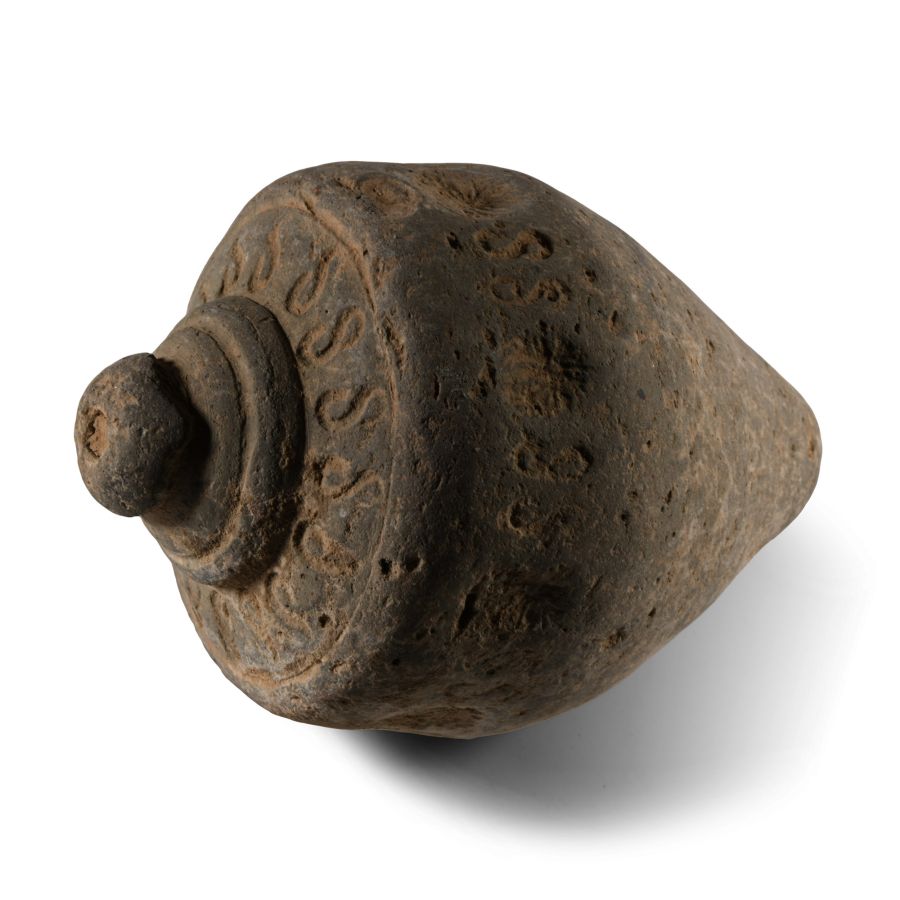
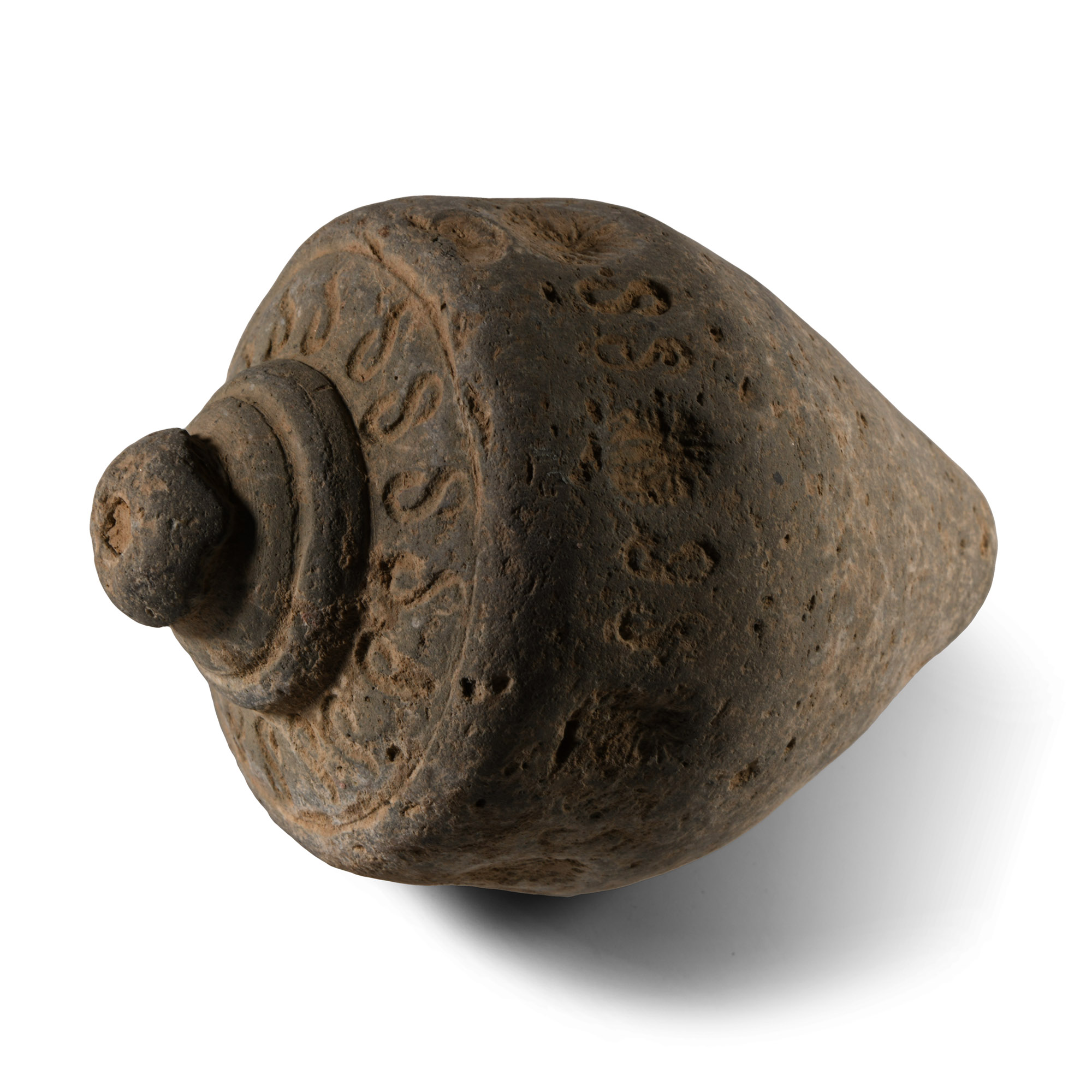
Byzantine 'Greek Fire' Ceramic Fire Bomb or Hand Grenade
9TH-11TH CENTURY A.D.
5 in. (650 grams, 12.5 cm).
Piriform-conical body with S-shaped ornaments to the shoulder, interstitial panels of impressed alternate foliage and S-shaped horizontal ornaments, domed filler-hole, intended to be filled with explosive liquid and wick, used as a hand grenade. [No Reserve]
ProvenanceFrom a military inspired collection formed from the 1990s.
Accompanied by an academic paper by military specialist Dr Raffaele D'Amato, dated 15 July 2019 and titled 'Eastern Roman Empire - Greek Fire Bomb or Hand Grenade (μεσαίον kακάβιον) 9th-11th century AD'.
Cf. Arendt, W. I., 'Granaten des 13-14. Jahrhunderts, die an der Wolga gefunden sind', in Zeitschrift fur Historische Waffen-und Kostumkunde, 11 (1926-8), p.42; Arendt, W., 'Die Spharisch-konischen Gefasse aus Gebranntem Ton', ibid; cf. Ayalon, D., Gunpowder and Firearms in the Mamluk Kingdom, London, 1956, p.16; the shape is similar with a specimen from British Museum, inventory no. 1882,0720.1 from Bulandshahr, India, in Hildburgh, W.L., 'Aeolopiles as fire blowers’ in Archaeologia, 94, 1951, pp..27-55, pl.XVI.c.
FootnotesThis piece was a type of a ceramic fire grenade, similar to the ones used by the Eastern Romans but of Turco-Mongol type. Apart from the use of manual flame-throwers, special corps of soldiers employed terracotta grenades, in the form of small jars, abundantly evidenced in archaeological excavations, even in Far East, like in Burma.
CONDITIONTimeLine Auctions follows a vetting process to ensure the authenticity and legality of all items, reinforcing our commitment to integrity and responsible trading. Each antiquity, antique, and coin lot undergoes thorough examination by a vetting committee of at least ten external specialists, professional trade association members, scientists, and archaeologists: Our Vetting Process
AUCTIONS:
TimeLine is a leading auction house specialising in antiquities, ancient art, collectables, natural history, coins, medals, and books. Our auctions offer museums, collectors, historians, and enthusiasts the opportunity to acquire unique and historically significant pieces.
LOT 1388
Byzantine 'Greek Fire' Ceramic Fire Bomb or Hand Grenade
Sold for (Inc. bp): £117
-
Luristan Bronze Arrowhead Collection
Circa 1000 B.C.Sold for (Inc. bp): £111
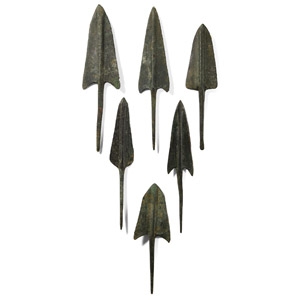
Each with an elongated, triangular shape with barbed shoulders, raised midrib and quadrangular spiked tang. 84 grams total, 8-11.2 cm
UK private collection before 2000. Acquired on the UK art market. Property of a London gentleman.
This type of arrowhead came in different varieties and sizes: some of them have barbed shoulders, some rounded shoulders, but both the types had a raised midrib. -
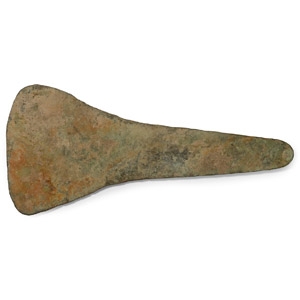
Luristan Copper Flat Axe
13th-6th century B.C.Sold for (Inc. bp): £65
Formed with a rounded butt and flared cutting edge; flat in cross-section. 113 grams, 16.9 cm
Acquired 1980-2015. Ex Abelita family collection. -
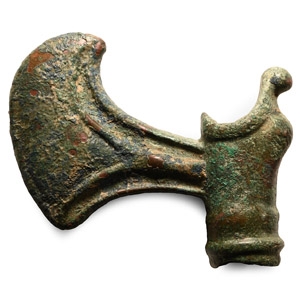
North-Western Persian Elamite Bronze Axehead
2nd millennium B.C.Sold for (Inc. bp): £286
With crescent blade and rounded knot at the butt, ornamental curved edging to the upper shaft hole, a cord edge on the lower shaft hole, incised band around the edge of the blade. 267 grams, 97 mm
UK private collection before 2000. Acquired on the UK art market. Property of a London gentleman.
The type corresponds to the Gernez type H.2.H.a, of axes with collar and short sleeve lined with mouldings, fan-shaped blade and rear knot. It was a variant only known in Elam and Luristan. In Luristan one identical specimen was found at Chigha Sabz (grave M7). In Elam the majority of these axes were found in the Middle-Bronze Age (Age of Isin-Larsa or Early Babylonian Age) tombs of Sarcophagi, at Susa.
