
Loading, please wait...
LOT 1418
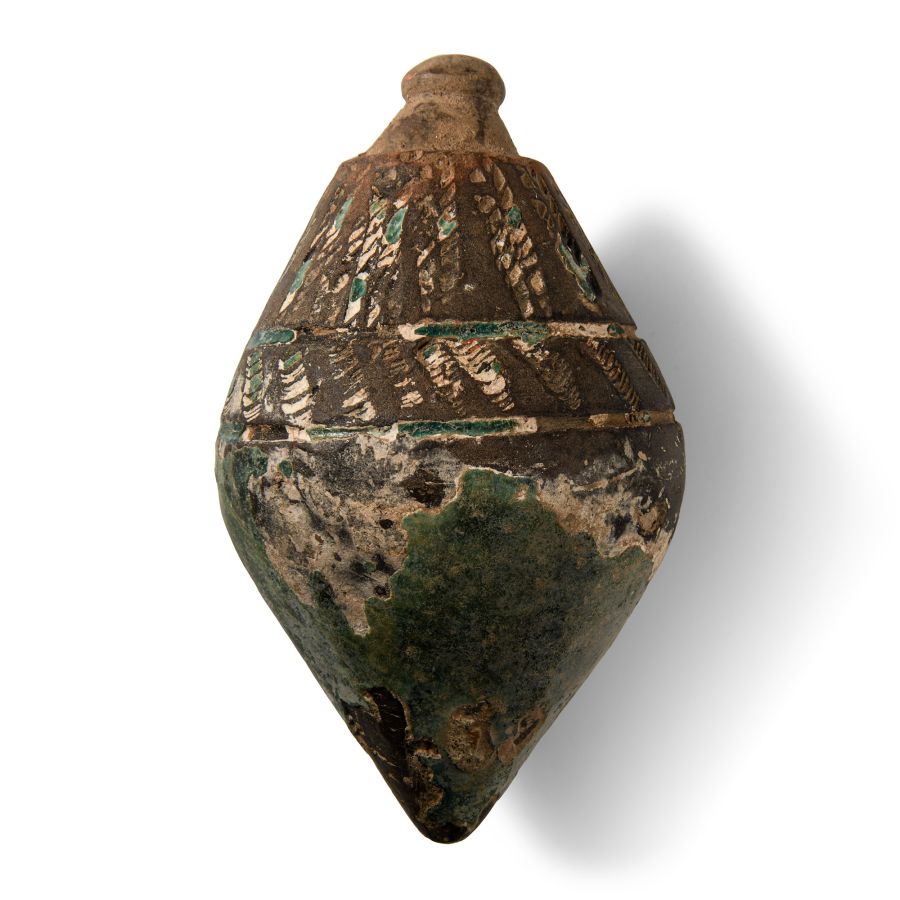
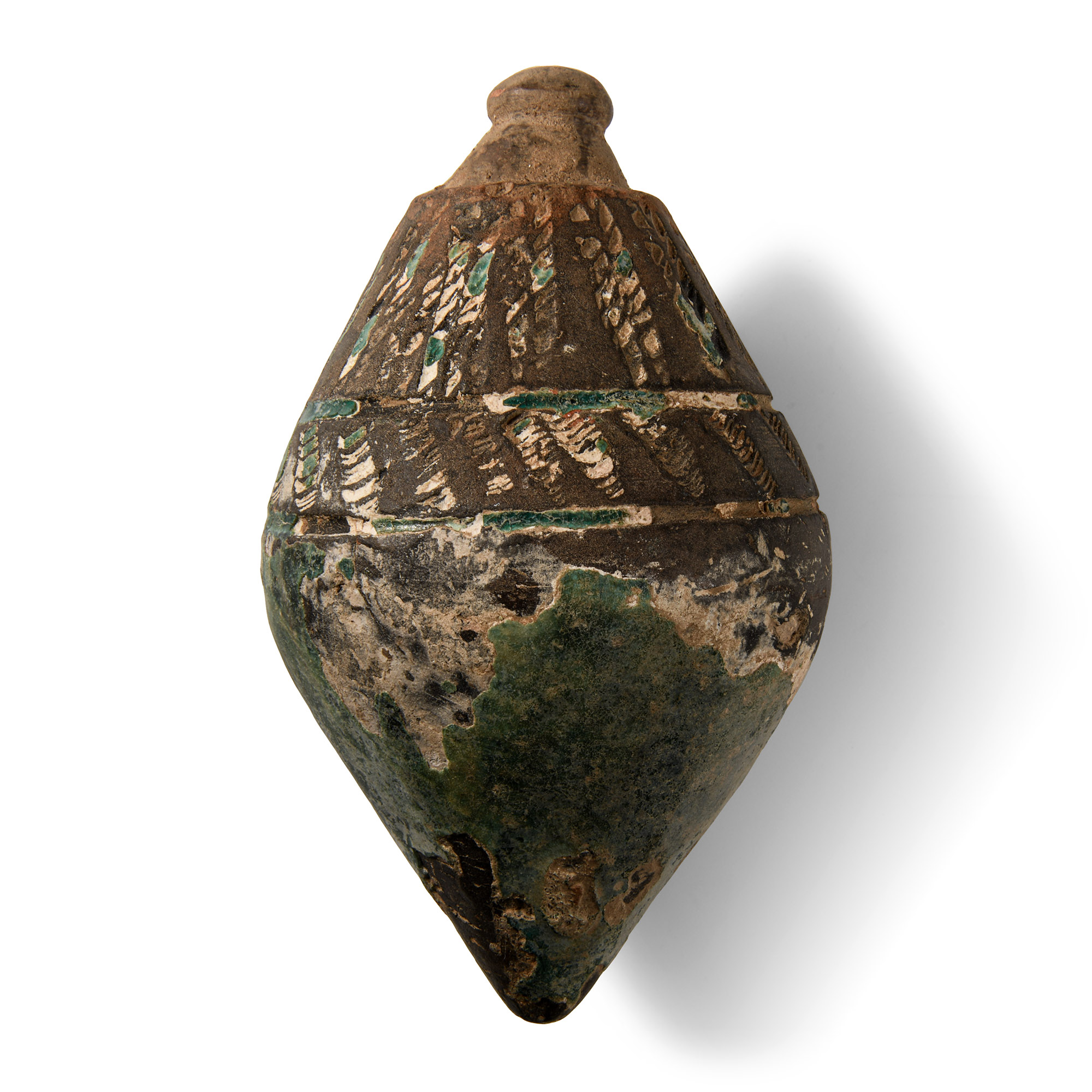
Byzantine 'Greek Fire' Ceramic Fire Bomb or Hand Grenade
9TH-11TH CENTURY A.D.
6 1/8 in. (575 grams, 15.5 cm).
Biconvex body with impressed bands to the shoulder, domed filler-hole, gesso and painted surface, intended to be filled with explosive liquid and wick, used as a hand grenade.
ProvenanceAcquired 1980-2015.
Ex Abelita family collection.
Accompanied by an academic paper by military specialist Dr Raffaele D'Amato, dated 15 July 2019 and titled 'Eastern Roman Empire - Greek Fire Bomb or Hand Grenade (μεσαίον kακάβιον) 9th-11th century AD'.
Cf. Arendt, W. I., Granaten des 13-14. Jahrhunderts, die an der Wolga gefunden sind, Zeitschrift fur Historische Waffen-und Kostumkunde, 11 (1926-8), p.42; cf. Arendt, W., Die Spharisch-konischen Gefasse aus Gebranntem Ton, ibid; cf. Ayalon, D., Gunpowder and Firearms in the Mamluk Kingdom, London, 1956, p.16; the shape finds correspondence with a fire grenade in the Kars Museum, no.14.09.2009.
FootnotesApart from the use of siphons or manual flame-throwers called cheirosiphona, special corps of Roman soldiers employed terracotta grenades, in the form of small jars, abundantly evidenced in archaeological excavations. They were called μεσαία kακαβιά or κυτροκακάβια where the former had a bulbous shape and the latter a more cylindrical form.
CONDITIONTimeLine Auctions follows a vetting process to ensure the authenticity and legality of all items, reinforcing our commitment to integrity and responsible trading. Each antiquity, antique, and coin lot undergoes thorough examination by a vetting committee of at least ten external specialists, professional trade association members, scientists, and archaeologists: Our Vetting Process
AUCTIONS:
TimeLine is a leading auction house specialising in antiquities, ancient art, collectables, natural history, coins, medals, and books. Our auctions offer museums, collectors, historians, and enthusiasts the opportunity to acquire unique and historically significant pieces.
LOT 1418
Byzantine 'Greek Fire' Ceramic Fire Bomb or Hand Grenade
Sold for (Inc. bp): £169
-
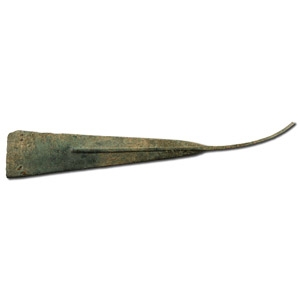
Western Asiatic Bronze Sword Sheath
2nd-1st millennium B.C.Estimate: £300 - 400 (+bp*)
Opening Bid: £150
Triangular in plan, terminating in an exaggerated curving point; the outer face pierced towards the top and with a raised midrib; the convex interior possibly containing fragmentary remains of a weapon. 355 grams, 56 cm
From a Japanese collection, 1990s.
Scabbards with a curve at their base are shown on reliefs and seals from Anatolia from the middle of the second millennium to the 9th century B.C. -
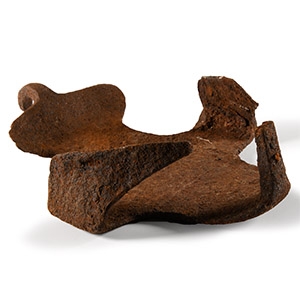
Roman Iron 'Hipposandalus' Military Horseshoe
1st-4th century A.D.Sold for (Inc. bp): £494
Iron shoe with lateral curved plates and vertical bar to the front, rear panel with hooked spur for attachment. 350 grams, 16.5 cm
From a collection acquired on the UK art market from various auction houses and collections mostly before 2000. From an important Cambridgeshire estate; thence by descent.
Hipposandals (soleae ferreae) were used on horses with injured hooves, a sort of equine orthopaedic shoe used by the mulomedicus, i.e. a Roman military veterinarian. Another important function was that to protect the hooves of the horse from injuries and damages from hard objects. The hipposandal of type 1 was formed from a sub-oval plate which tapered towards the front and rear with projections at the front, back and on either side. The heel was upturned at about 45 degrees and flared outwards. It would have terminated with a downward facing hook, now missing. The base of the sole was flat. -
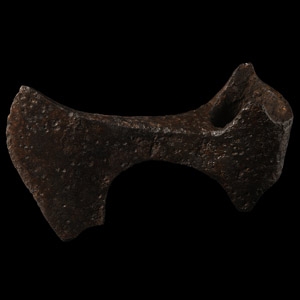
Viking Iron Bearded Axehead
Circa 9th-11th century A.D.Sold for (Inc. bp): £208
With scooped socket flanked by lateral wings, broad blade with chin and spur to the lower edge; possibly Baltic workmanship. 470 grams, 15 cm
From the private collection of a London gentleman, from his grandfather's collection formed before the early 1970s.
