
Loading, please wait...
LOT 1358
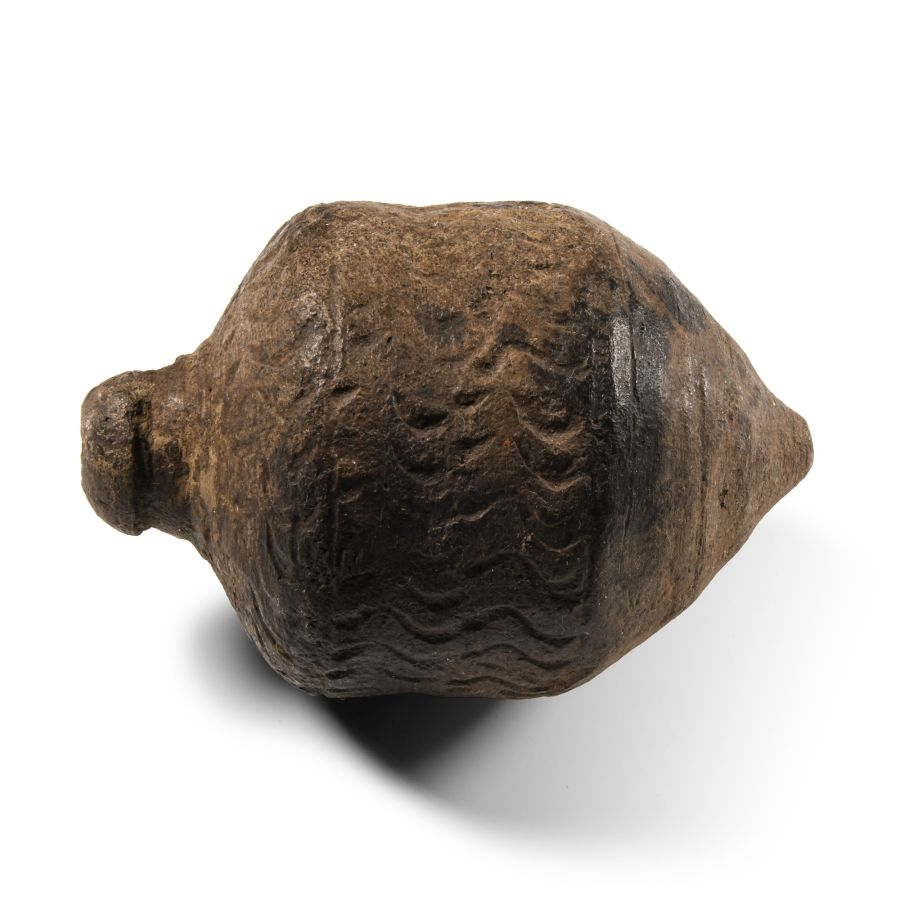
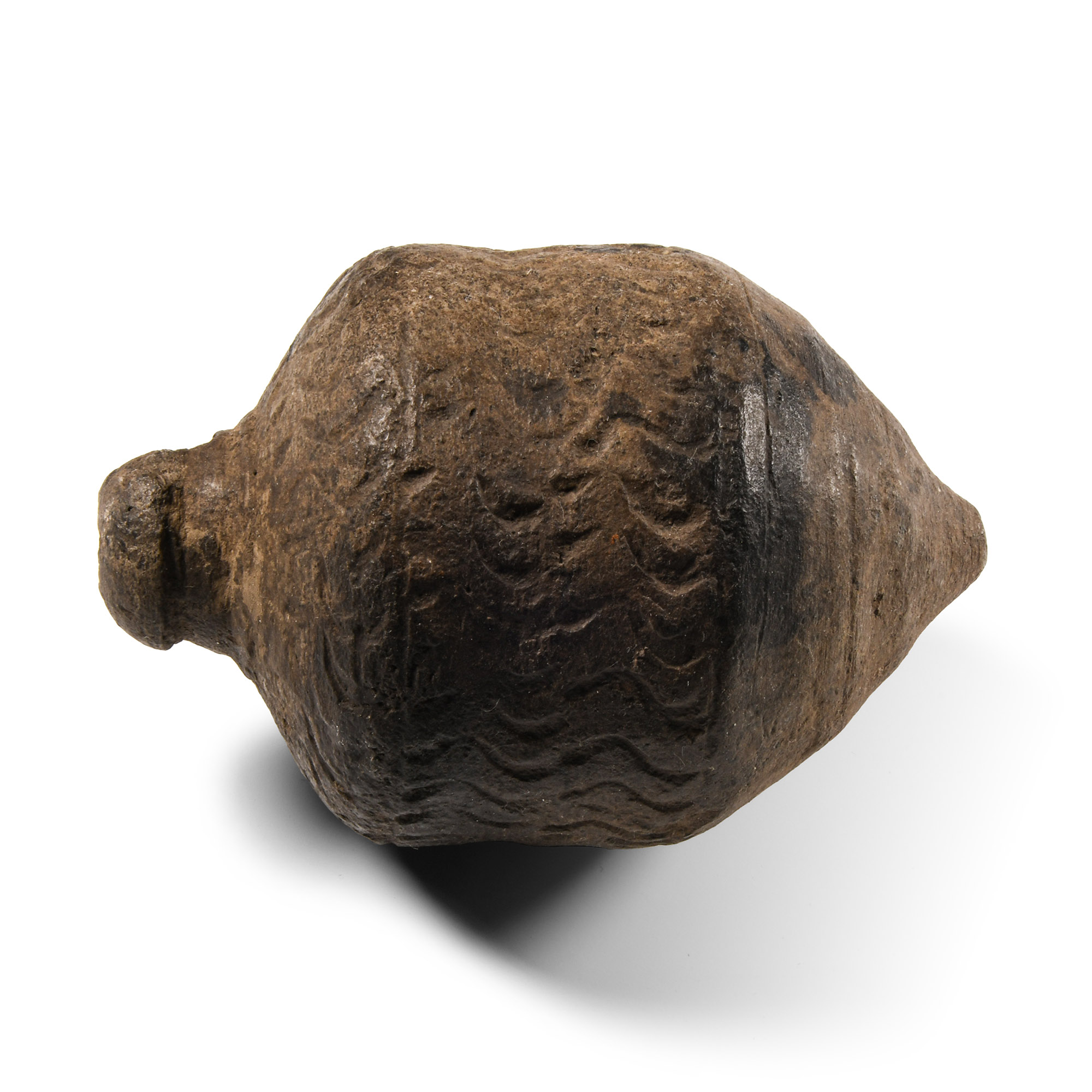
Byzantine 'Greek Fire' Ceramic Fire Bomb or Hand Grenade
9TH-11TH CENTURY A.D.
4 in. (242 grams, 10.1 cm).
With domed filler-hole, broad shoulder, alternating bands of crescent impressed detailing; intended to be filled with explosive liquid and wick, used as a hand grenade. [No Reserve]
ProvenanceFrom a collection acquired on the UK art market from various auction houses and collections mostly before 2000.
From an important Cambridgeshire estate; thence by descent.
Accompanied by an academic paper by military specialist Dr Raffaele D'Amato, dated 15 July 2019 and titled 'Eastern Roman Empire - Greek Fire Bomb or Hand Grenade (μεσαίον kακάβιον) 9th-11th century AD'.
Cf. Arendt, W. I., Granaten des 13-14. Jahrhunderts, die an der Wolga gefunden sind, Zeitschrift fur Historische Waffen-und Kostumkunde, 11 (1926-8), p.42; cf. Arendt, W., Die Spharisch-konischen Gefasse aus Gebranntem Ton, ibid; cf. Ayalon, D., Gunpowder and Firearms in the Mamluk Kingdom, London, 1956, p.16.
FootnotesApart from the use of siphons or manual flame-throwers called cheirosiphona, special corps of Roman soldiers employed terracotta grenades, in the form of small jars, abundantly evidenced in archaeological excavations. Such were the γανωτα, vessels (sometimes also of bronze) used for Greek fire. They were called μεσαία kακαβιά or κυτροκακάβια where the former had a bulbous shape and the latter a more cylindrical form.
CONDITIONTimeLine Auctions follows a vetting process to ensure the authenticity and legality of all items, reinforcing our commitment to integrity and responsible trading. Each antiquity, antique, and coin lot undergoes thorough examination by a vetting committee of at least ten external specialists, professional trade association members, scientists, and archaeologists: Our Vetting Process
AUCTIONS:
TimeLine is a leading auction house specialising in antiquities, ancient art, collectables, natural history, coins, medals, and books. Our auctions offer museums, collectors, historians, and enthusiasts the opportunity to acquire unique and historically significant pieces.
LOT 1358
Byzantine 'Greek Fire' Ceramic Fire Bomb or Hand Grenade
Sold for (Inc. bp): £286
-
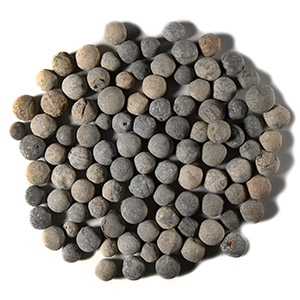
Lead Musket Ball Collection
17th-18th century A.D.Sold for (Inc. bp): £39
Group of ninty-nine lead musket and pistol balls. 2.08 kg total, 12-18 mm
UK gallery, early 2000s. -
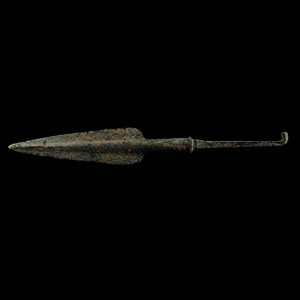
Western Asiatic Tanged Bronze Spearhead
Late 3rd-early 2nd millennium B.C.Estimate: £100 - 140 (+bp*)
Opening Bid: £50
Having foliate blade with central rib and slender shoulders, cylindrical short shaft encasing a rectangular tang with a bent end. 151 grams, 26.5 cm
Acquired 1980-2015. Ex Abelita family collection.
This variant is characterised by a blade of rhomboidal or swollen section, an intermediate part often short widened so as to form a clear stop and a curved bristle at its end, sometimes finished in a button. Most lances are of medium dimensions (23 cm to 36 cm), others are very elongated (more than 50 cm). The best parallels come from Tepe Hissar. Elements of handles found nearby the spearheads in the excavations have made it possible to reconstruct the total length of the weapon (1.40 m). -
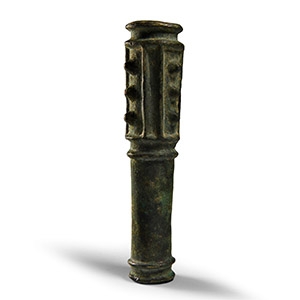
Luristan Bronze Macehead
Late 2nd millennium B.C.Sold for (Inc. bp): £286
Of cylindrical shape, the upper section with alternating rectangular panels and vertical rows of three prominent spikes, short cylindrical shaft edged at top and bottom. 244 grams, 13.5 cm
Ex London, UK, collection, before 1988.
The mace was probably the oldest weapon used by humans. This weapon has been used in different ways and it was probably considered the main tool in the civilisation of the Kassites because of the high number of maces found in this area. Bronze maces in Luristan probably had wooden handles, although most of them unfortunately have been eroded and severely deteriorated. According to Khorasani, such maces were realised with lost-wax process.
