
Loading, please wait...
LOT 1126
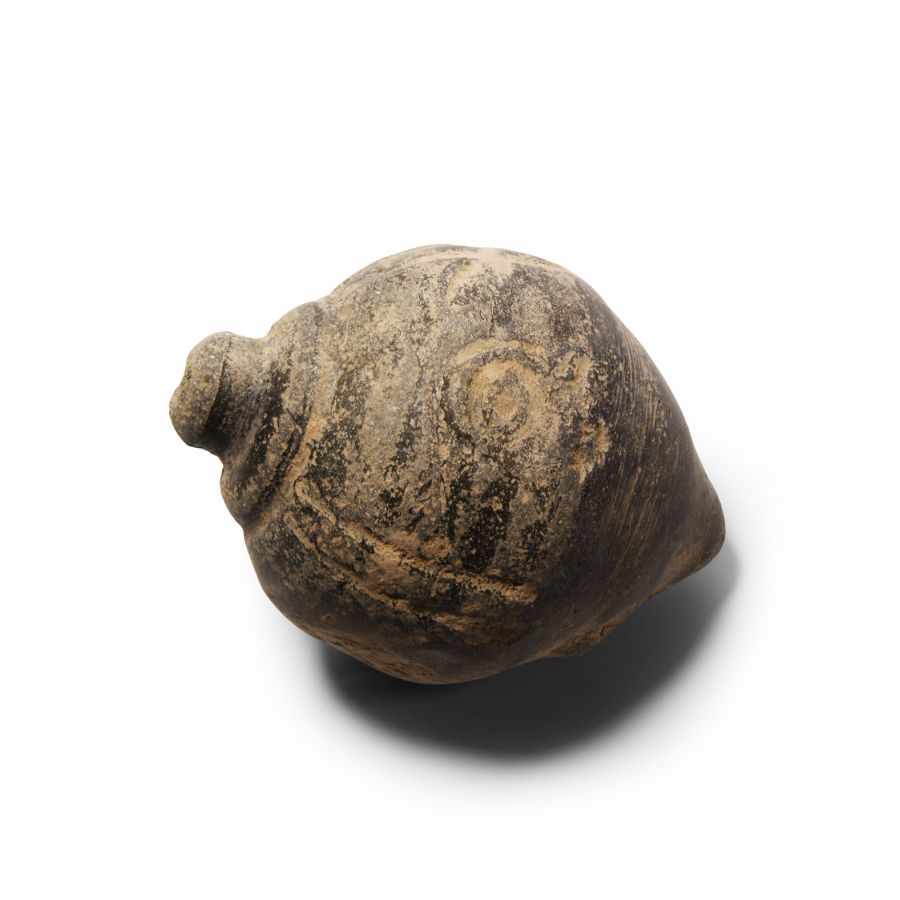
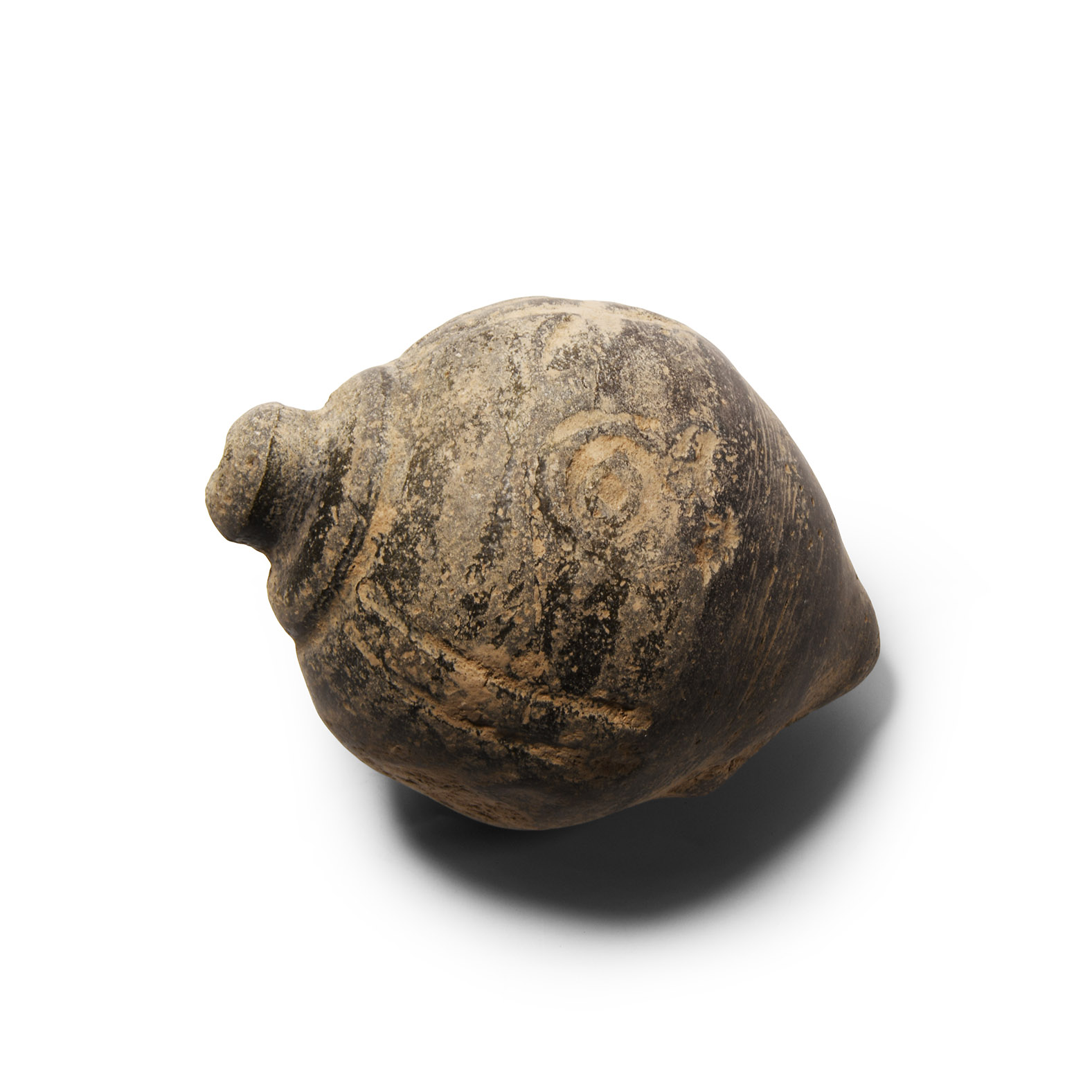
Byzantine 'Greek Fire' Ceramic Fire Bomb or Hand Grenade
9TH-11TH CENTURY A.D.
6 in. (980 grams, 15 cm).
Irregular pear-shaped ceramic vessel with domed filler-hole, impressed rings and vertical bars to the shoulder; intended to be filled with explosive liquid and wick, used as a hand grenade. [No Reserve]
ProvenanceEx London, UK, collection, 1990s.
Accompanied by an academic paper by military specialist Dr Raffaele D'Amato, dated 15 July 2019 and titled 'Eastern Roman Empire - Greek Fire Bomb or Hand Grenade (μεσαίον kακάβιον) 9th-11th century AD'.
Cf. Arendt, W. I., Granaten des 13-14. Jahrhunderts, die an der Wolga gefunden sind, Zeitschrift fur Historische Waffen-und Kostumkunde, 11 (1926-8), p.42; cf. Arendt, W., Die Spharisch-konischen Gefasse aus Gebranntem Ton, ibid; cf. Ayalon, D., Gunpowder and Firearms in the Mamluk Kingdom, London, 1956, p.16.
FootnotesApart from the use of siphons or manual flame-throwers called cheirosiphona, special corps of Roman soldiers employed terracotta grenades, in the form of small jars, abundantly evidenced in archaeological excavations. Such were the γανωτα, vessels (sometimes also of bronze) used for Greek fire. They were called μεσαία kακαβιά or κυτροκακάβια where the former had a bulbous shape and the latter a more cylindrical form.
CONDITIONTimeLine Auctions follows a vetting process to ensure the authenticity and legality of all items, reinforcing our commitment to integrity and responsible trading. Each antiquity, antique, and coin lot undergoes thorough examination by a vetting committee of at least ten external specialists, professional trade association members, scientists, and archaeologists: Our Vetting Process
AUCTIONS:
TimeLine is a leading auction house specialising in antiquities, ancient art, collectables, natural history, coins, medals, and books. Our auctions offer museums, collectors, historians, and enthusiasts the opportunity to acquire unique and historically significant pieces.
LOT 1126
Byzantine 'Greek Fire' Ceramic Fire Bomb or Hand Grenade
Sold for (Inc. bp): £176
-
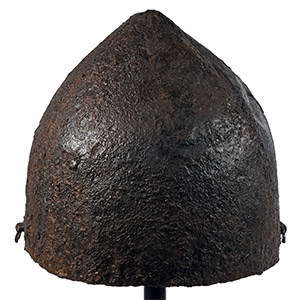
Norman or Viking Period Iron Four-Plate Helmet
Circa 8th-12th century A.D.Sold for (Inc. bp): £2,600
Comprising four triangular plates each with curved profile mounted with the frontal and rear plates overlapping the lateral ones, rivetted; two small lateral rings for attachment of cheek-plates; mounted on a custom-made display stand. 3.36 kg total, 44 cm high including stand
Good condition; surface with some rusting but complete in its structure.
Acquired 1971-1972. From the collection of the vendor's father. Property of a London, UK, collector. This lot has been checked against the Interpol Database of stolen works of art and is accompanied by search certificate number no. 11754-202772.
The type of helmet composed from rivetted plates is a long-lived military fashion depicted from Late Antiquity to the medieval period. -
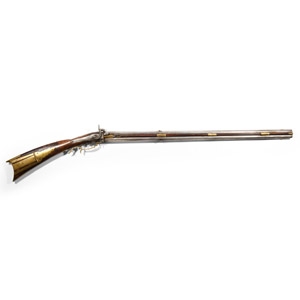
Percussion Swivel Breech Kentucky Rifle
1836 A.D.Sold for (Inc. bp): £1,820
Over and under turnover rifle with 82cm (32¼") barrel with brass insert inscribed 'D Kornman' to top, double set trigger, fitted with one (of two) ramrod in brass ferrules at side and characteristically curved wood stock with brass butt and side plates, trigger guard and patch container with hinged lid; left of stock with inset silver(?) of a fish or whale which might suggest that this was carried on a whaling ship; action working. 4.10 kg, 124 cm
Acquired from Andrew Spencer Bottomley, UK, 2016. The Kusmirek Collection, UK. Accompanied by copies of the purchase invoice and listing.
Sold as an exempt item under Section 58 (2) of the Firearms Act, 1968, to be held as a curiosity or ornament. No license required but buyer must be over 18 years of age. Overseas bidders should note that, due to UK regulations governing export of all firearms, overseas buyers will need to make arrangements for shipping this lot out of the UK directly, by air freight, with a specialist company or agent. -
.jpg)
Large Byzantine Silver Archer's Ring
14th-15th century A.D.Estimate: £600 - 800 (+bp*)
Opening Bid: £240
Comprising a hoop with reserved triangular ornament on the edges and triangular plaque with foliage motifs, raised central panel with frond motif. 22.61 grams, 34.77 mm overall, 25.16 mm internal diameter
Acquired in the 1990s. Ex Cambridgeshire, UK, collection.
Archer rings in Late Byzantium and the medieval Balkans were connected with the employment of the powerful composite bow, but very often, in the 14th century they served as insignia of rank for aristocratic noblemen. Archaeological findings of archers’ rings originate mainly from fortified towns, including mining centres. Many were made in bone, simple in design and undecorated. In contrast, the ones made in bronze and silver were usually decorated in rather uniform style, consisting of floral motifs on the head, mostly tulip and foliage, and linear motifs around the edges. This decoration combined Turkish, Central European and Eastern Roman traditional patterns.
