
Loading, please wait...
LOT 0925
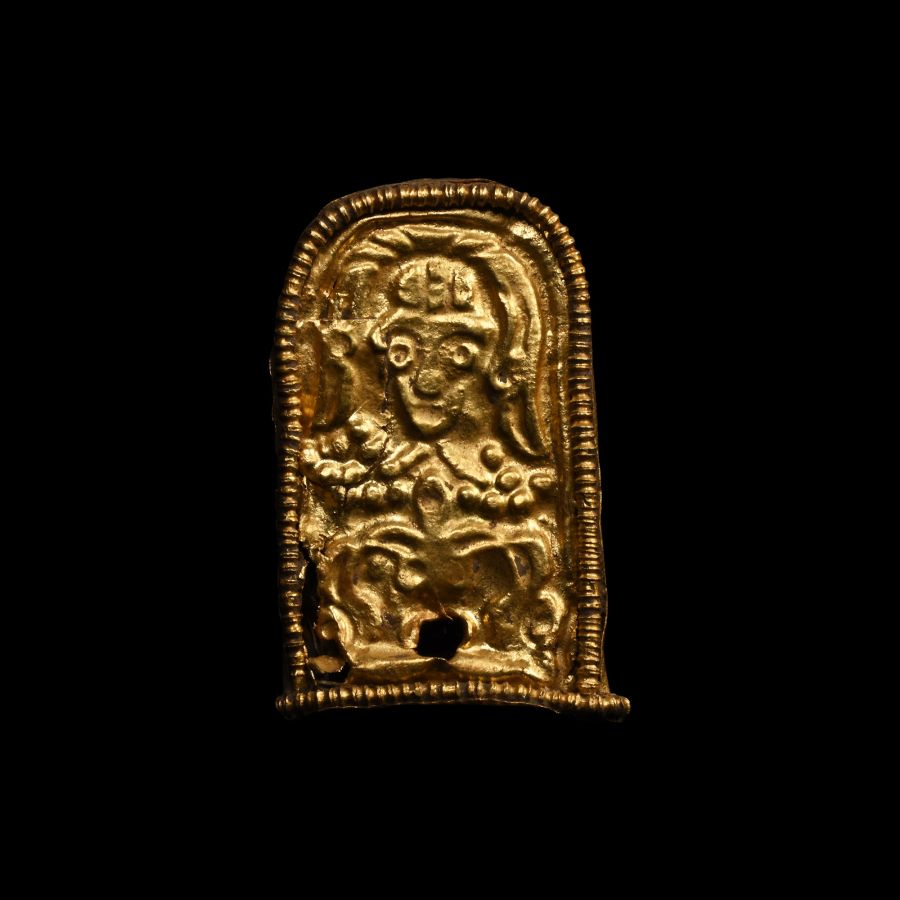
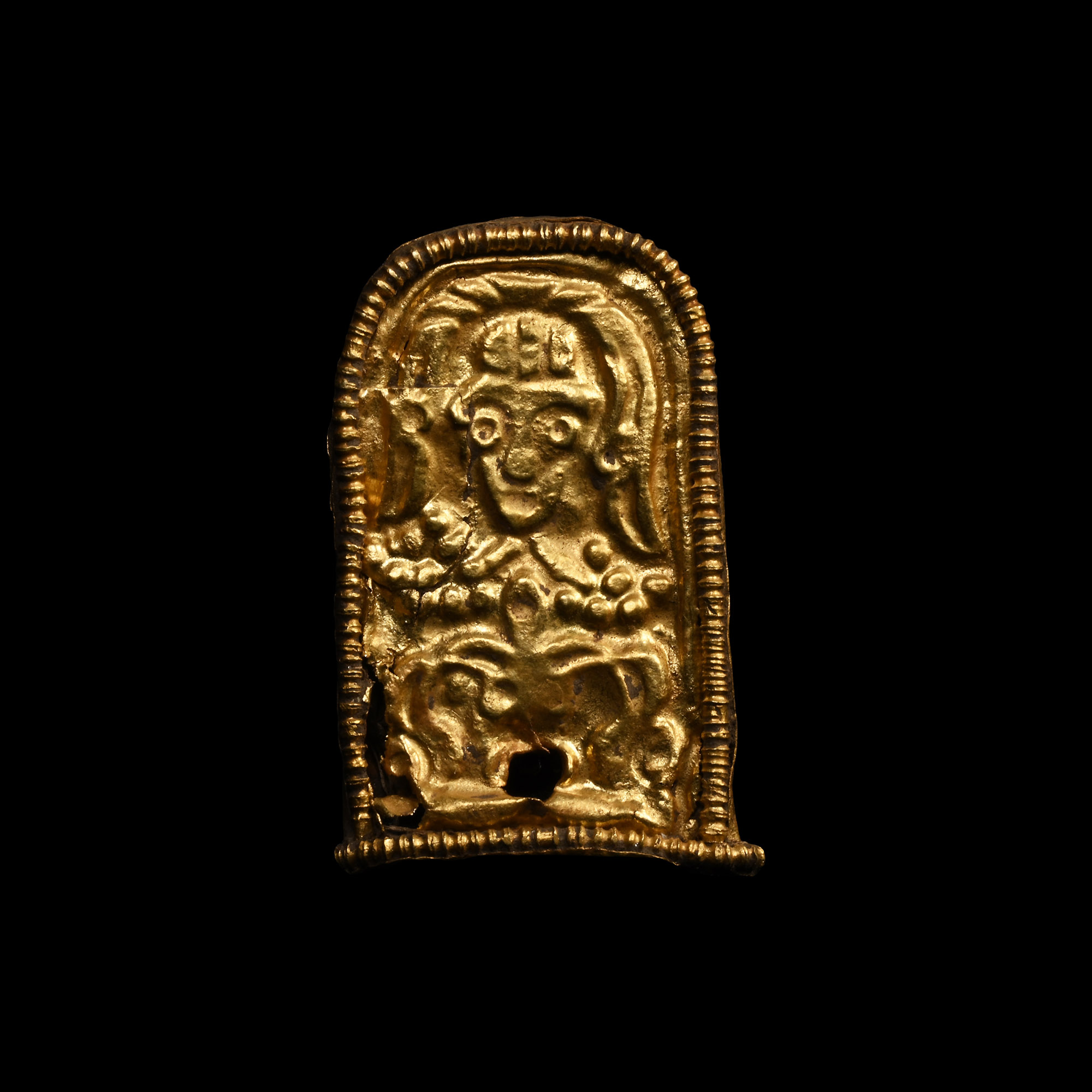
Byzantine Gold Strap End with Facing Figure
CIRCA 7TH-8TH CENTURY A.D.
1 1/2 in. (7.40 grams, 39 mm).
The hollow-formed, tongue-shaped body adorned with a filigree border, repoussé figure with pellets on the torso and serpents framing the head; two ancient repairs to verso.
ProvenanceAcquired 1990s-early 2000s.
East Anglian private collection.
This lot is accompanied by an illustrated lot declaration signed by the Head of the Antiquities Department, Dr Raffaele D'Amato.
Cf. similar mount in the collection of the British Museum, London, under accession no.1991,1002.1; see also similar pendant (in style) in Arslan, E.A., L'oro D'egli Avari, Popolo delle Steppe In Europa (The gold of the Avars, Steppe People in Europe, In Italian), Milano, 2000, for illustration of use and for comparable pieces, particularly p.110, cat.82.
FootnotesThe beautiful burials of horsemen found in the Avar necropolis of central Europe date to the last third of the 7th century A.D. and the early 8th century A.D. show wealth and pomp. This type of belt element, although present in the Avar graves, was probably produced in the workshops of the Eastern Roman Empire, from where they reached the Avar lands as imperial gifts or spoils of war. They could be simple fastenings for belts, or part of multiple belts, to which sabres and knives were attached, commonly used among Avars, Bulgars and Romans during the 6th -7th centuries A.D.
CONDITIONTimeLine Auctions follows a vetting process to ensure the authenticity and legality of all items, reinforcing our commitment to integrity and responsible trading. Each antiquity, antique, and coin lot undergoes thorough examination by a vetting committee of at least ten external specialists, professional trade association members, scientists, and archaeologists: Our Vetting Process
AUCTIONS:
TimeLine is a leading auction house specialising in antiquities, ancient art, collectables, natural history, coins, medals, and books. Our auctions offer museums, collectors, historians, and enthusiasts the opportunity to acquire unique and historically significant pieces.
-
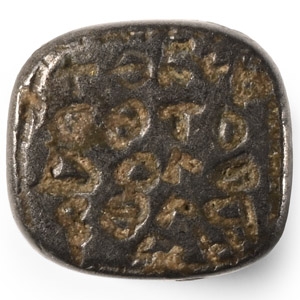
Byzantine Seal Matrix with Inscription
Circa 6th-12th century A.D.Estimate: £180 - 240 (+bp*)
Opening Bid: £100
With inscription '+ΘKEB / OΘTO / ΔΟΛΟ / ΤΘΛΑ' for 'ΘΕΟΤΟΚΕ ΒΟΗΘΕI ΤΩ ΔΟΥΛΩ ΤΟΥ ΘΕΟΥ ΛΑΔΕ' (Mother of God, help Lades, the servant of God). 13.1 grams, 18 mm
From an important collection formed before 1988, London and Geneva. This lot is accompanied by an illustrated lot declaration signed by the Head of the Antiquities Department, Dr Raffaele D’Amato. This lot is accompanied by an illustrated lot declaration signed by the Head of the Antiquities Department, Dr Raffaele D'Amato. -
.jpg)
Byzantine Bronze Lamp with Stand
5th-7th century A.D.Estimate: £1,800 - 2,400 (+bp*)
Opening Bid: £1,000
Comprising a squat nozzle with recessed disc finial, hinged lid shaped as a hare looking over its tail, basal disc with square hole to accept a stand, curled arms at the rear forming the handle with thumb-pad formed as a perching bird (one partly absent); separate stand with tripod legs and spike finial. 870 grams total, 12.5-19.5 cm
UK private collection before 2000. Acquired on the UK art market. Private collection, London. This lot has been checked against the Interpol Database of stolen works of art and is accompanied by a search certificate number no.12688-236229. This lot has been cleared against the Art Loss Register database, and is accompanied by an illustrated lot declaration signed by the Head of the Antiquities Department, Dr Raffaele D'Amato. -
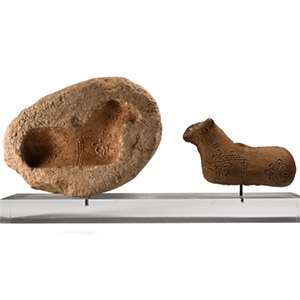
Byzantine Stone Pottery Mould with Animal
6th-7th century A.D.Estimate: £250 - 350 (+bp*)
Opening Bid: £125
Ellipsoid in plan, a mould for forming ceramic model animals with incised decorative detailing; mounted on a custom-made stand with a specimen modern casting taken from the mould, hollow to the reverse. 1.75 kg total, 31.5 cm wide including stand
From the Janner Klausner family collection by desent 1960s, London and Israel. This lot is accompanied by an illustrated lot declaration signed by the Head of the Antiquities Department, Dr Raffaele D'Amato.
