
Loading, please wait...
LOT 0214
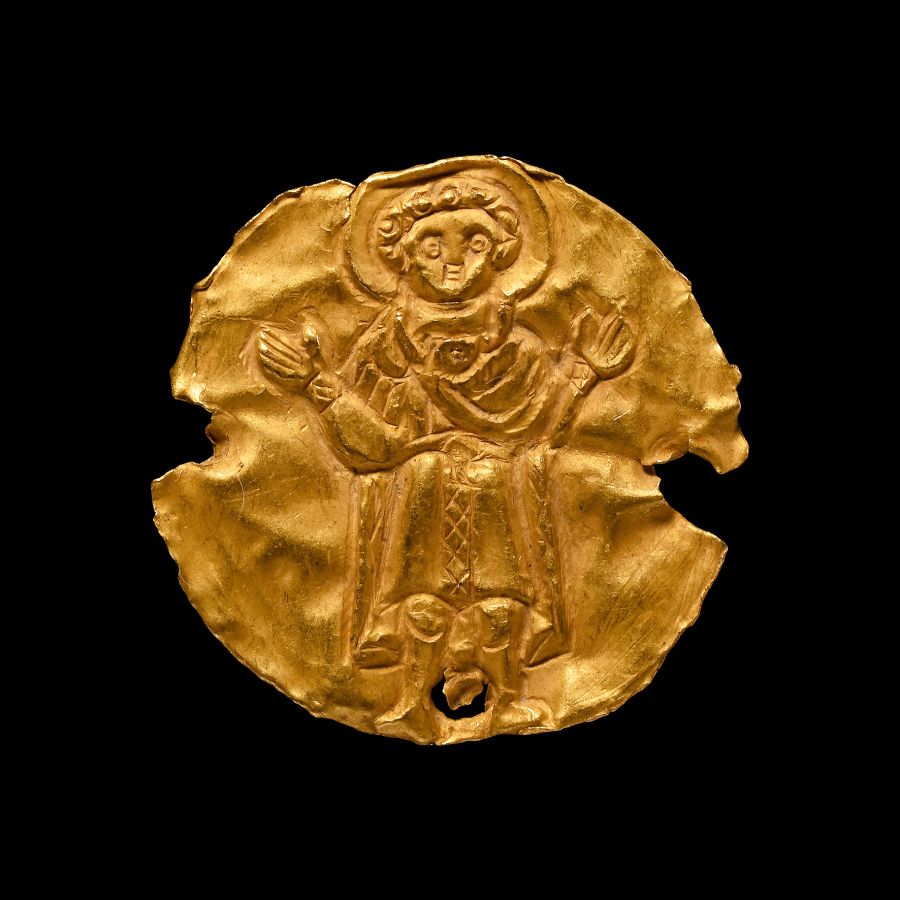
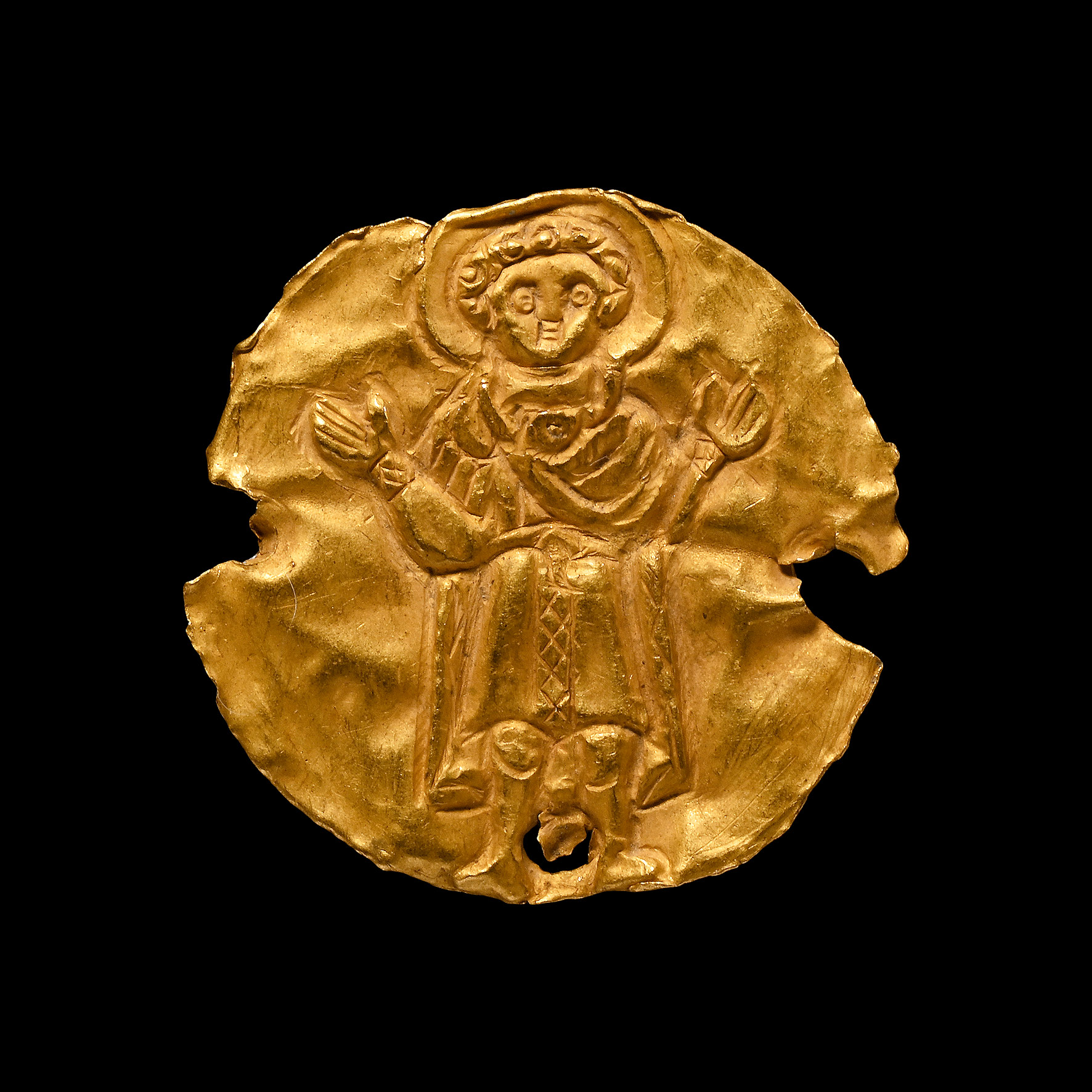
Byzantine Gold Roundel of a Standing Saint
LATE 10TH-EARLY 11TH CENTURY A.D.
7/8 in. (1.19 grams, 23 mm).
Sheet gold disc with three holes close to the rim for attachment of links (two damaged); repoussé facing image of a nimbate saint standing wearing a knee-length tunic with decorative hatched panel to the front, calf-length cloak with hatched texture, disc brooch beneath the chin, both arms raised in the orans gesture. [No Reserve]
ProvenanceEx Elie Borowski, 1988.
LiteratureCf. Evans, H.C. & Wixom, W.D., The Glory of Byzantium. Art and Culture of the Middle Byzantine Era A.D.843-1261, New York, 2006, item 107, for a larger example with enamelled fill.
CONDITIONTimeLine Auctions follows a vetting process to ensure the authenticity and legality of all items, reinforcing our commitment to integrity and responsible trading. Each antiquity, antique, and coin lot undergoes thorough examination by a vetting committee of at least ten external specialists, professional trade association members, scientists, and archaeologists: Our Vetting Process
AUCTIONS:
TimeLine is a leading auction house specialising in antiquities, ancient art, collectables, natural history, coins, medals, and books. Our auctions offer museums, collectors, historians, and enthusiasts the opportunity to acquire unique and historically significant pieces.
-
Byzantine Bronze Stamp Seal
5th-7th century A.D.Sold for (Inc. bp): £715
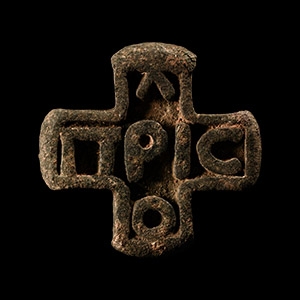
Cruciform seal with ring handle and knop finial; legend to the underside 'Λ/ΠΡΙC/O'. 90 grams, 49 mm
Acquired in the 1970s. European private collection. -
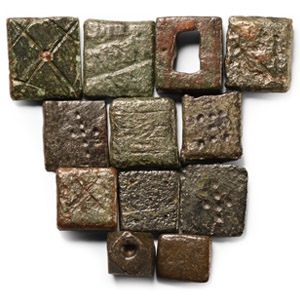
Byzantine Bronze Trade Weight Collection
Circa 6th-12th century A.D.Sold for (Inc. bp): £65
Mixed group of square trade weights with punched and incised detailing. 36.4 grams total, 7-14 mm
Acquired since the 1970s. From the private collection of a Surrey, UK, gentleman. -
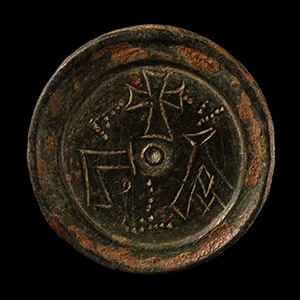
Byzantine Bronze Coin Weight
5th-7th century A.D.Sold for (Inc. bp): £312
With gussetted rim, reverse with central roundel, obverse with cross above gamma and alpha with pointillé detailing. 26.8 grams, 27 mm
Private collection of Mr S.A., Switzerland, 1990s, thence by descent.
