
Loading, please wait...
LOT 0212
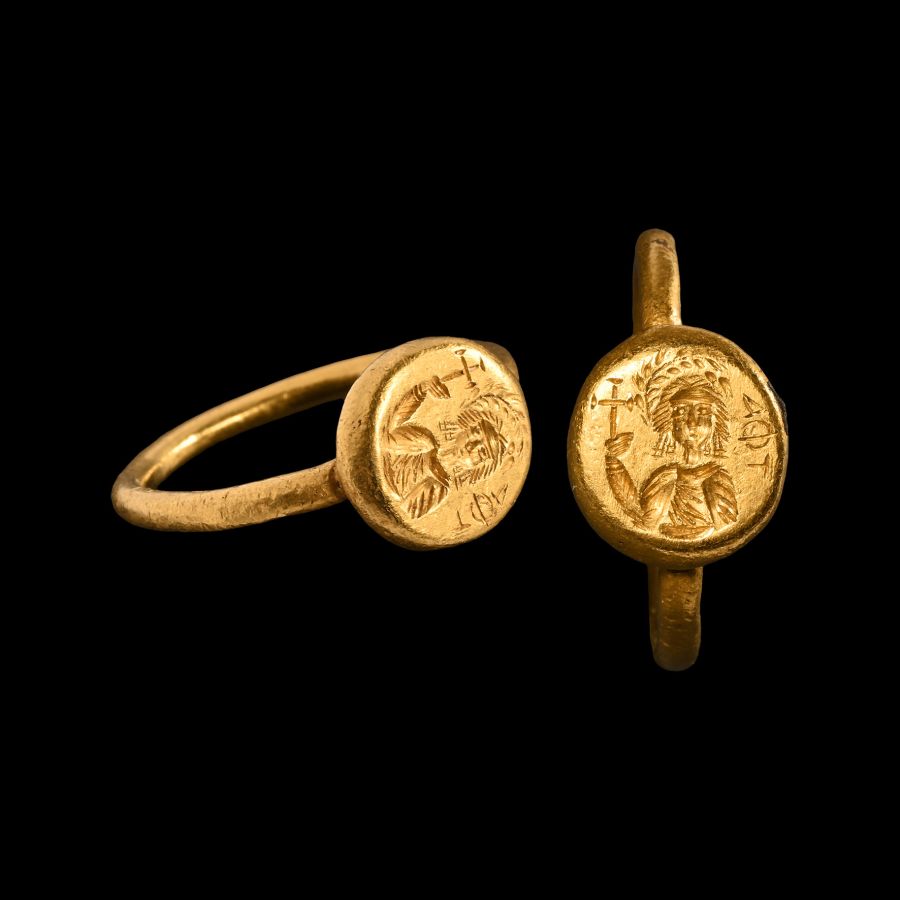
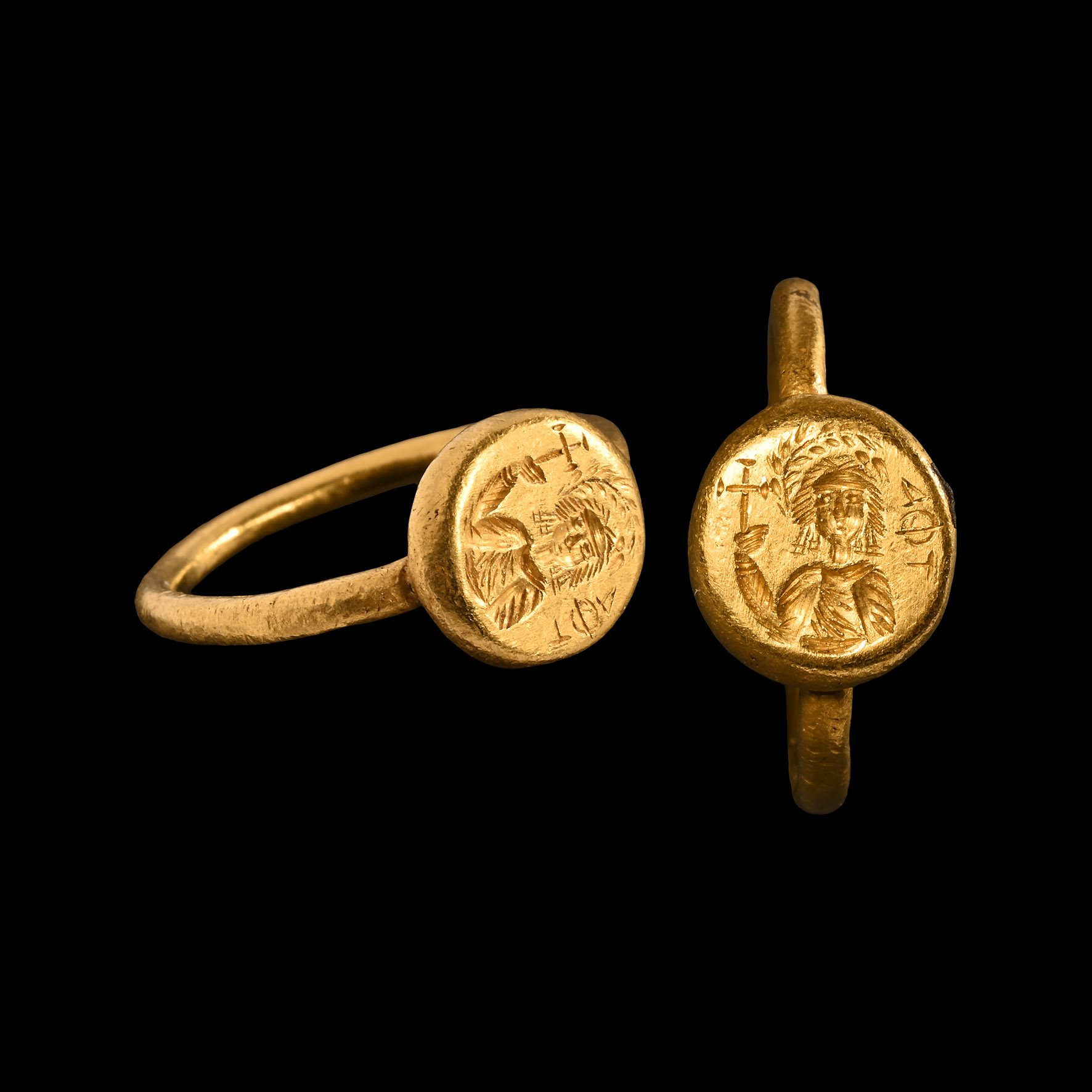
Byzantine Gold Ring with Figure Holding a Cross
6TH-7TH CENTURY A.D.
3/4 in. (4.85 grams, 20.41 mm overall, 16.21 mm internal diameter (approximate size British K 1/2, USA 5 1/2, Europe 10.58, Japan 10)).
Comprising a round-section hoop with a tablet-bezel engraved with an imperial figure holding a cross in the right hand, a palm branch extending over the head and Greek inscription 'AΦT' (Aghia Photini or Aghia Photia) to the right. [No Reserve]
ProvenanceEx Axia Art, London, UK.
Property of a North American gallery.
Accompanied by a positive scientific statement from Striptwist Limited, a London-based company run by historical precious metal specialist Dr Jack Ogden, reference number 170706.
This lot has been checked against the Interpol Database of stolen works of art and is accompanied by search certificate no.12116-214329.
Cf. Papanikola-Bakirtzi, D. (ed.), Everyday life in Byzantium. Byzantine Hours. Works and days in Byzantium, Exhibition catalogue, Thessaloniki, White Tower October 2001-January 2002, Athens, 2002, nos.571-572, for the type.
FootnotesThis type of ring belongs to a typical category of the period in question, made with high quality materials, and decorated with images of saints to invoke their protection. Aghia Fotini, a saint venerated throughout the Christian world since the 6th century A.D., was a famous Samaritan woman, who spoke with Jesus at Jacob's well. According to her hagiographic legend she and her children were martyred under Nero.
CONDITIONTimeLine Auctions follows a vetting process to ensure the authenticity and legality of all items, reinforcing our commitment to integrity and responsible trading. Each antiquity, antique, and coin lot undergoes thorough examination by a vetting committee of at least ten external specialists, professional trade association members, scientists, and archaeologists: Our Vetting Process
AUCTIONS:
TimeLine is a leading auction house specialising in antiquities, ancient art, collectables, natural history, coins, medals, and books. Our auctions offer museums, collectors, historians, and enthusiasts the opportunity to acquire unique and historically significant pieces.
-
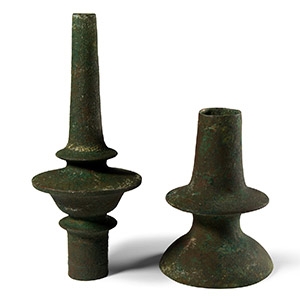
Byzantine Bronze Oil Lamp Stands
6th-7th century A.D.Sold for (Inc. bp): £65
A pair of copper-alloy oil lamp stands with ornamental stems. 1.7 kg total, 16-25.2 cm
UK private collection before 2000. UK art market. Property of a London gentleman.
This kind of stand was destined to support lamp with oval bodies, at the base of which there was a slot that allowed it to be inserted into the lamp stand. The latter was composed of a turned stem and a single, double or even triple curvilinear base, which had the shape of an inverted chalice and carried one, two or three supports which ended with horse hoof ornaments, and feet in the shape of lion's paws. -
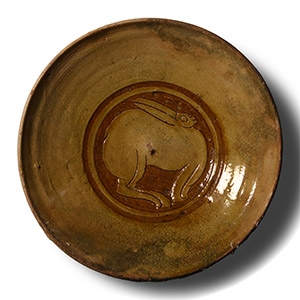
Byzantine Glazed Sgraffito-Ware Shipwreck Bowl
12th-13th century A.D.Sold for (Inc. bp): £2,340
With glazed upper face and basal ring; central reserved motif of a hare within concentric rings, with signs of sea encrustations. 544 grams, 22 cm
Private collection of Mr S.A., Switzerland, 1990s, thence by descent. This lot has been checked against the Interpol Database of stolen works of art and is accompanied by search certificate no.12046-211891. -
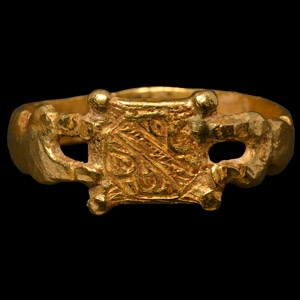
Byzantine Gold Ring with Foliate Motifs
Circa 11th-12th century A.D.Estimate: £1,500 - 2,000 (+bp*)
Opening Bid: £800
Comprising a flat-section hoop with a starburst motif to the base; openwork shoulders and a square bezel with a pellet to each corner, the bezel engraved with foliate motifs. 3.65 grams, 19.99 mm overall, 18.00 mm internal diameter (approximate size British L, USA 5 3/4, Europe 11.24, Japan 10)
Acquired from London galleries during the 1990s. From the jewellery collection of a London, UK, gentleman.
Some rings from the Balkan territories of the Eastern Empire (for example the ring from Dobrača) bear a square thickened bezel engraved with schematic representations. What sets them apart are the widened shoulders emphasised by a plastic rib and the raised and flattened head, which places them in the group of rings which dates mainly to the 11th century (from the end of the 10th to the first decades of the 12th century).
