
Loading, please wait...
_900x900.jpg "Byzantine Gold Ring with Cross")
_200x200.jpg "Byzantine Gold Ring with Cross")
.jpg "Byzantine Gold Ring with Cross")
LOT 0163
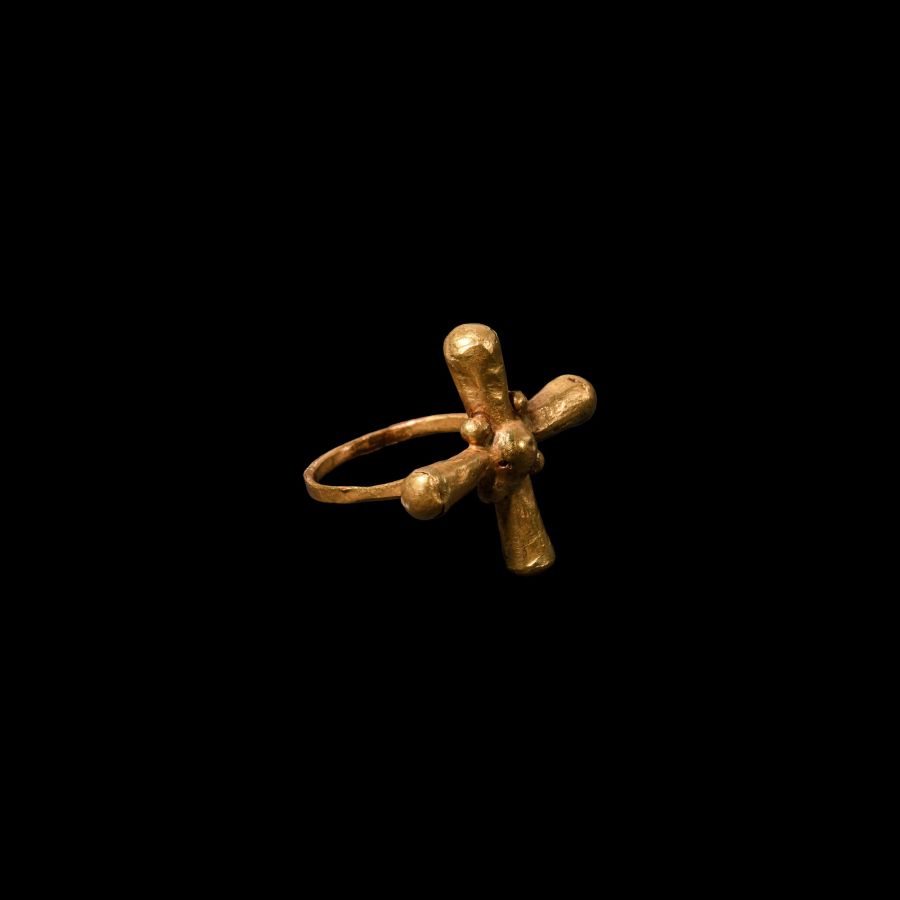
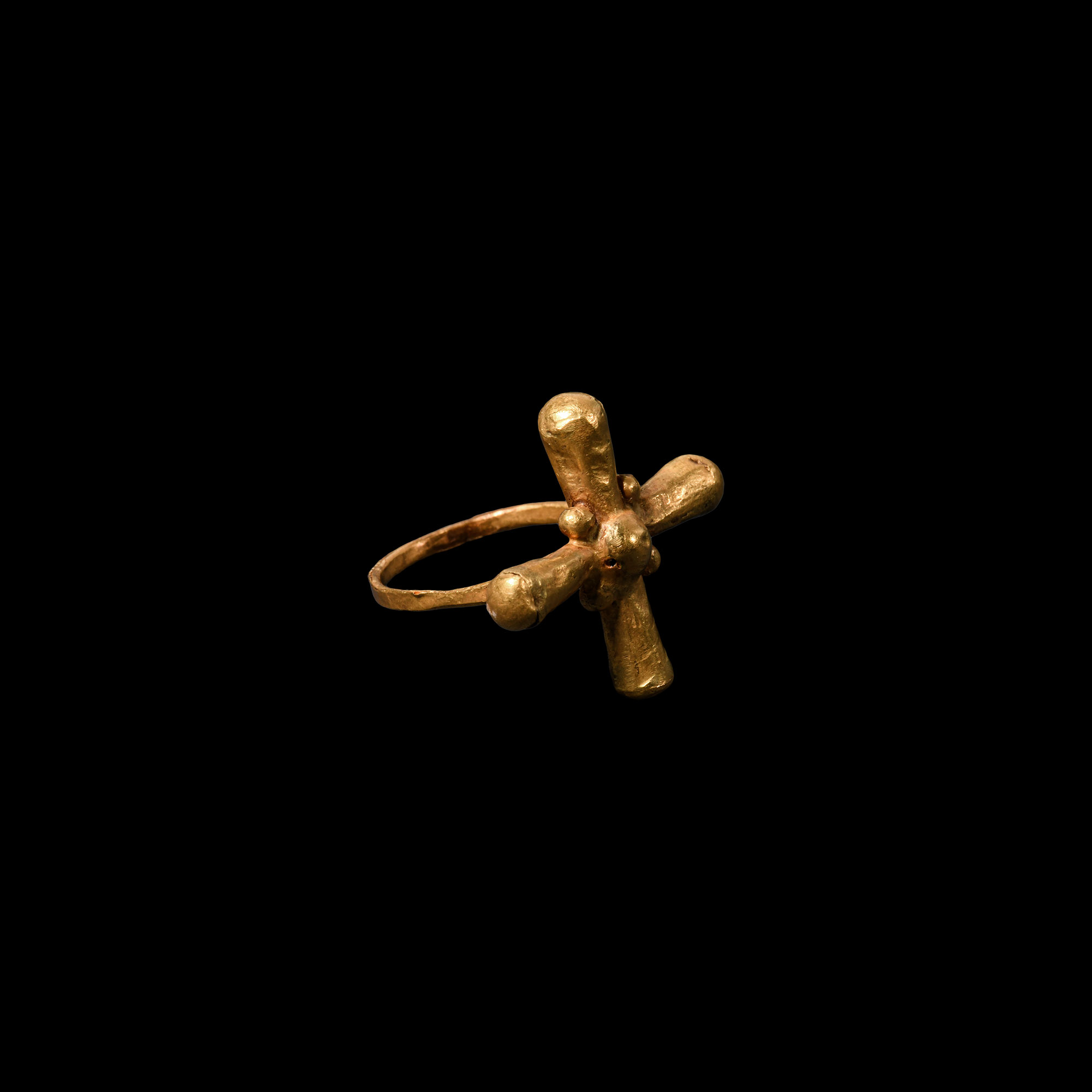
Byzantine Gold Ring with Cross
CIRCA 6TH-8TH CENTURY A.D.
3/4 in. (2.72 grams, 21.96 mm overall, 14.23 mm internal diameter (approximate size British G, USA 3 1/4, Europe 4.92, Japan 4)).
Composed of a slender rectangular-section hoop and cruciform bezel with expanding round-section arms, central dome and granule to each quarter; accompanied by a custom-made display stand.
ProvenancePrivate European collection since the 1950s.
Private collection, UK, 2010.
Cf. Ross, M.C., Catalogue of the Byzantine and Early Mediaeval Antiquities in the Dumbarton Oaks Collection, Volume 2: Jewelry, Enamels and Art of the Migration Period, Washington, 2005, item XIV(F) and XCVII(I), for type.
CONDITIONTimeLine Auctions follows a vetting process to ensure the authenticity and legality of all items, reinforcing our commitment to integrity and responsible trading. Each antiquity, antique, and coin lot undergoes thorough examination by a vetting committee of at least ten external specialists, professional trade association members, scientists, and archaeologists: Our Vetting Process
AUCTIONS:
TimeLine is a leading auction house specialising in antiquities, ancient art, collectables, natural history, coins, medals, and books. Our auctions offer museums, collectors, historians, and enthusiasts the opportunity to acquire unique and historically significant pieces.
LOT 0163
Byzantine Gold Ring with Cross
Estimate £1,500 - 2,000€1,740 - 2,320 (for guidance only)$2,030 - 2,700 (for guidance only)
-
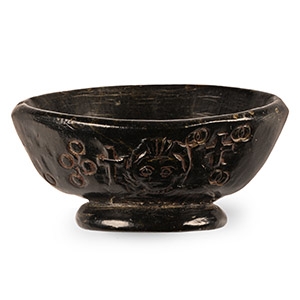
Byzantine Polished Black Stone Dish with Bust of an Emperor
5th century A.D. or laterSold for (Inc. bp): £260
Featuring a pedestal foot; the bust carved to one face, holding a globus cruciger in one hand, crosses and annulets in left and right fields, a horizontal register of concentric roundels to the opposite face. 49.7 grams, 59 mm
From a Paris gallery, French collection pre 1978. -
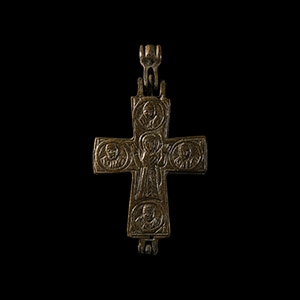
Byzantine Bronze Reliquary Cross
10th-11th century A.D.Sold for (Inc. bp): £624
Comprising two narrow hinged plates and articulated suspension loop with two vertical ribs; obverse with Jesus on the cross, dressed in a long robe with standing Virgin and Saint John on his side, Greek inscription 'ἴδε ὁ υἱός σου.Ἰδοὺ ἡ μήτηρ σου' (John 19:27-28: 'Here is your son. Here is your mother') under the arms; titulum, the sun and the moon above; on the tabula ansata of the titulum a Greek inscription 'Χ fur XΡΙΣΤΟΣ'; reverse with Theotokos (Mother of God) in orans pose and the four busts of the evangelists, at the four arms of the cross. 82 grams, 83 mm
Acquired on the German art market around 2000. From the collection of Surrey, UK, gentleman.
This enkolpion is a beautiful example of the type of pendant cross widespread in the 11th-12th centuries. Many variants of enkolpia reflected the new artistic fashions in vogue at Byzantium, influenced by the political and artistic vigour of the Macedonian dynasty. This enkolpion corresponds to type I of the Pitarakis classification. -
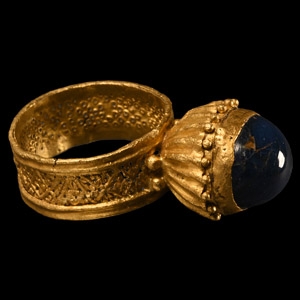
Byzantine Gold Ring with Sapphire
5th-6th century A.D.Estimate: £2,500 - 3,500 (+bp*)
Opening Bid: £1,000
Flat-section hoop displaying geometric pierced work between raised bands, fluted hemispherical bezel adorned with granules and set with a polished cabochon sapphire. 8.66 grams, 33.78 mm overall, 16.94 mm internal diameter (approximate size British M 1/2, USA 6 1/4, Europe 13.09, Japan 13)
Acquired 1990s-early 2000s. East Anglian private collection. This lot has been checked against the Interpol Database of stolen works of art and is accompanied by search certificate no.201084.
