
Loading, please wait...
LOT 0781
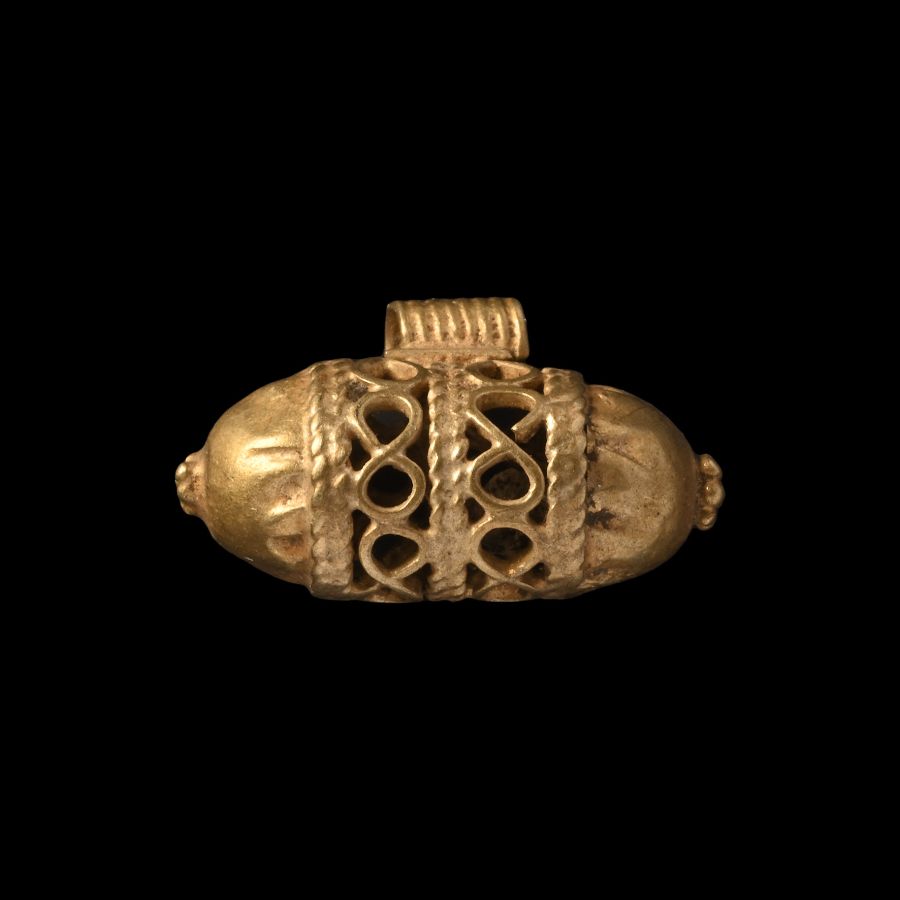
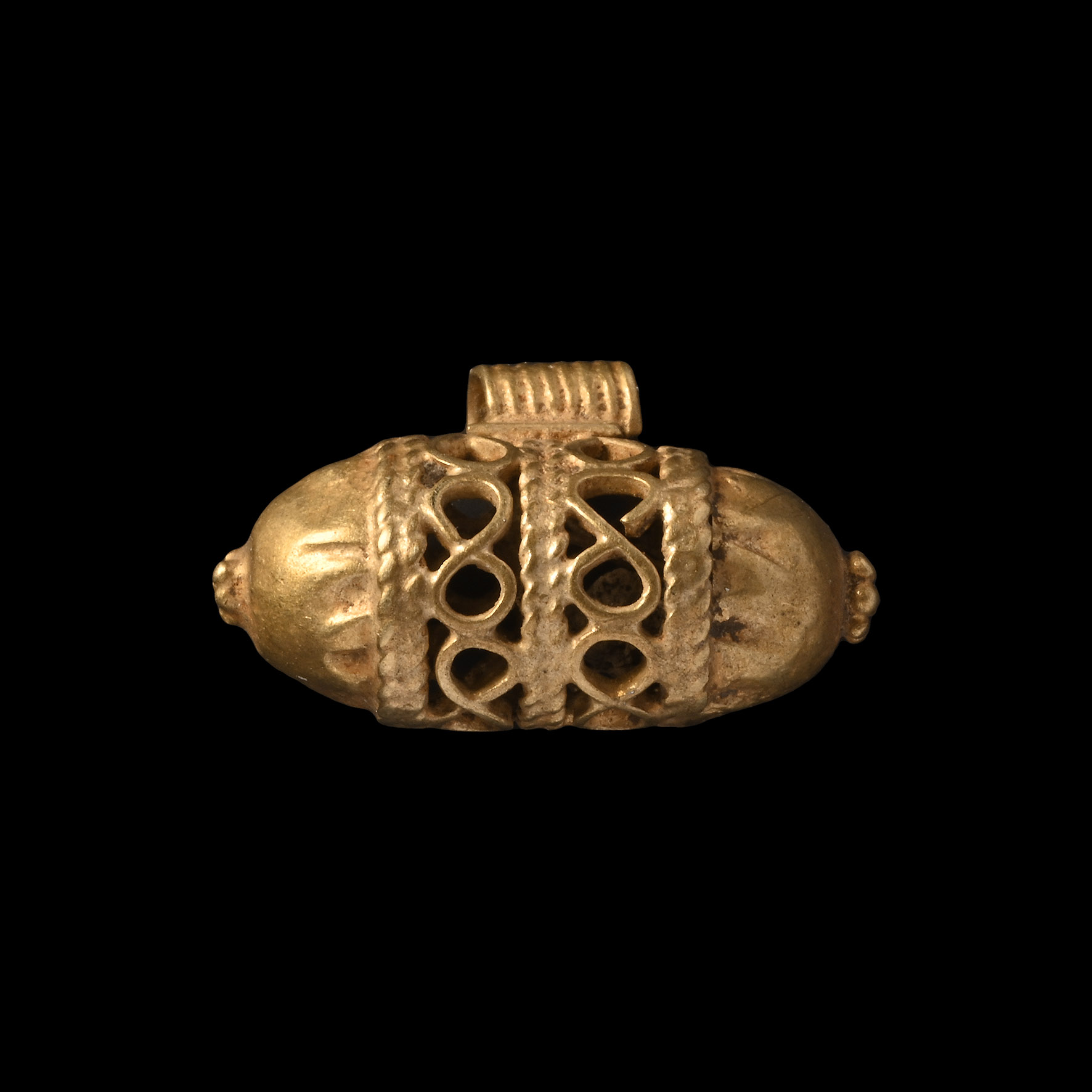
Byzantine Gold Openwork Pendant
6TH-8TH CENTURY A.D.
1/2 in. (0.87 grams, 14 mm).
Of capsule form, openwork filigree and ropework body, domed terminals with apex granules, ribbed suspension loop.
ProvenanceAcquired 1970-2010.
Collection of a late Japanese gentleman.
TimeLine Auctions follows a vetting process to ensure the authenticity and legality of all items, reinforcing our commitment to integrity and responsible trading. Each antiquity, antique, and coin lot undergoes thorough examination by a vetting committee of at least ten external specialists, professional trade association members, scientists, and archaeologists: Our Vetting Process
AUCTIONS:
TimeLine is a leading auction house specialising in antiquities, ancient art, collectables, natural history, coins, medals, and books. Our auctions offer museums, collectors, historians, and enthusiasts the opportunity to acquire unique and historically significant pieces.
LOT 0781
Byzantine Gold Openwork Pendant
Estimate £200 - 300€230 - 350 (for guidance only)$270 - 410 (for guidance only)
-
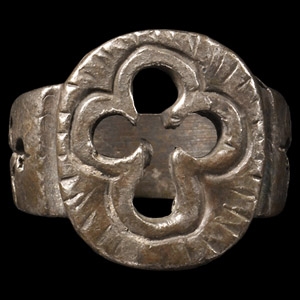
Byzantine Silver Ring with Pierced Cross
12th-14th century A.D. or laterSold for (Inc. bp): £169
Broad flat-section hoop and discoid bezel with notched edge, cross pommee void to the centre and to each shoulder. 8.44 grams, 22.34 mm overall, 17.97 mm internal diameter (approximate size British O 1/2, USA 7 1/4, Europe 15.61, Japan 15)
Acquired on the London art market, 1980s-1990s. -
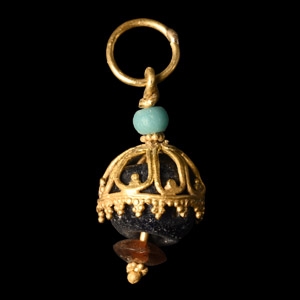
Byzantine Gold Pendant with Beads
6th-8th century A.D.Sold for (Inc. bp): £182
The openwork filigree domed cap set with a deep blue glass bead, a carinated polished garnet bead and granulated gold bead below, gold granulated bead and turquoise-coloured glass bead above, together with a free-running suspension loop. 2.06 grams, 24 mm
Acquired 1970-2010. Collection of a late Japanese gentleman. -
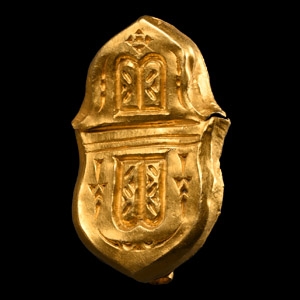
Byzantine Gold Repousse Belt Mount
7th century A.D.Sold for (Inc. bp): £208
Featuring tongue-shaped decorative elements and geometric and foliate motifs; formed as an opposed pair of capital 'M' characters; on the reverse two attachment loops. 3.36 grams, 34 mm
Acquired in the 1990s. Private collection, Suffolk, UK.
The letter M is probably intended for 'Maria'.
