
Loading, please wait...
LOT 0204
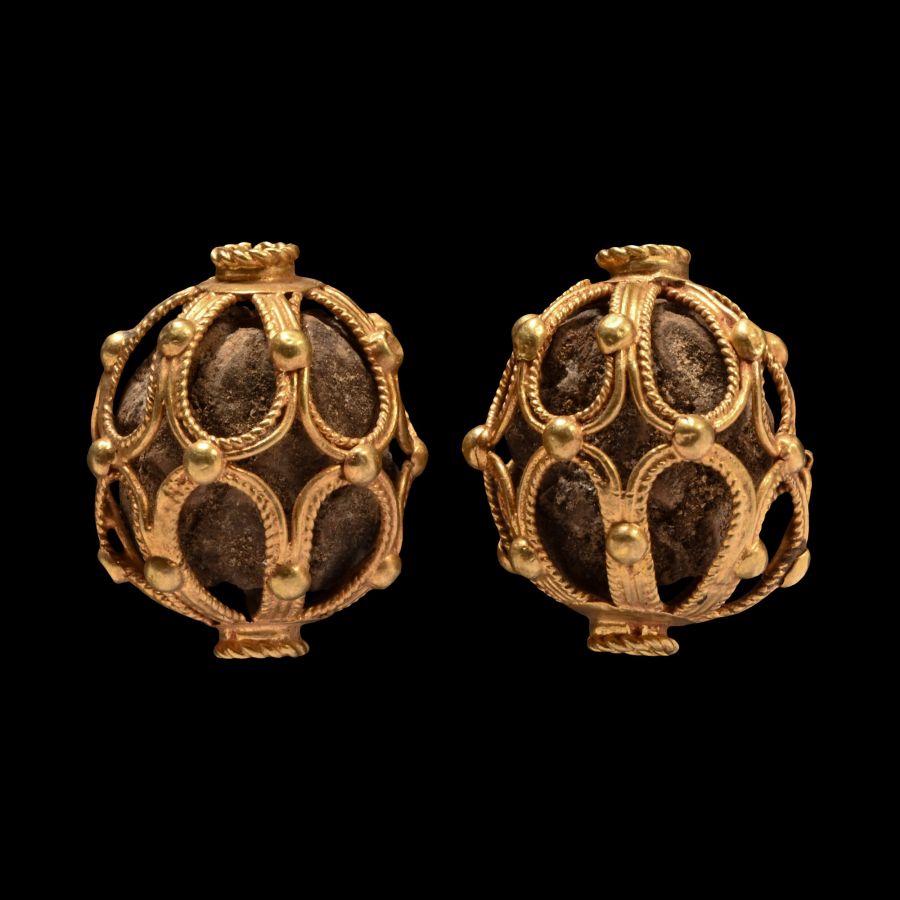
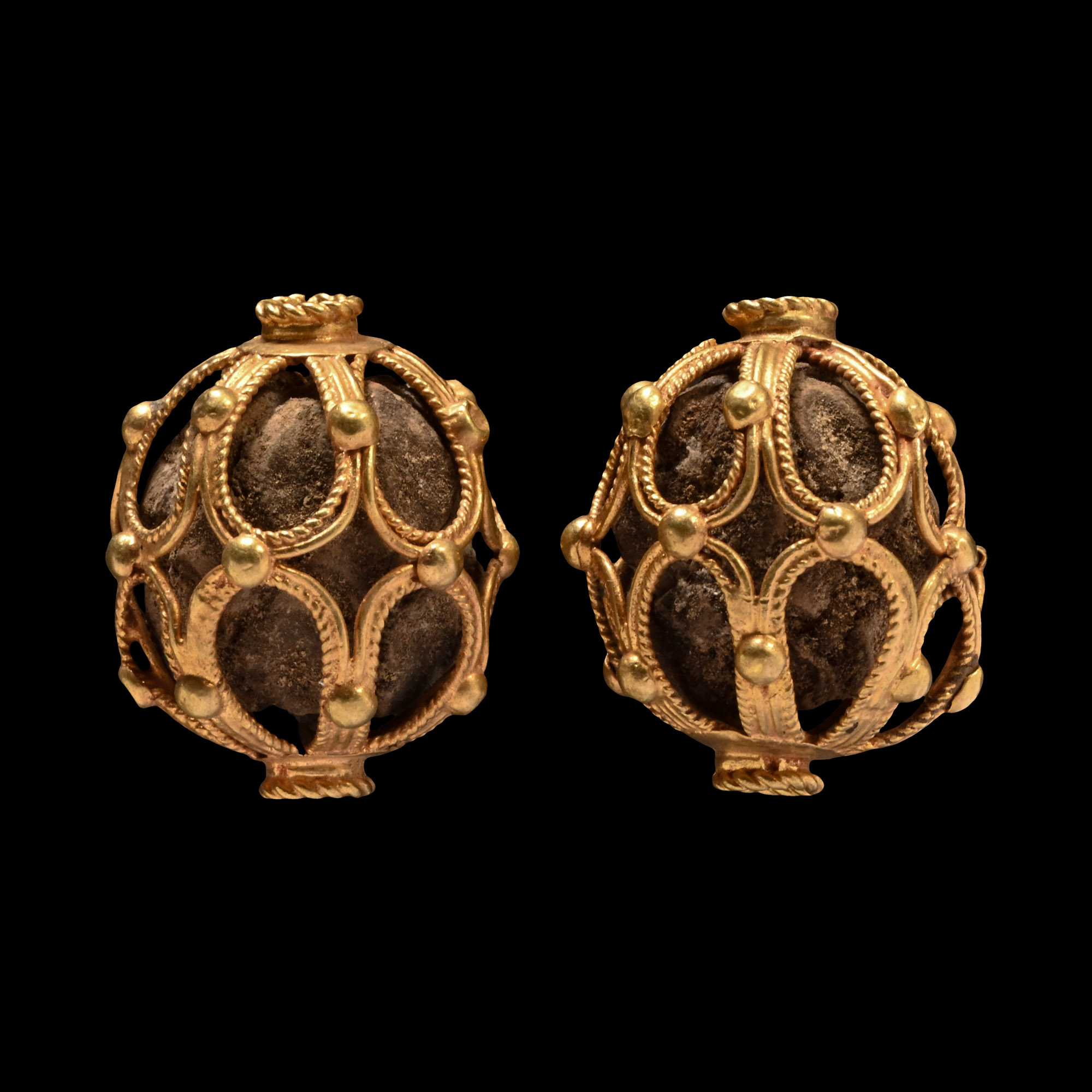
Byzantine Gold Openwork Beads
12TH-13TH CENTURY A.D.
7/8 in. (13.8 grams, 22 mm each).
Each a spherical cage with ropework texturing, granule at each node; oval glass bead within. [2]
ProvenanceAcquired on the Swiss art market, 1998.
Private collection, Europe.
This lot is accompanied by an illustrated lot declaration signed by the Head of the Antiquities Department, Dr Raffaele D'Amato.
TimeLine Auctions follows a vetting process to ensure the authenticity and legality of all items, reinforcing our commitment to integrity and responsible trading. Each antiquity, antique, and coin lot undergoes thorough examination by a vetting committee of at least ten external specialists, professional trade association members, scientists, and archaeologists: Our Vetting Process
AUCTIONS:
TimeLine is a leading auction house specialising in antiquities, ancient art, collectables, natural history, coins, medals, and books. Our auctions offer museums, collectors, historians, and enthusiasts the opportunity to acquire unique and historically significant pieces.
LOT 0204
Byzantine Gold Openwork Beads
Estimate £800 - 1,000€930 - 1,160 (for guidance only)$1,080 - 1,350 (for guidance only)
-
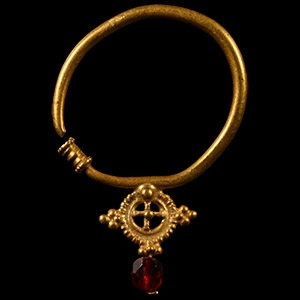
Byzantine Gold Earring with Cross and Garnet
Circa 8th-10th century A.D.Estimate: £800 - 1,000 (‡+bp*)
Opening Bid: £360
Penannular hoop with applied collars, applied discoid plaque with beaded rum and openwork cross to the centre, lateral granule clusters, facetted garnet bead below. 6.53 grams, 44 mm
Acquired in the mid 1980s-1990s. Private collection, Switzerland, thence by descent. Private collection, since the late 1990s. This lot is accompanied by an illustrated lot declaration signed by the Head of the Antiquities Department, Dr Raffaele D'Amato. -
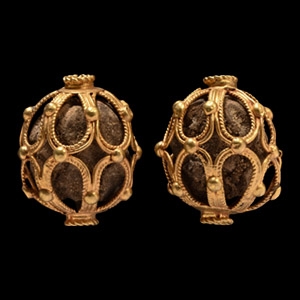
Byzantine Gold Openwork Beads
12th-13th century A.D.Estimate: £800 - 1,000 (‡+bp*)
Opening Bid: £360
Each a spherical cage with ropework texturing, granule at each node; oval glass bead within. 13.8 grams, 22 mm each
Acquired on the Swiss art market, 1998. Private collection, Europe. This lot is accompanied by an illustrated lot declaration signed by the Head of the Antiquities Department, Dr Raffaele D'Amato. -
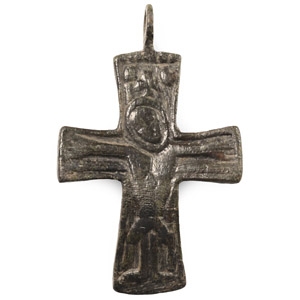
Byzantine Bronze Cross Pendant
10th-12th century A.D.Sold for (Inc. bp): £195
Nimbate Corpus Christi to the obverse with a cross above; integral suspension loop. 5.34 grams, 39 mm
Ex German art market, 2000s. Acquired from an EU collector living in London. From the collection of a Surrey, UK, gentleman. This lot is accompanied by an illustrated lot declaration signed by the Head of the Antiquities Department, Dr Raffaele D'Amato.
