
Loading, please wait...
LOT 0967
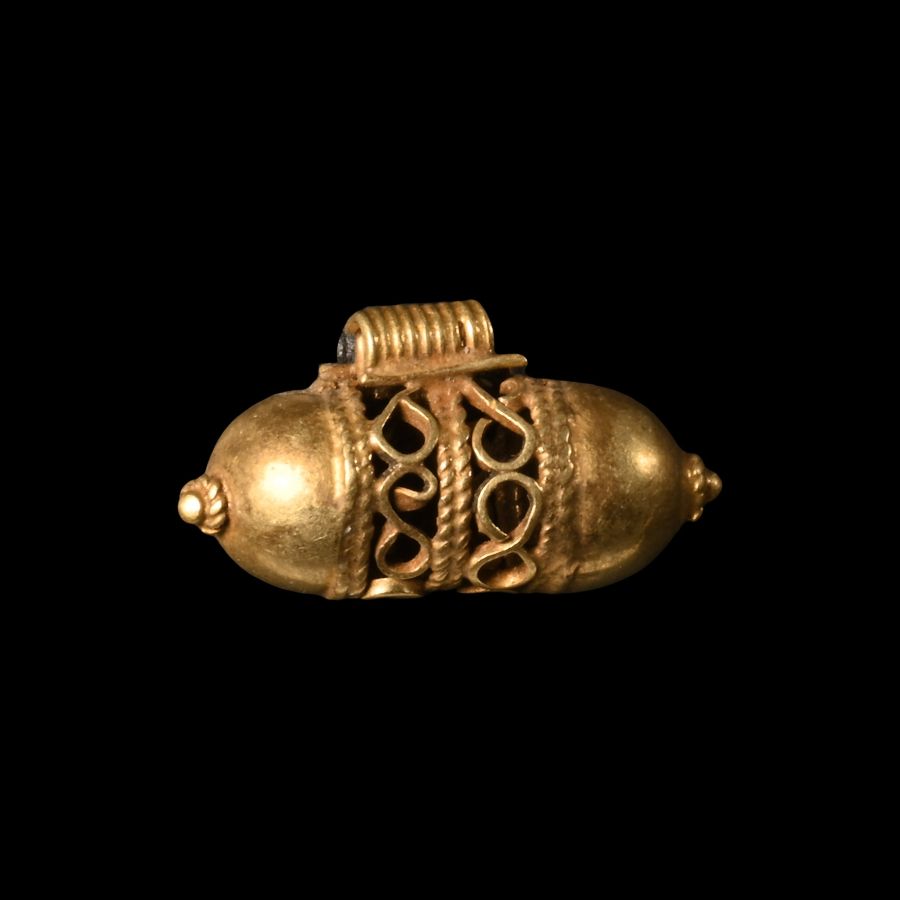
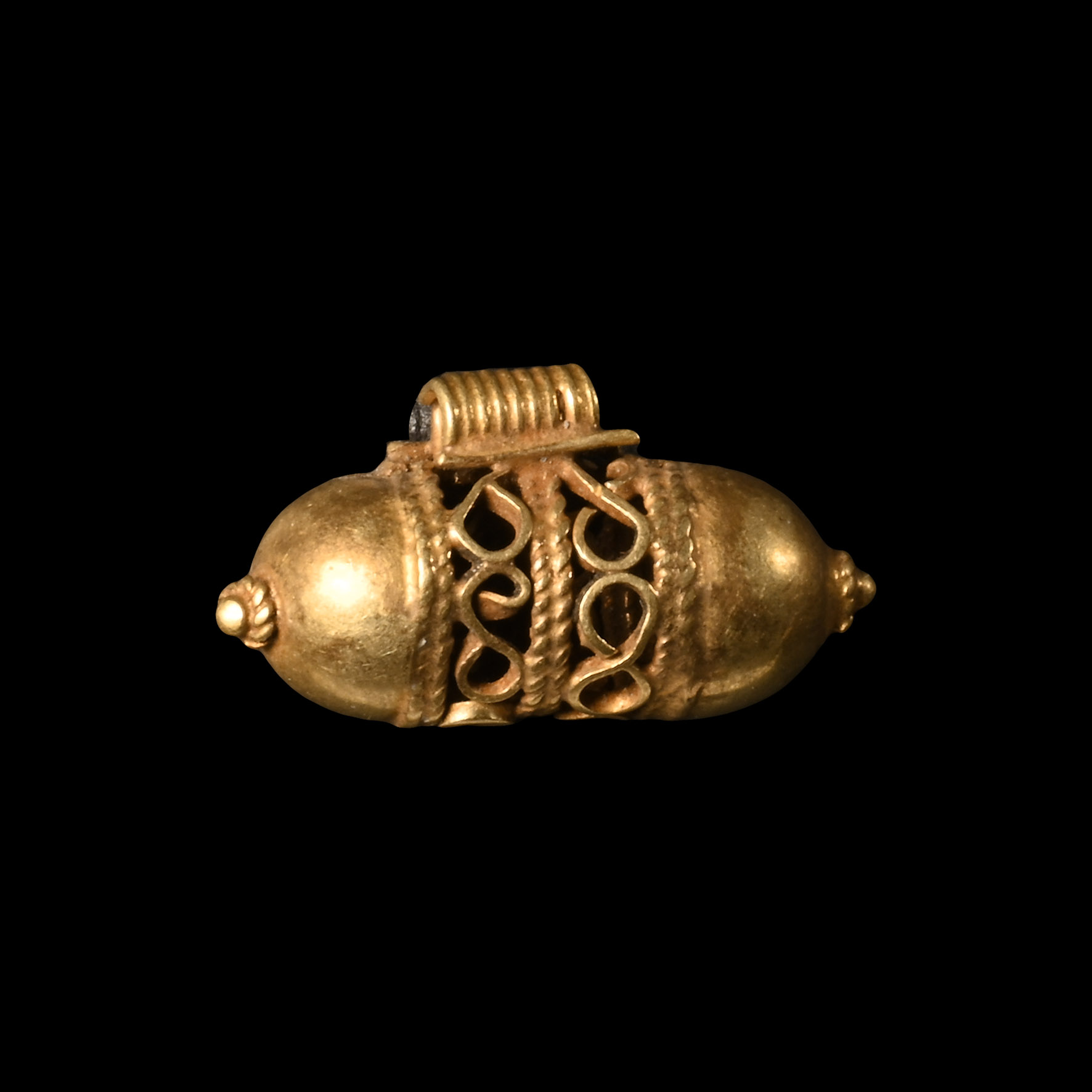
Byzantine Gold Fretwork Pendant
6TH-10TH CENTURY A.D.
1/2 in. (0.73 grams, 14 mm).
Capsule pendant with domed ends and openwork filigree band between, ribbed suspension tube.
ProvenanceFrom a late Japanese specialist collector, 1970-2000s.
CONDITIONTimeLine Auctions follows a vetting process to ensure the authenticity and legality of all items, reinforcing our commitment to integrity and responsible trading. Each antiquity, antique, and coin lot undergoes thorough examination by a vetting committee of at least ten external specialists, professional trade association members, scientists, and archaeologists: Our Vetting Process
AUCTIONS:
TimeLine is a leading auction house specialising in antiquities, ancient art, collectables, natural history, coins, medals, and books. Our auctions offer museums, collectors, historians, and enthusiasts the opportunity to acquire unique and historically significant pieces.
LOT 0967
Byzantine Gold Fretwork Pendant
Estimate £200 - 300€230 - 350 (for guidance only)$270 - 410 (for guidance only)
-
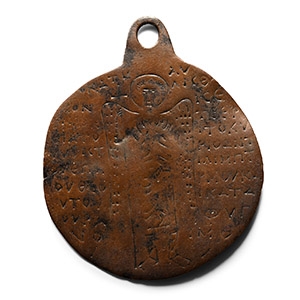
Byzantine 'Psalm 91 Related' Gnostic Bronze Talisman Pendant
Circa 5th-7th century A.D.Sold for (Inc. bp): £975
Discoid in form with integral loop, obverse with low-relief images of mounted Saint Sisinnios killing the demon Gyllou (Lilith), Agnus Dei, a stork, a lion, the holy snake Chnoubis and other symbols with Greek text between; reverse with a standing nimbate angel within a panel of Greek text from Psalm 91. 17.3 grams, 73 mm
From the collection of a gentleman, acquired on the London art market in the 1990s.
The text surrounding the angel recites the verses of Psalm 90 (Heb.91) in the ‘Great Reward Prayer’ (Μεγάλο Απόδειπνο): …Ο κατοικών εν βοηθεία τού Υψίστου, εν σκέπη τού Θεού τού ουρανού αυλισθήσεται. Ερεί τώ Κυρίω, Αντιλήπτωρ μου εί, καί καταφυγή μου… = …He who dwells in the shelter of the Most High will rest in the shadow of the Almighty. I will say of the Lord, 'He is my refuge and my fortress…' -
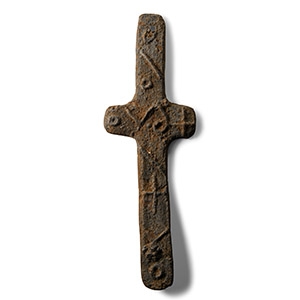
Byzantine Lead Cross
5th-7th century A.D.Estimate: £600 - 800 (‡+bp*)
Opening Bid: £300
Flat-section cruciform mount with stub arms and attachment point at one end; high-relief saltires, hoops and other detailing. 357 grams, 21.5 cm
Acquired in the mid 1980s-1990s. From the family collection of Mr S.A., Switzerland, thence by descent. Private collection since the late 1990s. -
.jpg)
Byzantine Bronze Horse Harness Boss Pendant
15th century A.D.Sold for (Inc. bp): £33
Large domed centre with low-relief sun wheel design, pellets to the rim and suspension loop above. 28.6 grams, 75 mm
From the collection of a North American gentleman, formed in the 1990s.
In the late Byzantium period, round-shaped buckles and horse harness mounts were often decorated with beaded edges and with floral embossed ornaments, under the influence of the Ottoman Turks. They have the shape of a small shield and impressed decoration of a rose. Belt appliques have an extra boss for attachment, instead of a loop which is usually attached to the horse harness pendants.
