
Loading, please wait...
LOT 0984
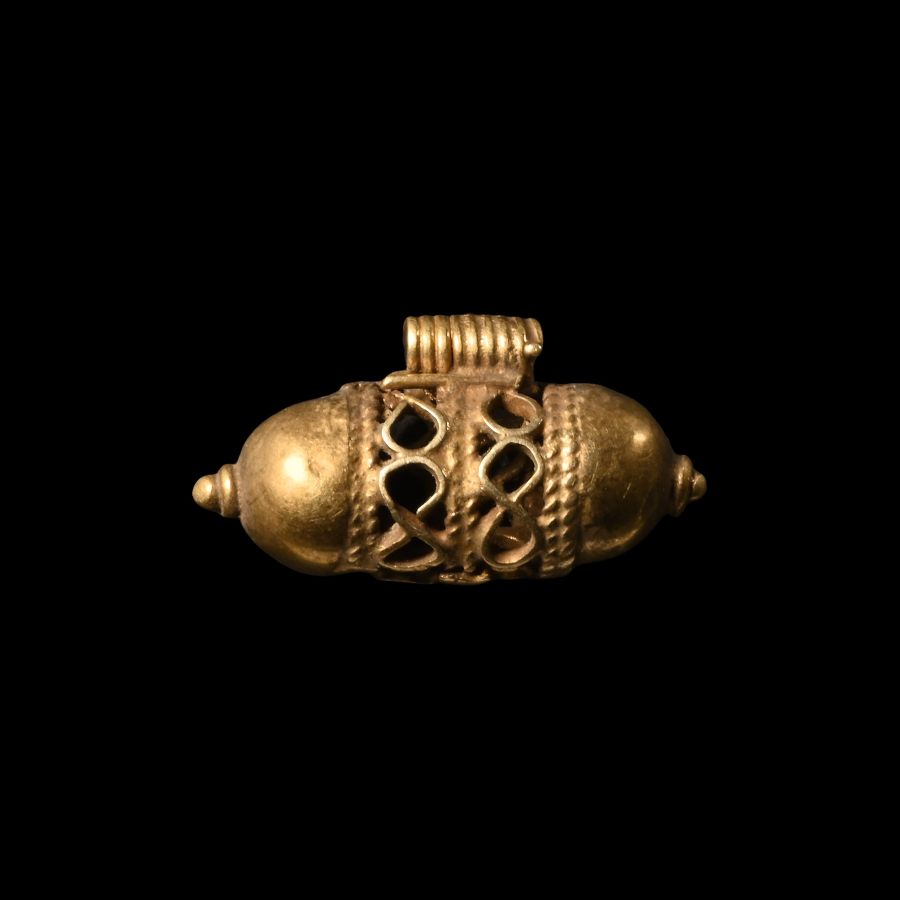
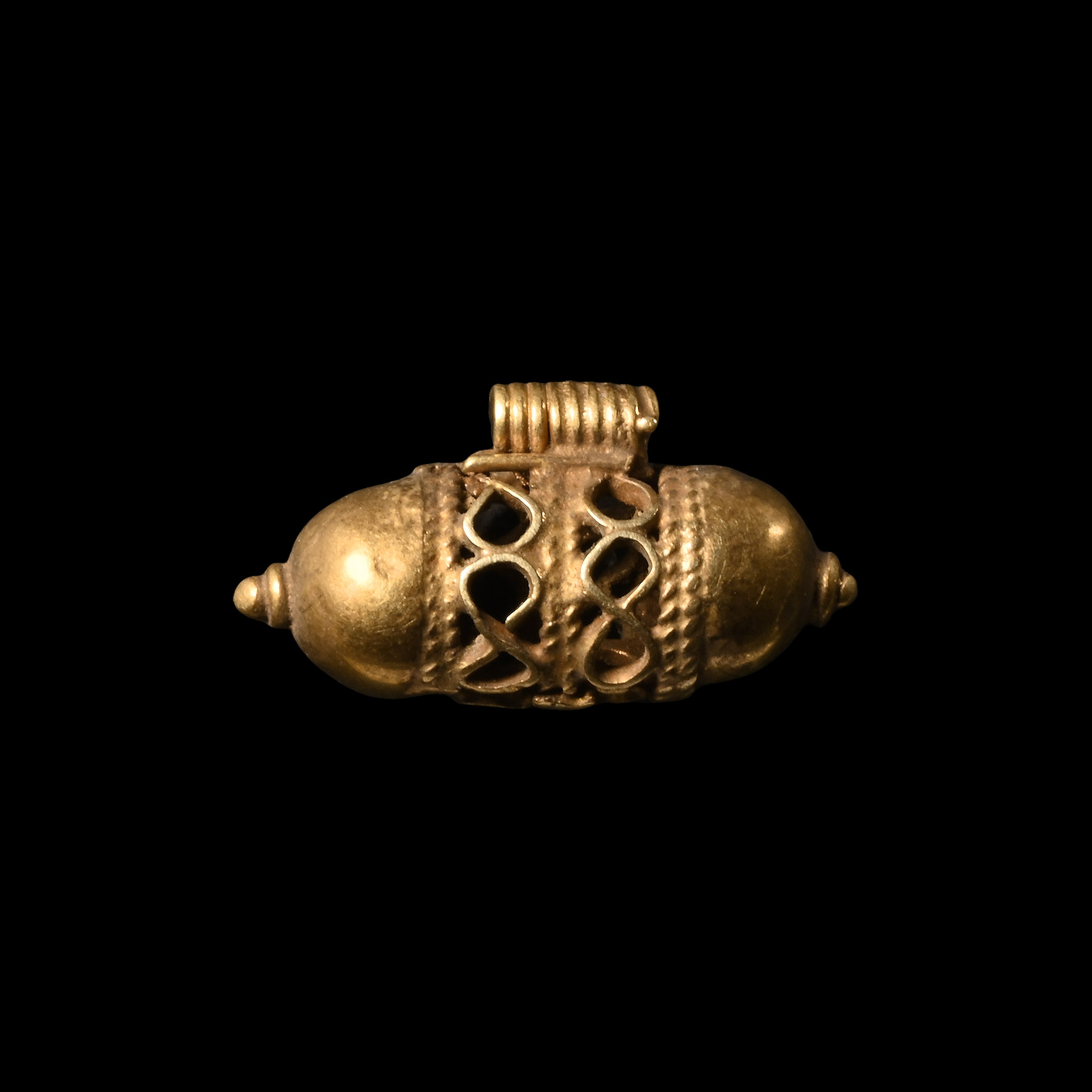
Byzantine Gold Filigree Pendant
6TH-8TH CENTURY A.D.
5/8 in. (0.91 grams, 15 mm).
Capsule pendant with domed ends and openwork filigree bands between, ribbed suspension tube, granule finials.
ProvenanceFrom a late Japanese specialist collector, 1970-2000s.
CONDITIONTimeLine Auctions follows a vetting process to ensure the authenticity and legality of all items, reinforcing our commitment to integrity and responsible trading. Each antiquity, antique, and coin lot undergoes thorough examination by a vetting committee of at least ten external specialists, professional trade association members, scientists, and archaeologists: Our Vetting Process
AUCTIONS:
TimeLine is a leading auction house specialising in antiquities, ancient art, collectables, natural history, coins, medals, and books. Our auctions offer museums, collectors, historians, and enthusiasts the opportunity to acquire unique and historically significant pieces.
LOT 0984
Byzantine Gold Filigree Pendant
Estimate £200 - 300€230 - 350 (for guidance only)$270 - 410 (for guidance only)
-
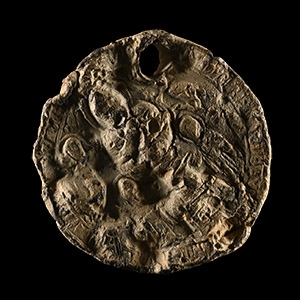
Byzantine Lead Medallion with Saints
Circa 7th century A.D.Sold for (Inc. bp): £59
Discoid with suspension hole near rim, obverse with low-relief nimbate figures and legend to the rim, reverse with Maltese cross and scrolls. 26.1 grams, 44 mm
From the collection of an London antiquarian, 1980s. -
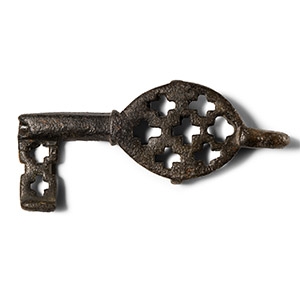
Byzantine Bronze Openwork Key
Circa 8th-10th century A.D.Sold for (Inc. bp): £2,210
Formed with a hollow bow open to the sides and with lateral struts, each plate pierced with seven equal-arm crosses; pierced lug above for suspension; barrel-type shank with rectangular bit pierced with two similar crosses. 59 grams, 87 mm
From a collection acquired on the UK art market from various auction houses and collections mostly before 2000. From an important Cambridgeshire estate; thence by descent.
The repeated use of the cross symbol may indicate an ecclesiastical use. -
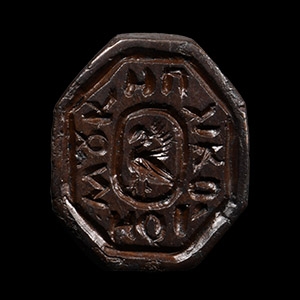
Large Byzantine Inscribed Bronze Glove Ring with Swan
Circa 15th century A.D.Sold for (Inc. bp): £312
With facetted shoulders and octagonal bezel, central swan motif surrounded by enigmatic Greek text 'IOHMOK HΠ[.]IKO'. 12.22 grams, 25.54 mm overall, 21.20 mm internal diameter (approximate size British X 1/2, USA 11 3/4, Europe 26.92, Japan 25)
Private collection formed since the 1940s. UK art market. Property of an Essex gentleman.
Similar rings have been found in the area of Vojvodina, where the military and ecclesiastical presence of Byzantium was still strong until the 13th century. The signet ring shows a Greek inscription probably made by Slavonic people using Greek letters as an 'imitation' of earlier Eastern Roman rings.
