
Loading, please wait...
LOT 0803
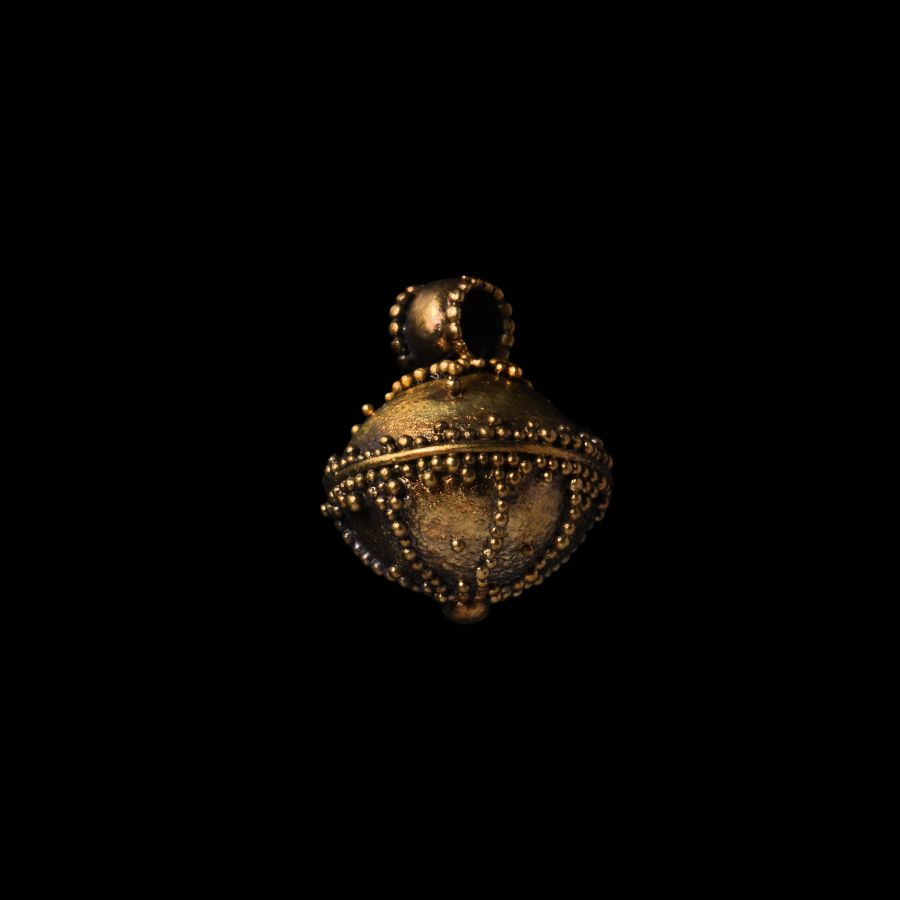
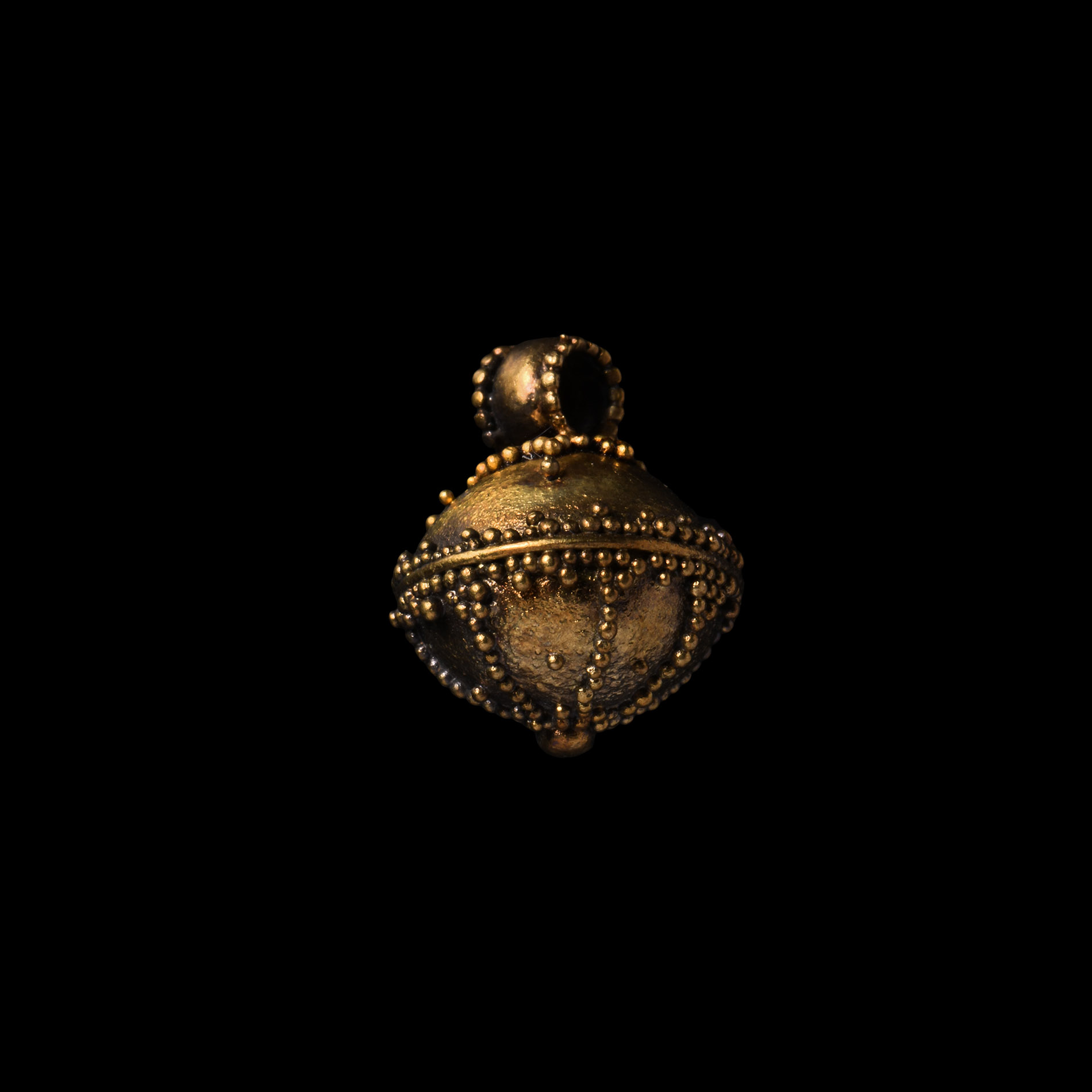
Byzantine Gold Filigree Pendant
10TH-15TH CENTURY A.D.
5/8 in. (1.74 grams, 15 mm).
The suspension loop with beaded border; finely granulated star pattern; raised rib highlighted with beads of gold to the centre; the lower body of the pendant decorated with filigree triangles, a trail of lines leading to a central gold boss, each segment with a small bead of gold. [No Reserve]
ProvenanceAcquired in the 1970s.
From an important London, UK, collection.
TimeLine Auctions follows a vetting process to ensure the authenticity and legality of all items, reinforcing our commitment to integrity and responsible trading. Each antiquity, antique, and coin lot undergoes thorough examination by a vetting committee of at least ten external specialists, professional trade association members, scientists, and archaeologists: Our Vetting Process
AUCTIONS:
TimeLine is a leading auction house specialising in antiquities, ancient art, collectables, natural history, coins, medals, and books. Our auctions offer museums, collectors, historians, and enthusiasts the opportunity to acquire unique and historically significant pieces.
-
.jpg)
Byzantine Gold Coin Bead Necklace
Coin dated 527-565 A.D.Sold for (Inc. bp): £338
Composed of carnelian and perhaps glass rounded oval beads, featuring a gold Solidus coin pendant of Emperor Justinian I; modern screw clasp. 14.3 grams, 37 cm long
Acquired in the 1970s. Ex property of a North London collector. -
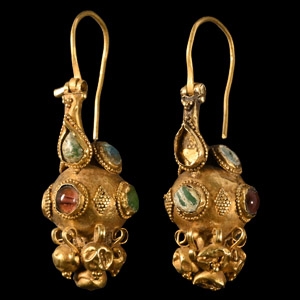
Byzantine Inlaid Gold Earrings
4th-9th century A.D.Sold for (Inc. bp): £910
Each composed of a large bulb, hinged hoop above adorned with three granulated cells set with glass (one insert absent); four circular cells to the equator set with stones of alternating blue and red colour, granulated lozenges between, pyramid bulbs below adorned with granule clusters, collar of suspension loops above; articulate hinges. 8.87 grams total, 42 mm each
Acquired 1980-2015. Ex Abelita family collection. -
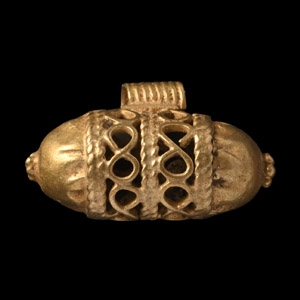
Byzantine Gold Openwork Pendant
6th-8th century A.D.Estimate: £200 - 300 (+bp*)
Opening Bid: £100
Of capsule form, openwork filigree and ropework body, domed terminals with apex granules, ribbed suspension loop. 0.87 grams, 14 mm
Acquired 1970-2010. Collection of a late Japanese gentleman.
