
Loading, please wait...

LOT 1025
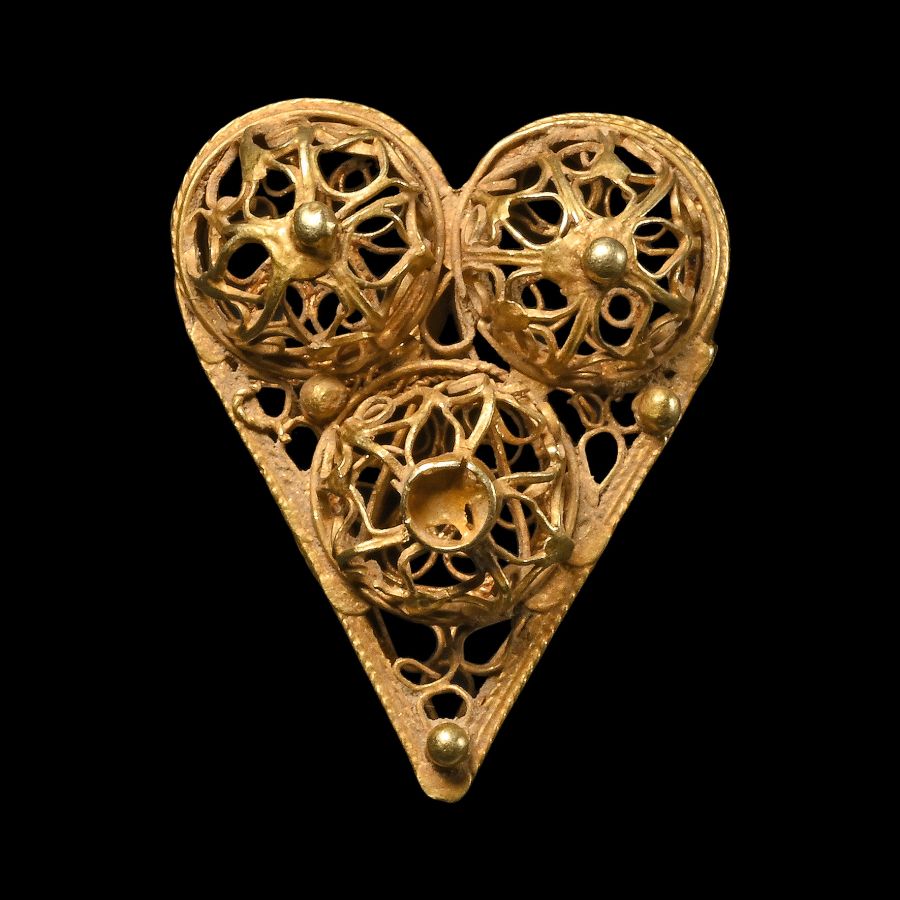
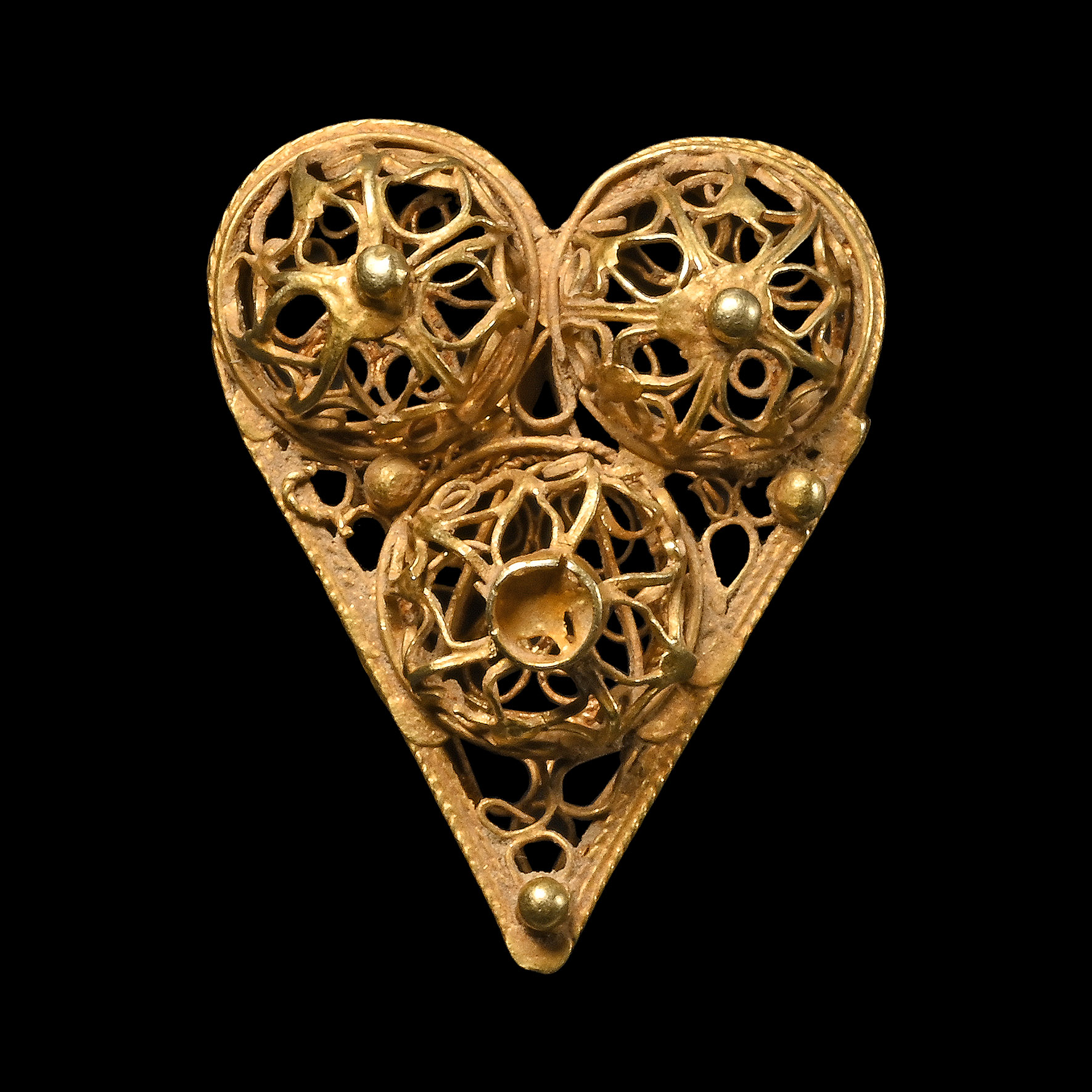
Byzantine Gold Filigree Heart-Shaped Pendant
5TH-7TH CENTURY A.D.
1 in. (2.92 grams, 24 mm).
Hollow with three filigree circles to the underside each with scrolled filigree fill, pierced sidewall, three openwork filigree domes to the obverse with granules and a tubular cell to the apex of the lower one.
ProvenanceEx property of a late Japanese collector, 1970s-2000s.
CONDITIONTimeLine Auctions follows a vetting process to ensure the authenticity and legality of all items, reinforcing our commitment to integrity and responsible trading. Each antiquity, antique, and coin lot undergoes thorough examination by a vetting committee of at least ten external specialists, professional trade association members, scientists, and archaeologists: Our Vetting Process
AUCTIONS:
TimeLine is a leading auction house specialising in antiquities, ancient art, collectables, natural history, coins, medals, and books. Our auctions offer museums, collectors, historians, and enthusiasts the opportunity to acquire unique and historically significant pieces.
-
Byzantine Gilt Bronze Decorated Buckle
6th-7th century A.D.Sold for (Inc. bp): £520
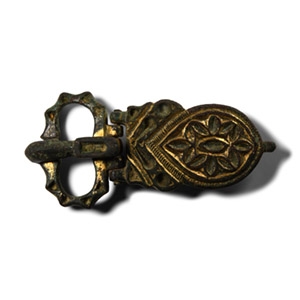
Comprising: buckle loop with dentilled outer edge, impressed triangular cells; D-section tongue curved over the forward edge of the loop, with rectangular shield to the rear with slot; plate formed as a vesica-shaped rear panel with rosette motif and billetted border, forward edge with cells flanking; knop finial to rear edge; obverse with three pierced lugs for attachment to the belt; ferrous hinge-pin. 56 grams, 80 mm
Private UK collection. Acquired in the 1980s. Property of a Cambridgeshire gentleman. -
Byzantine Seal Matrix with Inscription
Circa 6th-12th century A.D.Estimate: £250 - 350 (+bp*)
Opening Bid: £125
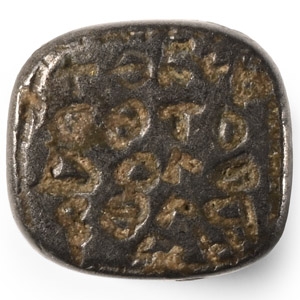
With inscription '+ΘKEB / OΘTO / ΔΟΛΟ / ΤΘΛΑ' for 'ΘΕΟΤΟΚΕ ΒΟΗΘΕΛ ΤΩ ΔΟΥΛΩ ΤΟΥ ΘΕΟΥ ΛΑΔΕ' (Mother of God, help Lades, the servant of God). 13.1 grams, 18 mm
From an important collection formed before 1988, London and Geneva. -
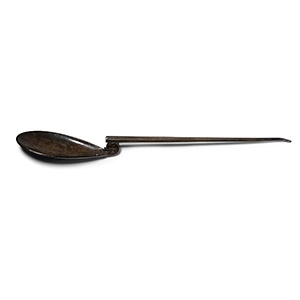
Byzantine Silver Swan-Necked Spoon with Cross
5th-7th century A.D.Estimate: £1,800 - 2,400 (‡+bp*)
Opening Bid: £1,000
Shallow piriform bowl attached to a stepped baluster, hexagonal-section handle with spike finial; engraved cross potent to either side of the junction. 46 grams, 22.7 cm
French private collection. Acquired on the French art market in 2011. Acquired by the present owner at the above. This lot has been checked against the Interpol Database of stolen works of art and is accompanied by search certificate number no.12240-222347.
The lateral incised cross motifs suggest that the spoon may have had a liturgical purpose, possibly associated with baptism.
