
Loading, please wait...
LOT 0791
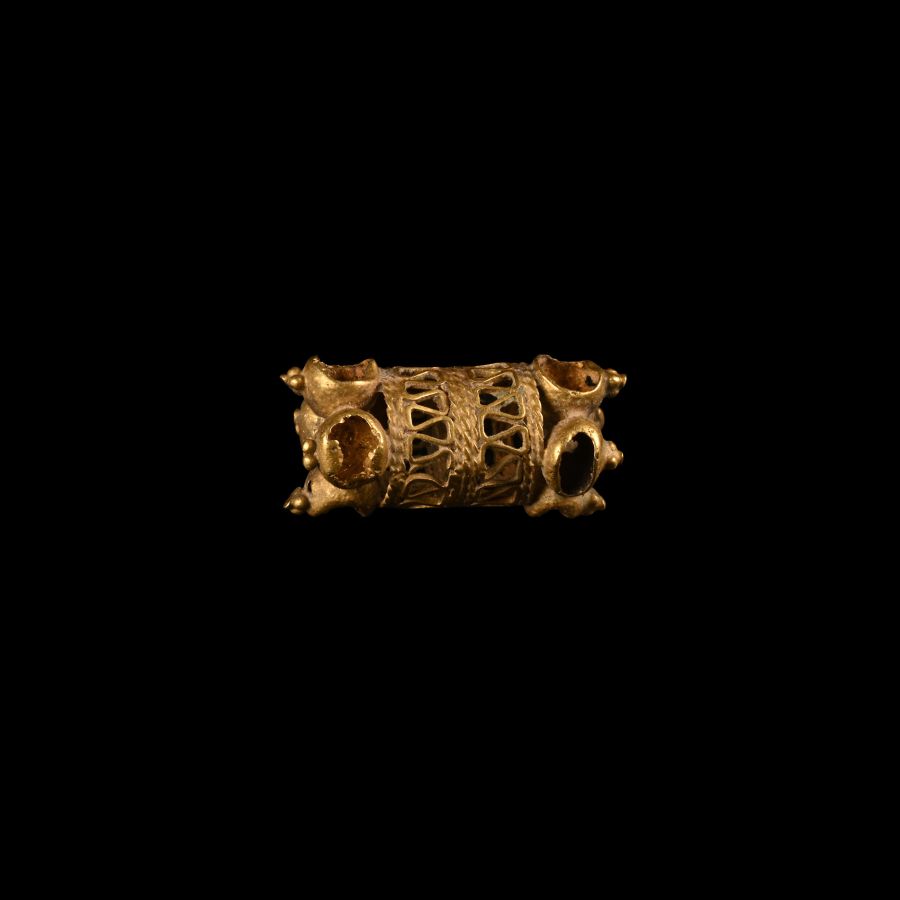
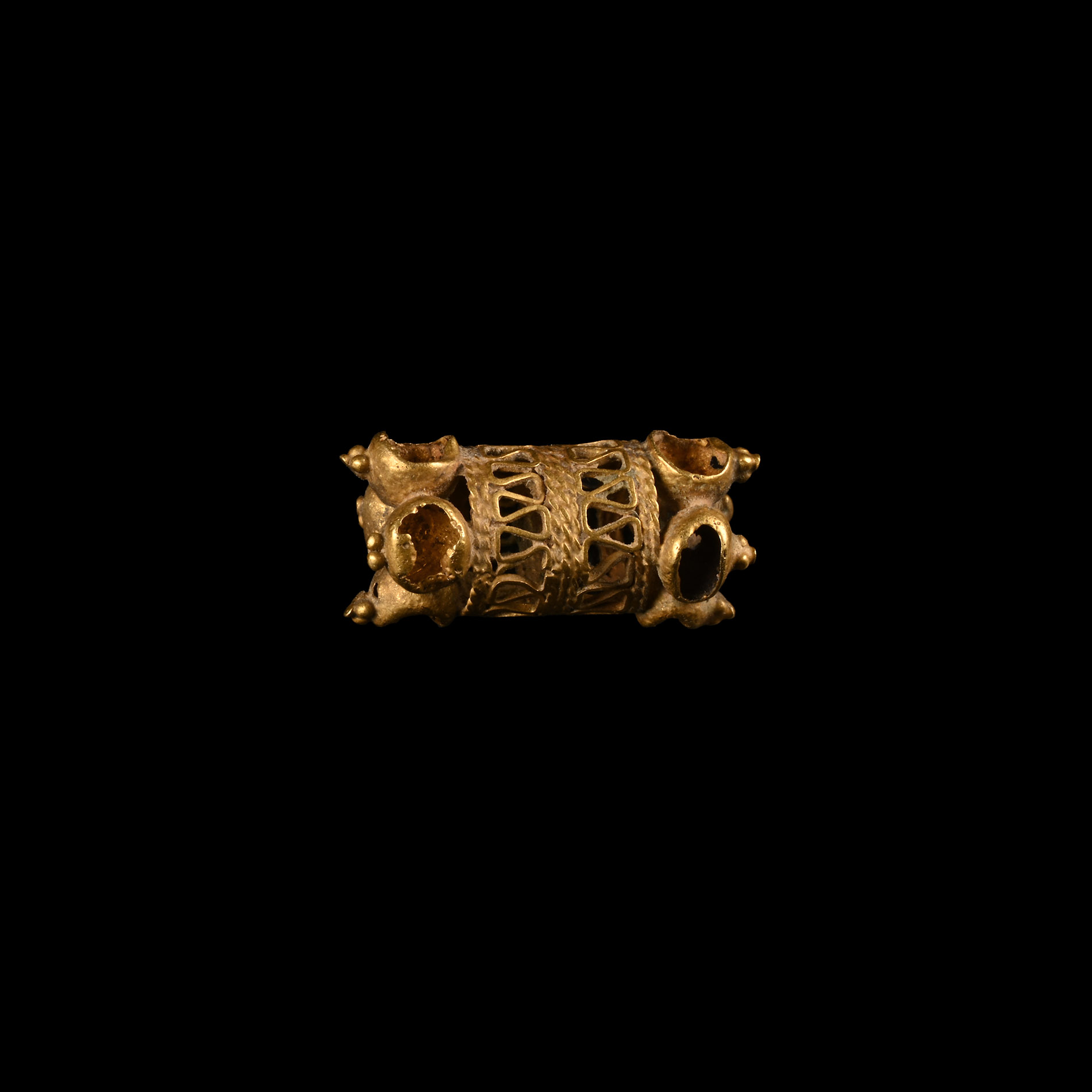
Byzantine Gold Filigree Amulet Holder
CIRCA 10TH CENTURY A.D.
1/2 in. (0.22 grams, 13 mm).
Of cylindrical form adorned with gold bulbs to both openings, each adorned with pyramid granules, the body formed with three bands of filigree ropework framing two tiers of plain filigree 'waves'.
ProvenanceAcquired 1970-2010.
From the collection of a late Japanese gentleman.
TimeLine Auctions follows a vetting process to ensure the authenticity and legality of all items, reinforcing our commitment to integrity and responsible trading. Each antiquity, antique, and coin lot undergoes thorough examination by a vetting committee of at least ten external specialists, professional trade association members, scientists, and archaeologists: Our Vetting Process
AUCTIONS:
TimeLine is a leading auction house specialising in antiquities, ancient art, collectables, natural history, coins, medals, and books. Our auctions offer museums, collectors, historians, and enthusiasts the opportunity to acquire unique and historically significant pieces.
LOT 0791
Byzantine Gold Filigree Amulet Holder
Estimate £150 - 200€170 - 230 (for guidance only)$200 - 270 (for guidance only)
-
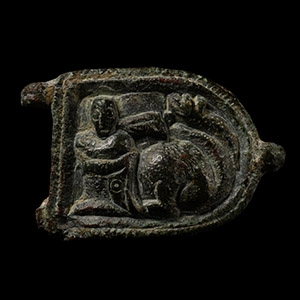
Byzantine Bronze Buckle Plate with Man and Beast
10th-12th century A.D.Sold for (Inc. bp): £117
Heater-shaped with attachment lugs to the reverse; high-relief figural design, possibly 'Daniel in the Lion's Den'. 16.01 grams, 35 mm
Acquired 1960s-1990s. From the late Alison Barker collection, a retired London barrister. -
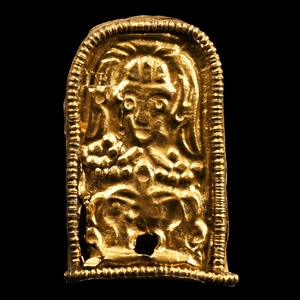
Byzantine Gold Strap End with Facing Figure
Circa 9th-10th century A.D.Estimate: £800 - 1,000 (+bp*)
Opening Bid: £320
The hollow-formed, tongue-shaped body adorned with a filigree border, repoussé figure with pellets on the torso and serpents framing the head. 7.40 grams, 39 mm
Acquired 1990s-early 2000s. East Anglian private collection. -
.jpg)
Byzantine Marble Column Capital
Circa 6th century A.D.Sold for (Inc. bp): £4,160
Rectangular in plan with ornament to all four faces; Side A: facing bust in a stepped square recess, with band of textured short hair, broad face with fleshy features, below this a severe undercut with median D-section column supporting the frame formed as openwork vine-leaves with couchant stag and fawn flanked by two panels of flowering creepers; Side B: facing female bust with band of straight hair, some remains of raised border, deep recessed vertical slot below; Side C: upper panel largely absent, undercut with D-section column of vine-leaves and bunch of grapes flanked by scrollwork; Side D: facing female bust with band of straight hair, remains of fluted border to one side, deep recessed vertical slot below; upper face with one large drilled socket and two smaller; mounted on a custom-made stand. 72.7 kg total, 58.5 cm high including stand
Ex UK art market. Acquired London in 2009. Ex central London gallery. Accompanied by an academic report by Prof. Neritan Ceka. This lot has been checked against the Interpol Database of stolen works of art and is accompanied by search certificate no.202057.
The treatment of the hair on portraits with the hair combed straight and raised on the forehead, covering the ears, refers to the portraits of sculptures, mosaics, coins, or ivory plaques of Justinian period (527-568 A.D.) and namely to the portrait of Byzantine Empress Theodora (500-548 A.D.) in the Musei del Castello Sforzesco, Milan, Italy. The decorative sculpture of that period was relatively limited in the presentation of human portraits and our object takes on a special meaning in the framework of the anthropomorphic art of the early Byzantine period.
