
Loading, please wait...
LOT 0784
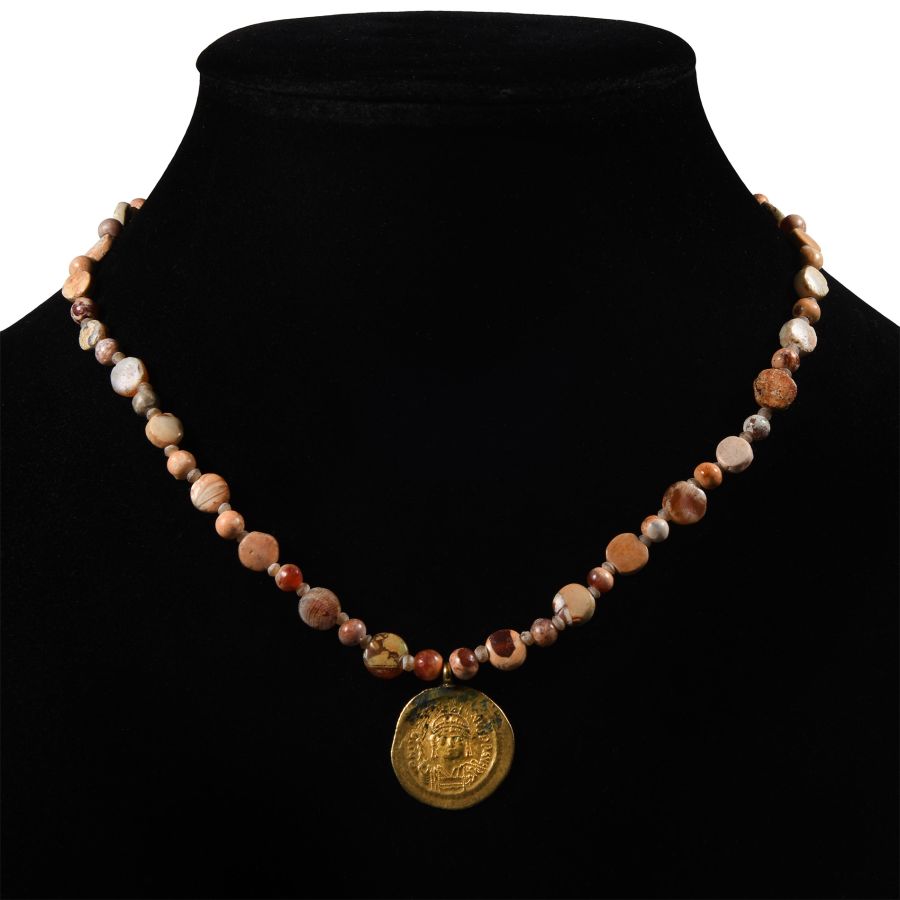
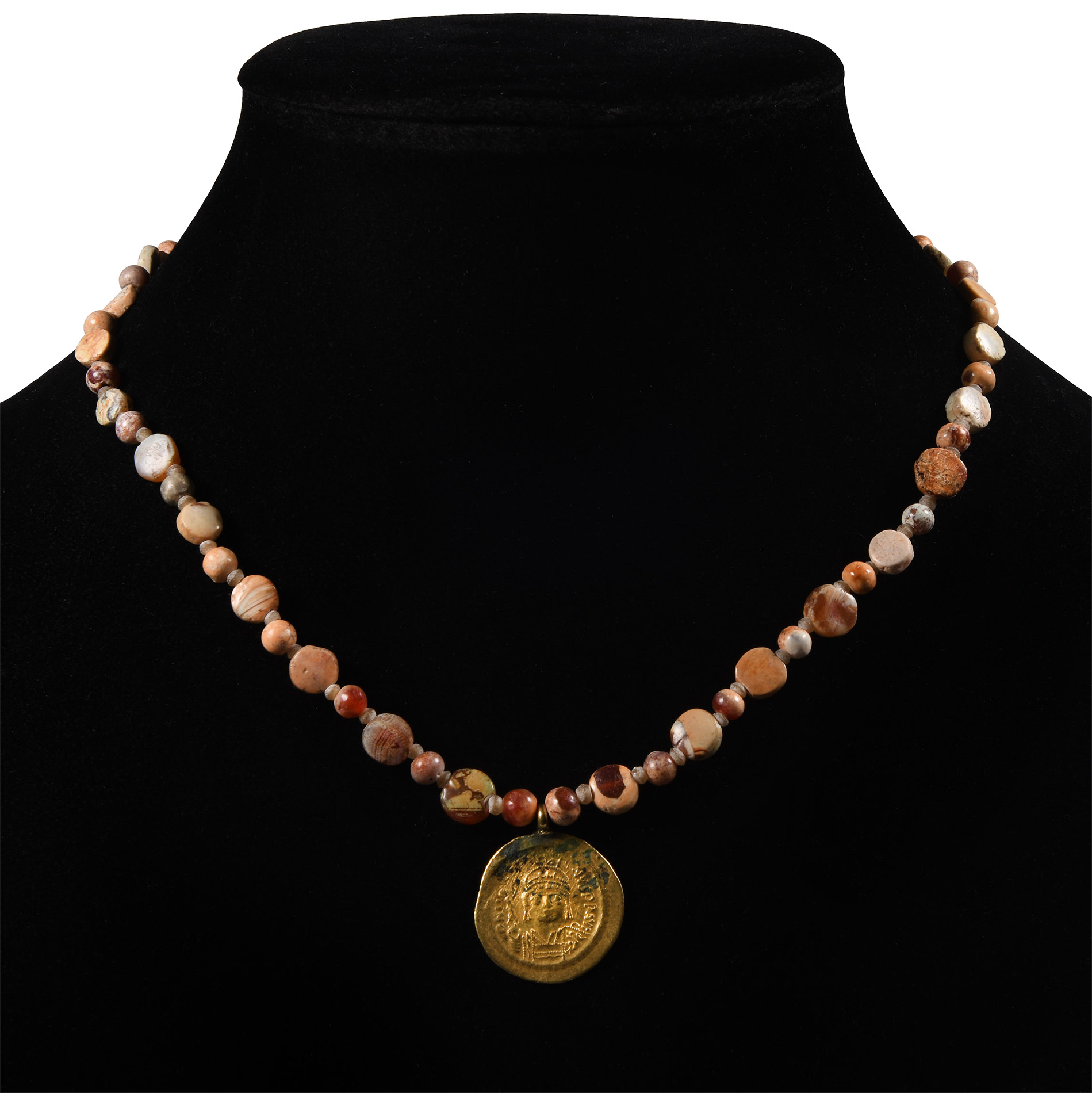
Byzantine Gold Coin Bead Necklace
COIN DATED 565-578 A.D.
16 1/8 in. (17.6 grams, 41 cm long).
Composed of assorted small round banded agate and carnelian beads with small cylinders between, featuring a gold solidus coin pendant of Emperor Justin II; modern screw clasp. [No Reserve]
ProvenanceFrom an important North London collection formed before 1980.
CONDITIONTimeLine Auctions follows a vetting process to ensure the authenticity and legality of all items, reinforcing our commitment to integrity and responsible trading. Each antiquity, antique, and coin lot undergoes thorough examination by a vetting committee of at least ten external specialists, professional trade association members, scientists, and archaeologists: Our Vetting Process
AUCTIONS:
TimeLine is a leading auction house specialising in antiquities, ancient art, collectables, natural history, coins, medals, and books. Our auctions offer museums, collectors, historians, and enthusiasts the opportunity to acquire unique and historically significant pieces.
-
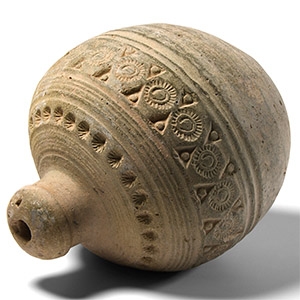
Byzantine Ceramic 'Greek Fire' Fire Bomb or Hand Grenade
9th-11th century A.D.Sold for (Inc. bp): £286
Of piriform shape, decorated with stamped sunburst and pellet-in-triangle motifs; intended to be filled with explosive liquid and wick, used as a hand grenade. 522 grams, 12.1 cm
Acquired 1990s-early 2000s. East Anglian private collection. Accompanied by an academic paper by military specialist Dr Raffaele D'Amato, dated 15 July 2019 and titled 'Eastern Roman Empire - Greek Fire Bomb or Hand Grenade (μεσαίον kακάβιον) 9th-11th century AD'.
Apart from the use of siphons or manual flame-throwers called cheirosiphona, special corps of Roman soldiers employed terracotta grenades, in the form of small jars, abundantly evidenced in archaeological excavations. Such were the γανωτα, vessels (sometimes also of bronze) used for Greek fire. They were called μεσαία kακαβιά or κυτροκακάβια where the former had a bulbous shape and the latter a more cylindrical form. -
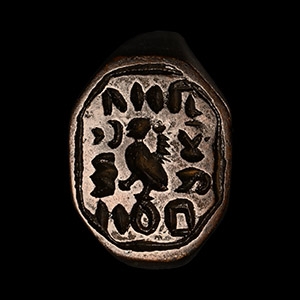
Byzantine Bronze Ring with Bird and Greek Inscription
Circa 12th-15th century A.D.Sold for (Inc. bp): £72
Composed of a slender hoop expanding to facetted shoulders, octagonal bezel engraved with a bird standing left at centre, Greek or pseudo Greek text in the surrounding field. 10.13 grams, 24.76 mm overall, 21.83 mm internal diameter (approximate size British X, USA 11 1/2, Europe 26.29, Japan 25)
UK private collection formed before 2000. Ex North London, UK, gallery. -
.jpg)
Byzantine Gold Coin Bead Necklace
Coin dated 610-641 A.D.Sold for (Inc. bp): £293
Composed of irregular coral and glass beads, featuring a gold Solidus coin pendant of Emperor Heraclius; modern screw clasp. 29.17 grams, 38 cm long
From an important North London collection formed before 1980.
