
Loading, please wait...
LOT 0956
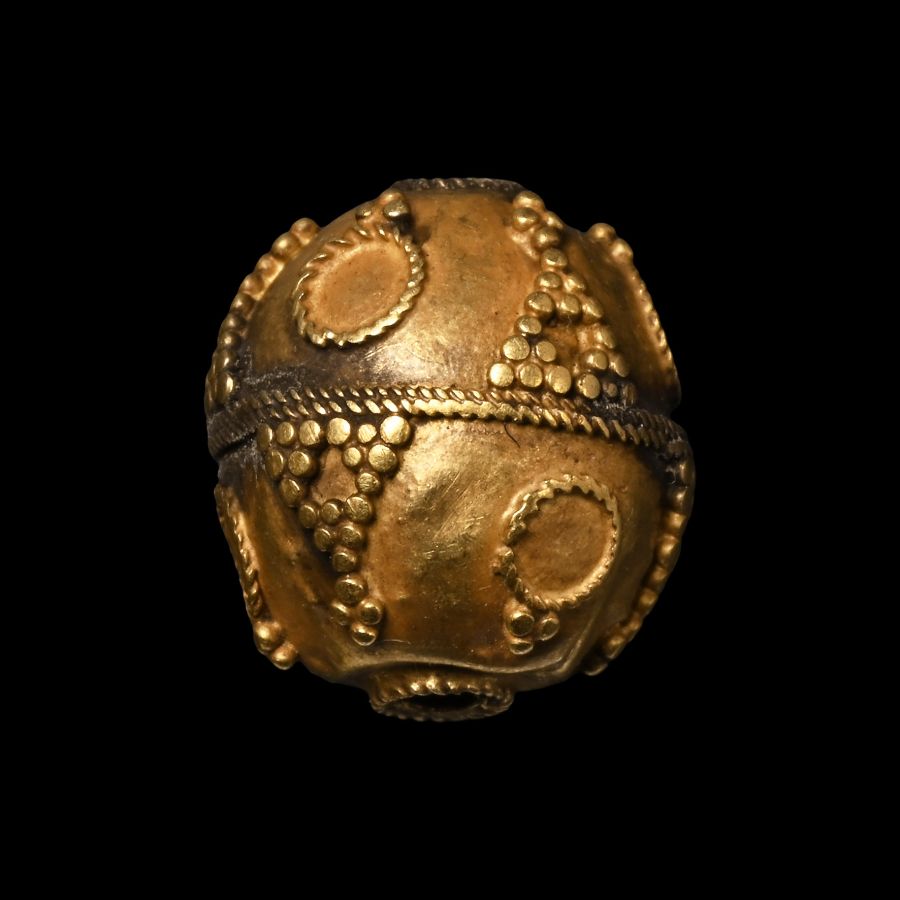
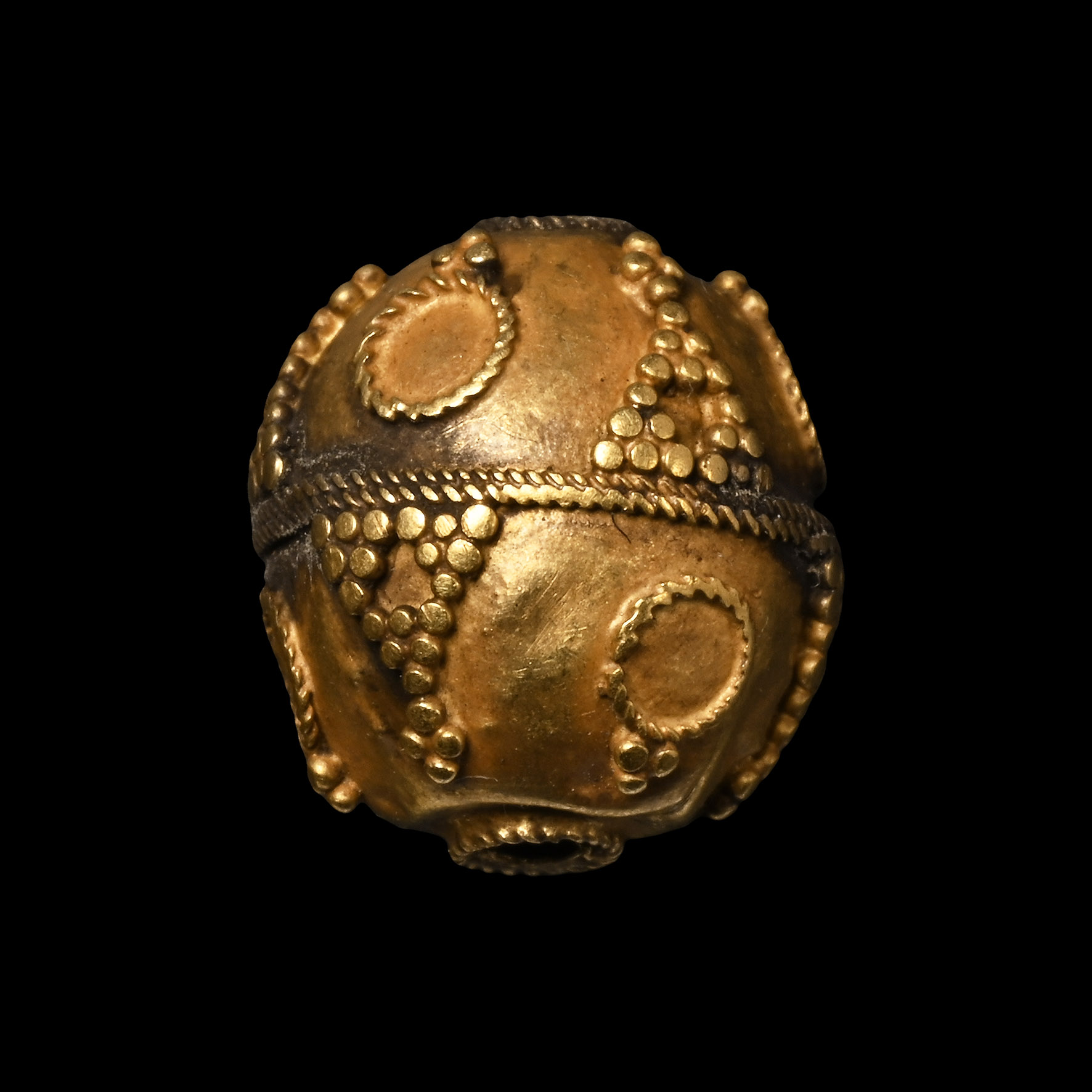
Byzantine Gold Bead with Granular Decoration
CIRCA 6TH-10TH CENTURY A.D.
1/2 in. (2.12 grams, 12 mm).
Hollow-formed, decorated with a central filigree band from which granulated triangles radiate, alternating with filigree circular motifs; piercing occluded.
ProvenanceFrom the property of late Mr SM, London, UK, 1969-1999.
CONDITIONTimeLine Auctions follows a vetting process to ensure the authenticity and legality of all items, reinforcing our commitment to integrity and responsible trading. Each antiquity, antique, and coin lot undergoes thorough examination by a vetting committee of at least ten external specialists, professional trade association members, scientists, and archaeologists: Our Vetting Process
AUCTIONS:
TimeLine is a leading auction house specialising in antiquities, ancient art, collectables, natural history, coins, medals, and books. Our auctions offer museums, collectors, historians, and enthusiasts the opportunity to acquire unique and historically significant pieces.
LOT 0956
Byzantine Gold Bead with Granular Decoration
Estimate £150 - 200€170 - 230 (for guidance only)$200 - 270 (for guidance only)
-
.jpg)
Byzantine Bead Bracelet with Cross
15th century A.D. or earlierSold for (Inc. bp): £111
Restrung; composed of annular and biconvex carnelian beads, together with a bronze Christian cross with the Five Wounds of Christ represented as ring-and-dot ornament. 4.28 grams, 18 cm long
Acquired 1980-2015. Ex Abelita family collection. -
Byzantine Inscribed Silver Bowl with Chi Rho
Circa 11th-12th century A.D.Estimate: £10,000 - 14,000 (+bp*)
Opening Bid: £5,556
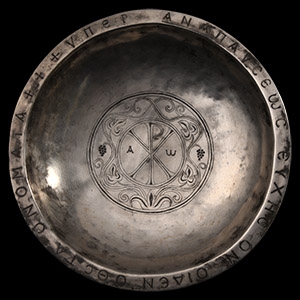
With rounded underside and flange rim; tondo with incised symmetrical vinescroll with bunches of grapes enclosing central disc with niello-filled Chi Rho flanked by alpha and omega; legend to the rim in capitals: '+++ ΥΠΕΡ ΑΝΑΠΑΥϹΕΩϹ ΕΥΧΗϹ ΟΝ ΟΙΔΕΝ ΟΘϹ ΤΑ ΟΝΟΜΑΤΑ' (For the eternal rest of him who had knowledge in the name of the Lord). 395 grams, 23.5 cm wide
From a European family collection formed in the 1990s; thence by descent to a UK gentleman. Accompanied by an academic report by Dr Raffaele D’Amato. Accompanied by professional drawings of the object. This lot has been checked against the Interpol Database of stolen works of art and is accompanied by search certificate no.11963-210867.
The decorative apparatus of this plate could be associated with Eastern Roman art of the 11-12th century A.D., although we cannot exclude an earlier dating. -
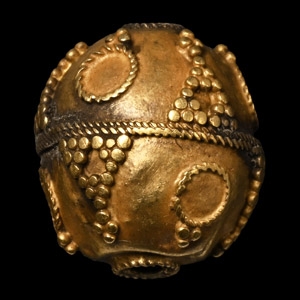
Byzantine Gold Bead with Granular Decoration
Circa 6th-10th century A.D.Estimate: £150 - 200 (+bp*)
Opening Bid: £75
Hollow-formed, decorated with a central filigree band from which granulated triangles radiate, alternating with filigree circular motifs; piercing occluded. 2.12 grams, 12 mm
From the property of late Mr SM, London, UK, 1969-1999.
