
Loading, please wait...
LOT 0165
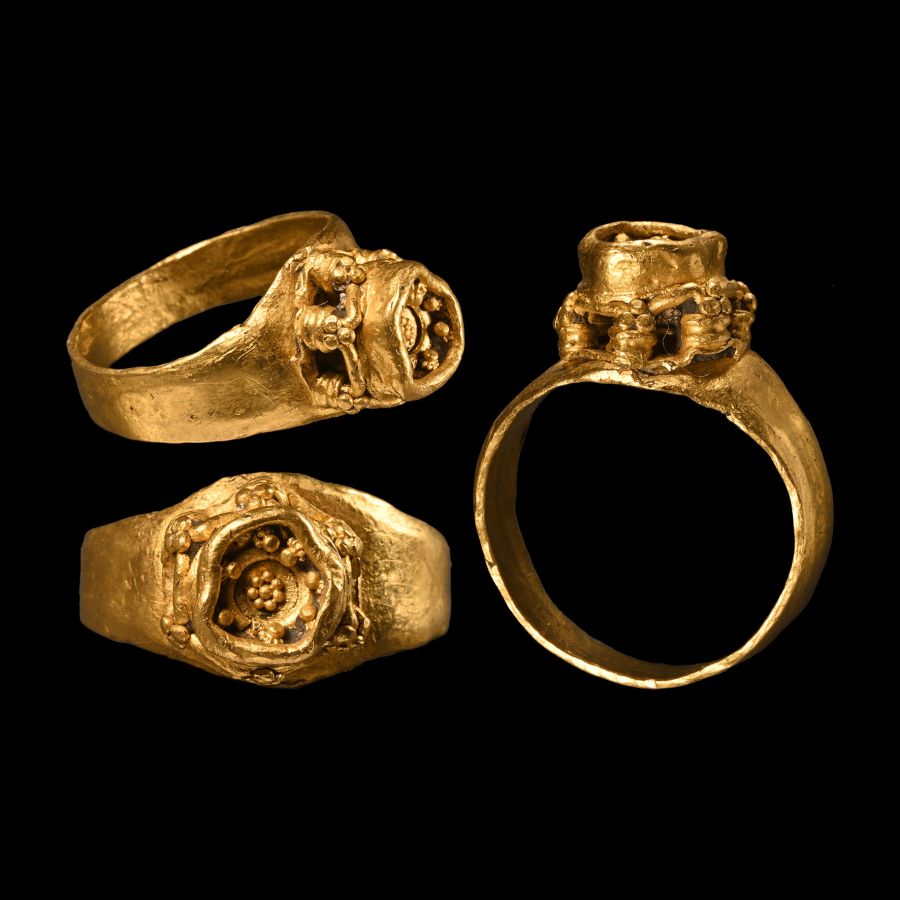
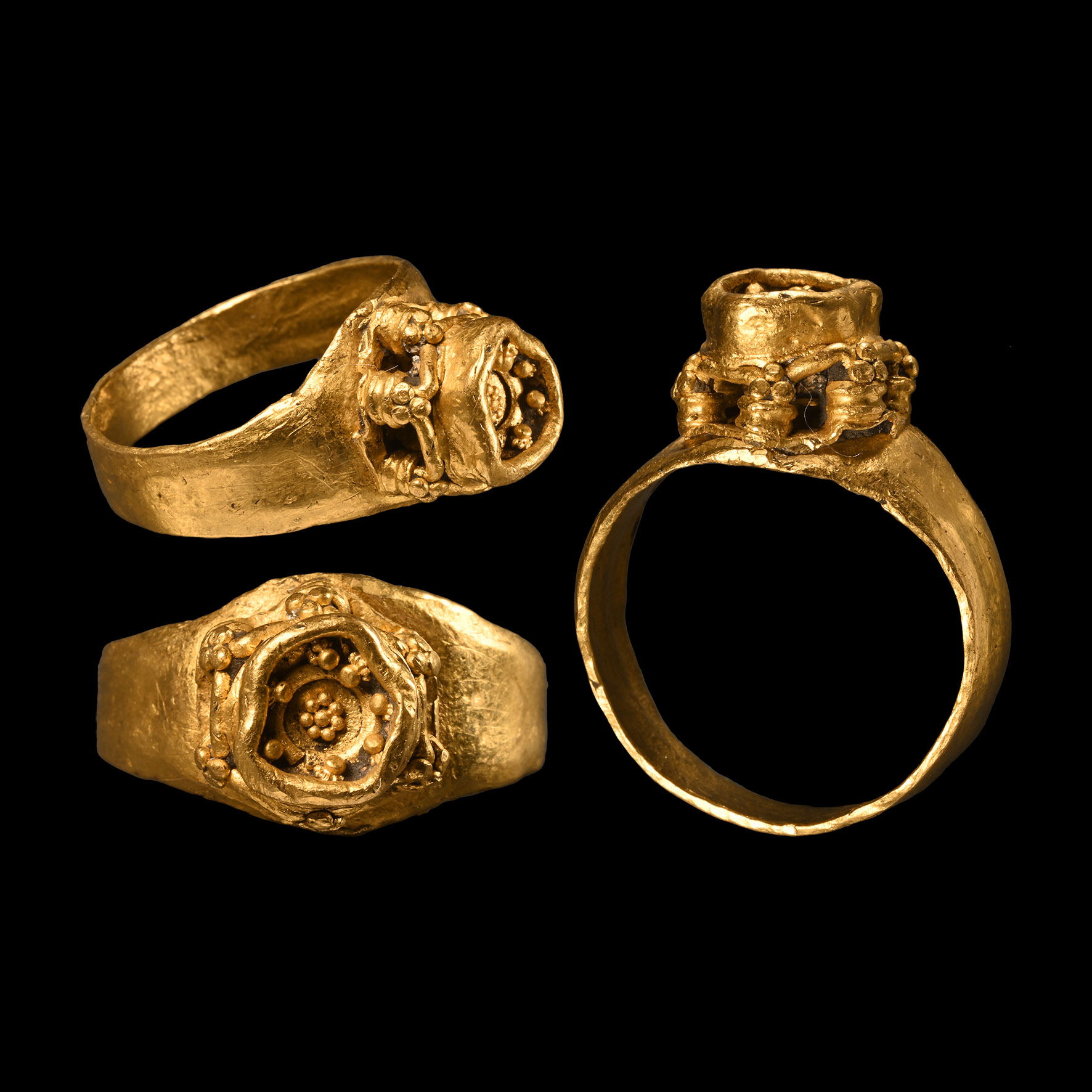
Byzantine Gold Architectural Ring
6TH-8TH CENTURY A.D.
1 1/8 in. (12.96 grams, 30.45 mm overall, 21.38 mm internal diameter (approximate size British W 1/2, USA 11 1/4, Europe 25.66, Japan 24)).
Composed of a flat-section hoop with expanded centre, openwork bezel of six gusseted legs topped with pyramid granules and dished discoid centre adorned with granule clusters; Byzantine or Merovingian.
ProvenanceAcquired 1990s-early 2000s.
East Anglian private collection.
Cf. The V&A Museum, accession number M.176-1937, for similar; cf. Adams, N. ed., Intelligible Beauty, London, 2010, p.18, for a similar example.
CONDITIONTimeLine Auctions follows a vetting process to ensure the authenticity and legality of all items, reinforcing our commitment to integrity and responsible trading. Each antiquity, antique, and coin lot undergoes thorough examination by a vetting committee of at least ten external specialists, professional trade association members, scientists, and archaeologists: Our Vetting Process
AUCTIONS:
TimeLine is a leading auction house specialising in antiquities, ancient art, collectables, natural history, coins, medals, and books. Our auctions offer museums, collectors, historians, and enthusiasts the opportunity to acquire unique and historically significant pieces.
-
Byzantine Gold Architectural Ring
6th-8th century A.D.Sold for (Inc. bp): £936
Composed of a flat-section hoop with expanded centre, openwork bezel of six gusseted legs topped with pyramid granules and dished discoid centre adorned with granule clusters; Byzantine or Merovingian. 12.96 grams, 30.45 mm overall, 21.38 mm internal diameter (approximate size British W 1/2, USA 11 1/4, Europe 25.66, Japan 24)
Acquired 1990s-early 2000s. East Anglian private collection. -
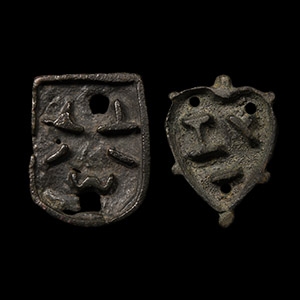
Byzantine Bronze Bread Stamp Group
6th-7th century A.D.Estimate: £120 - 170 (+bp*)
Opening Bid: £67
Comprising: one sub-rectangular in form with Greek capital letters (Mi, Iota, Iota, Tau and Tau, Iota, Eta) in raised relief, suspension lug to reverse; a leaf-shaped stamp with lugs to the perimeter and three raised letters to the centre, suspension lug to reverse. 40.8 grams total, 38 mm each
Acquired before 2000. From the collection of a European gentleman living in the UK.
The larger bronze stamps are generally known in the relevant literature as bread stamps. These were used on the bread consecrated during the Holy Liturgy and then given to the believers as the Body of Christ during the Holy Communion, as well as to the bread which was given as a present at the end of the Liturgy, as 'Blessed bread' or Antidoron. Similar seals are still used today in the Orthodox Church. -
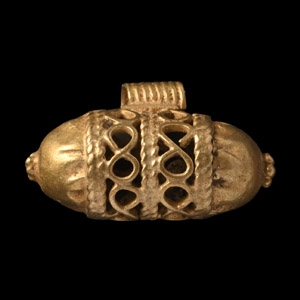
Byzantine Gold Openwork Pendant
6th-8th century A.D.Estimate: £200 - 300 (+bp*)
Opening Bid: £100
Of capsule form, openwork filigree and ropework body, domed terminals with apex granules, ribbed suspension loop. 0.87 grams, 14 mm
Acquired 1970-2010. Collection of a late Japanese gentleman.
