
Loading, please wait...
LOT 0986
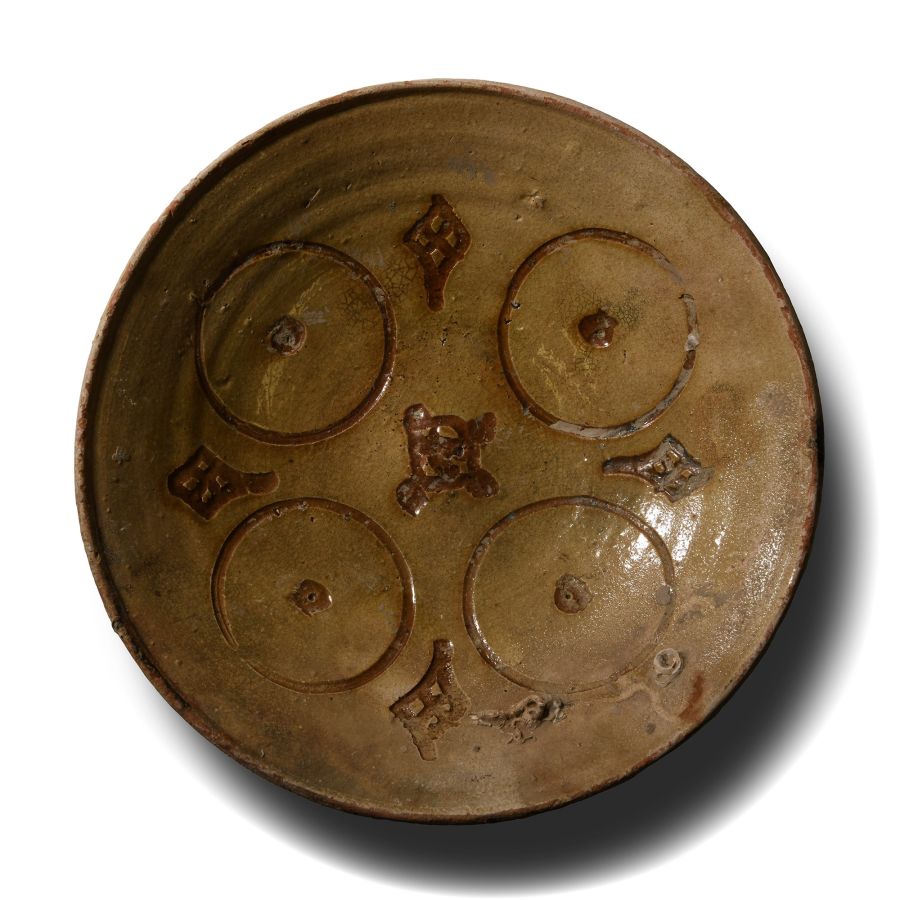
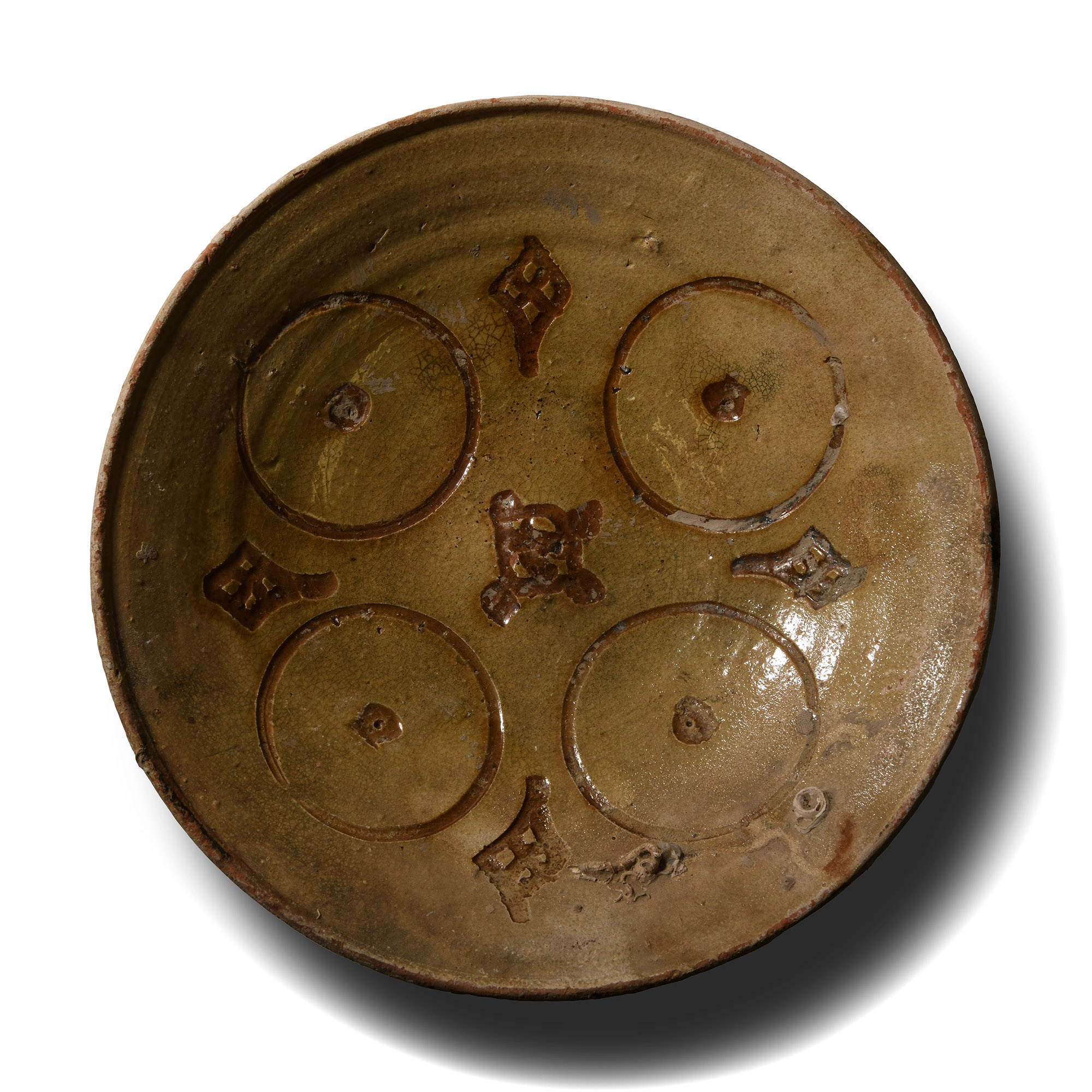
Byzantine Glazed Sgraffito-Ware Shipwreck Bowl
13TH-14TH CENTURY A.D.
8 5/8 in. (504 grams, 22 cm).
Shallow bowl with glazed upper face and basal ring, reserved geometric design of roundels and lozenges, with signs of sea encrustations.
ProvenancePrivate collection of Mr S.A., Switzerland, 1990s, thence by descent.
LiteratureCf. similar item in the Metropolitan Museum of Art, New York, under accession no.1994.306.
CONDITIONTimeLine Auctions follows a vetting process to ensure the authenticity and legality of all items, reinforcing our commitment to integrity and responsible trading. Each antiquity, antique, and coin lot undergoes thorough examination by a vetting committee of at least ten external specialists, professional trade association members, scientists, and archaeologists: Our Vetting Process
AUCTIONS:
TimeLine is a leading auction house specialising in antiquities, ancient art, collectables, natural history, coins, medals, and books. Our auctions offer museums, collectors, historians, and enthusiasts the opportunity to acquire unique and historically significant pieces.
-
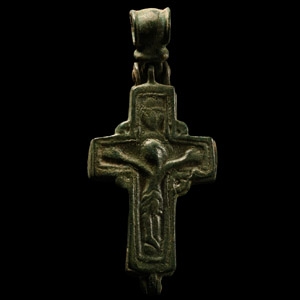
Byzantine Bronze Reliquary Cross Pendant
Circa 12th century A.D.Sold for (Inc. bp): £312
Two-piece enkolpion with hinged suspension loop, to each face a low-relief Corpus Christi with facing mask above. 29.7 grams, 62 mm
Acquired on the London art market in the late 1980s-1990s. From the family collection of an East London, UK, gentleman. -
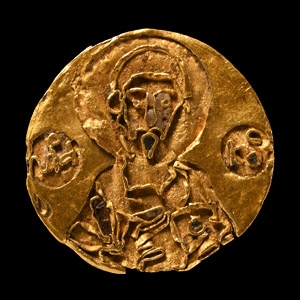
Byzantine Gold Enamel Mount of a Standing Saint and Inscription
Late 10th-early 11th century A.D.Sold for (Inc. bp): £442
Sheet gold disc with applied filigree cells; facing nimbate saint with flanking roundels bearing 'MP / IC' (Mary and Jesus). 1.01 grams, 18 mm
Ex Elie Borowski, 1988. -
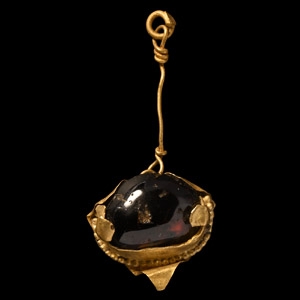
Byzantine Gold Garnet Set Pendant
Circa 6th-8th century A.D.Sold for (Inc. bp): £143
D-shaped cabochon garnet set in a gold cell with wire dangle beneath. 1.05 grams, 24 mm
From a late Japanese specialist collector, 1970-2000s.
