
Loading, please wait...
LOT 0931
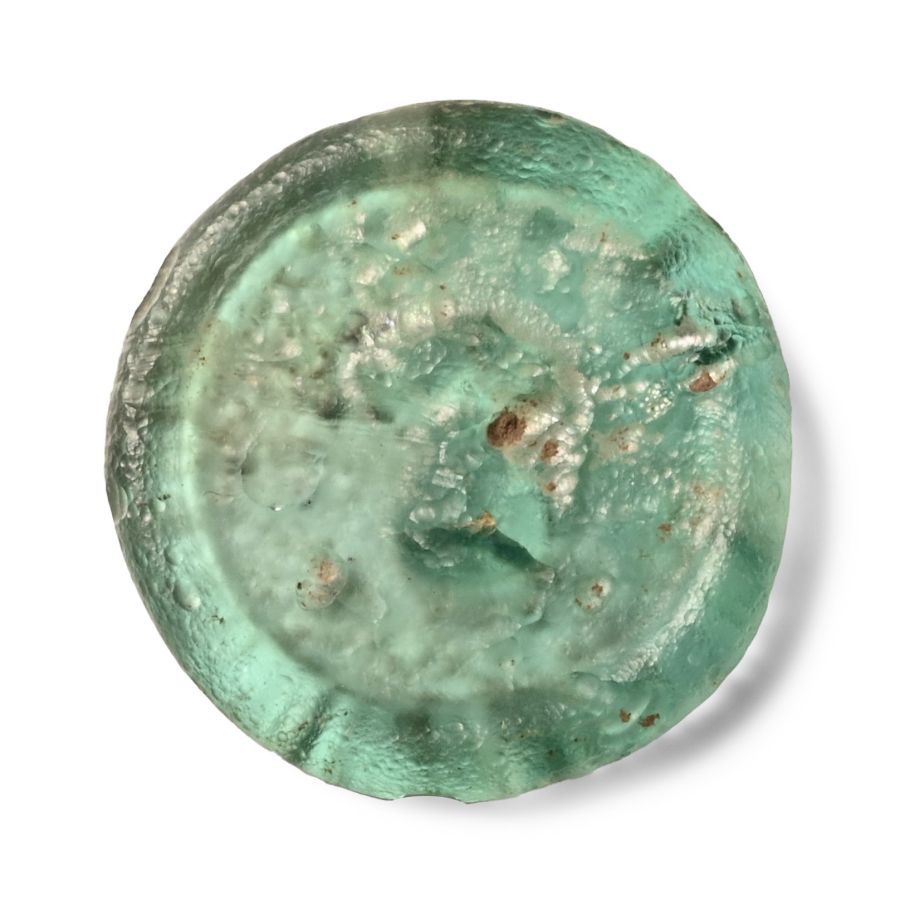
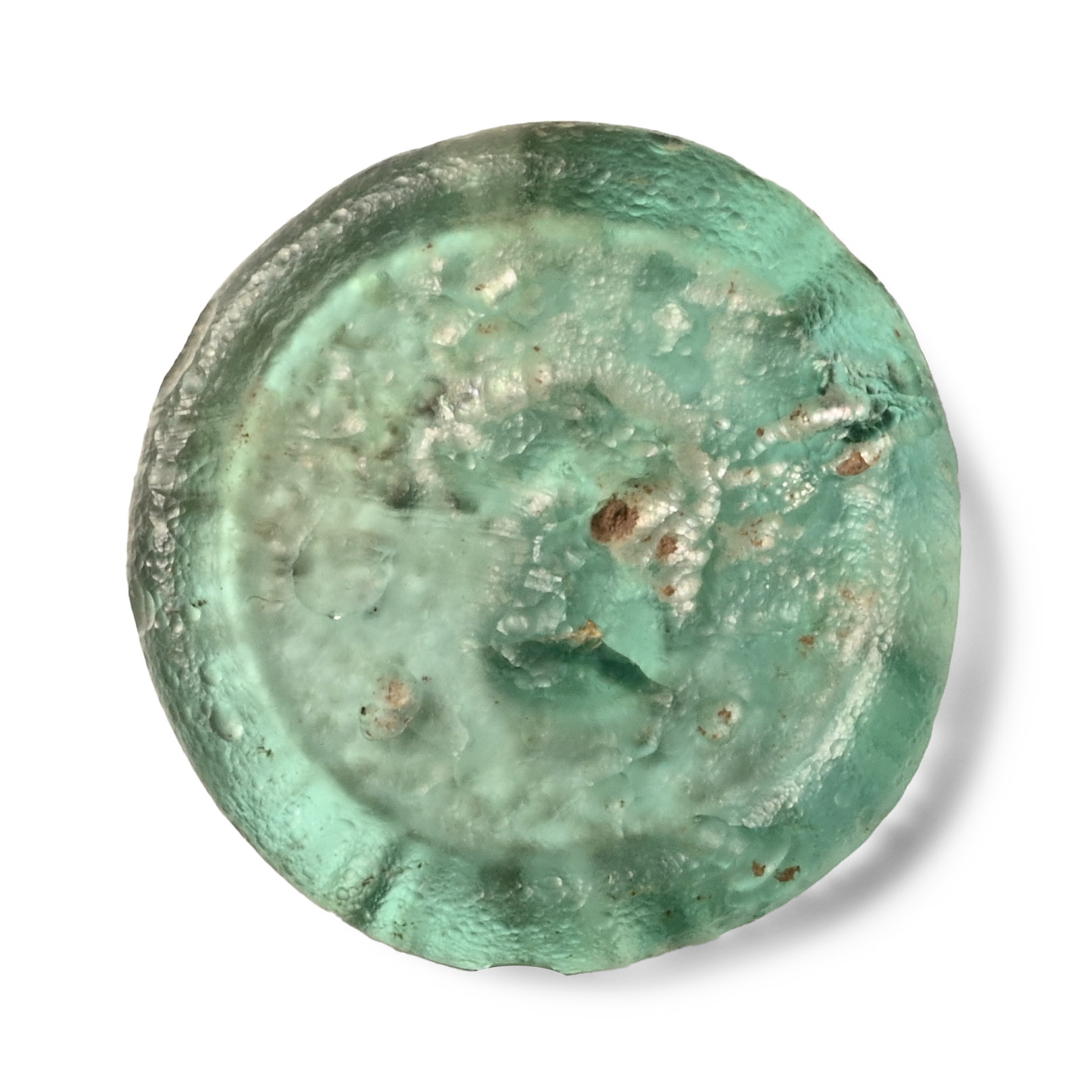
Byzantine Glass Weight with Eparches Inscription
CIRCA 6TH-8TH CENTURY A.D.
7/8 in. (2.36 grams, 23 mm).
Discoid weight with low-relief portrait bust, Greek legend.
ProvenanceFrom the property of late Mr SM, London, UK, 1969-1999.
CONDITIONTimeLine Auctions follows a vetting process to ensure the authenticity and legality of all items, reinforcing our commitment to integrity and responsible trading. Each antiquity, antique, and coin lot undergoes thorough examination by a vetting committee of at least ten external specialists, professional trade association members, scientists, and archaeologists: Our Vetting Process
AUCTIONS:
TimeLine is a leading auction house specialising in antiquities, ancient art, collectables, natural history, coins, medals, and books. Our auctions offer museums, collectors, historians, and enthusiasts the opportunity to acquire unique and historically significant pieces.
-
Byzantine Bifacial Gemstone with Religious Scenes
6th-8th century A.D.Sold for (Inc. bp): £338
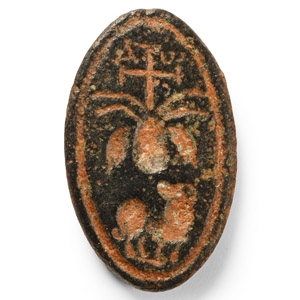
To one face an incuse cross above an agnus dei, to the other Christ enthroned in majesty with worshipper. 2.96 grams, 21 mm
Acquired on the London, UK, art market in the 1990s. From a gentleman's private collection. -
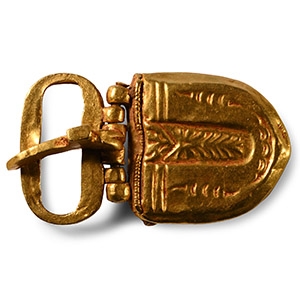
Byzantine Decorated Gold Belt Buckle
8th century A.D.Estimate: £4,000 - 6,000 (+bp*)
Opening Bid: £2,000
Comprising a D-shaped plate with acanthus-leaf motif in low-relief, beaded wire band above the hinge, kidney-shaped rectangular-section loop, flat tongue with spur to the upper face; three mounting studs to reverse. 33.02 grams, 55 mm
Acquired from Bernard Hern, 1970s. From an old UK collection, 1970s-1980s. This lot has been checked against the Interpol Database of stolen works of art and is accompanied by a search certificate number no.12113-217070. -
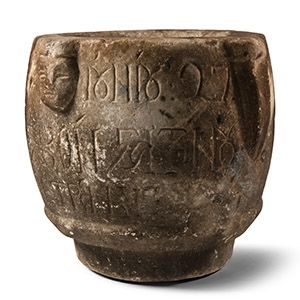
Byzantine Limestone Mortar with Faces and Later Dedication
Circa 14th-15th century A.D. and laterSold for (Inc. bp): £390
Drum-shaped body with narrow base, two vertical flanges running from the rim and between them two D-shaped male masks with low discoid caps; later inscribed: '1812 [ΕΤ]ΟΥ IΟΥ[ΛIΟΥ] 27 ІωÁΝΙΣ ΚΟΝΣΤΑΝΤΙΝΟΥ ΠΕΤΡΙΚΙ' (July the 27, year 1812 of Iohannes Konstantinos Petrikos). 11.15 kg, 22 cm wide
From a collection acquired on the UK art market from various auction houses and collections mostly before 2000. From an important Cambridgeshire estate; thence by descent.
