
Loading, please wait...
LOT 0953
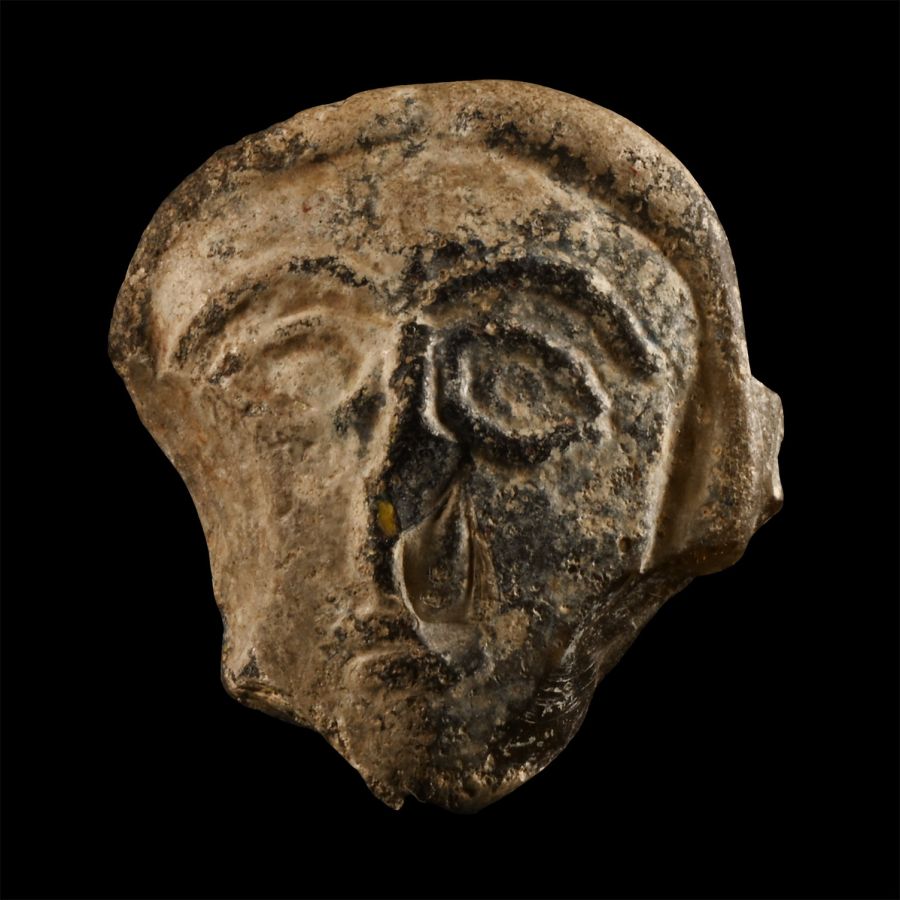
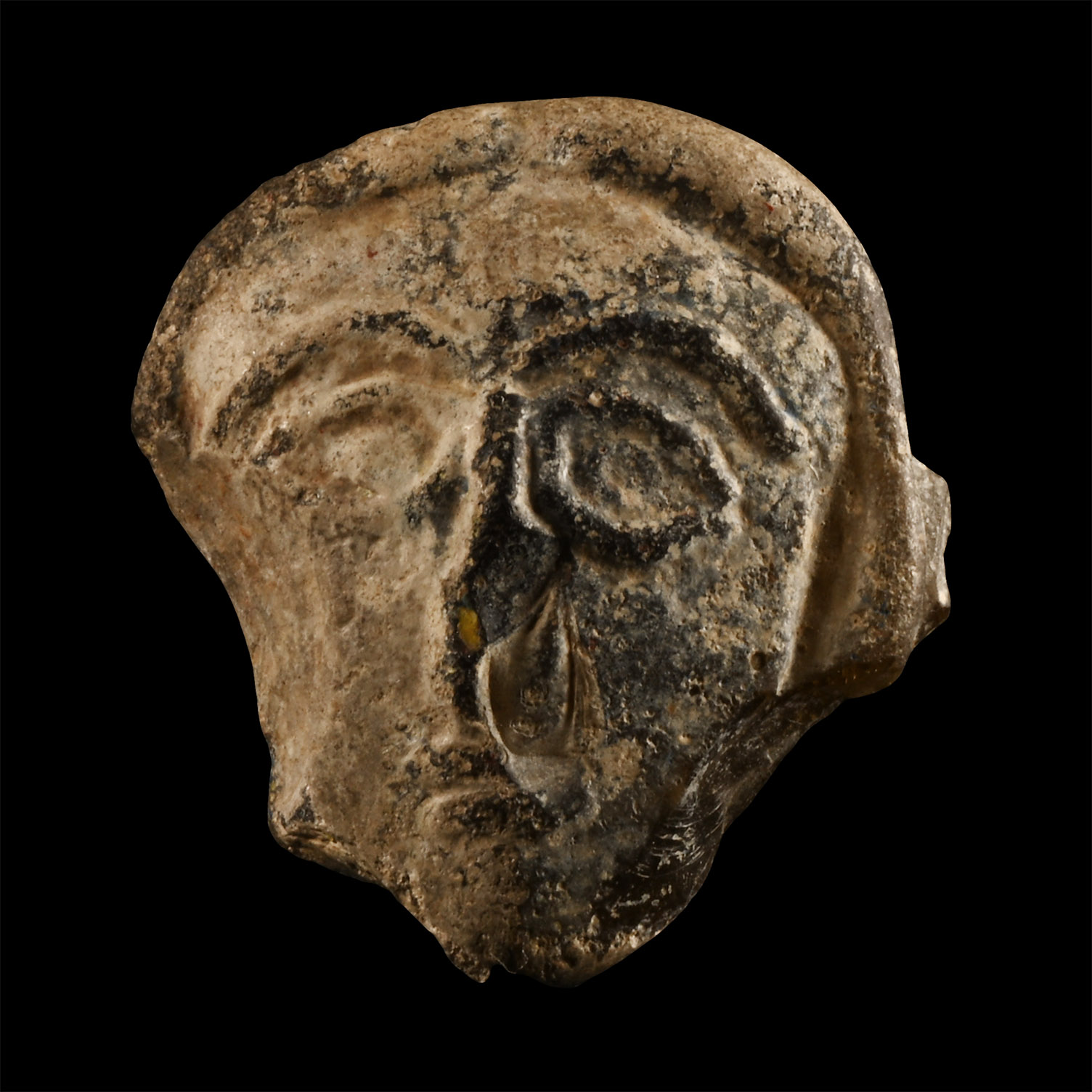
Byzantine Glass Face Appliqué
CIRCA 6TH-10TH CENTURY A.D. OR LATER
1 1/8 in. (7.6 grams, 29 mm).
Modelled in low relief with band of hair above arched brows and lentoid eyes, transverse bar for the mouth; reputedly the head of Jesus from a Corpus Christi. [No Reserve]
ProvenanceCollected from 1969-1999.
From the collection of the late Mr S.M., London, UK.
TimeLine Auctions follows a vetting process to ensure the authenticity and legality of all items, reinforcing our commitment to integrity and responsible trading. Each antiquity, antique, and coin lot undergoes thorough examination by a vetting committee of at least ten external specialists, professional trade association members, scientists, and archaeologists: Our Vetting Process
AUCTIONS:
TimeLine is a leading auction house specialising in antiquities, ancient art, collectables, natural history, coins, medals, and books. Our auctions offer museums, collectors, historians, and enthusiasts the opportunity to acquire unique and historically significant pieces.
-
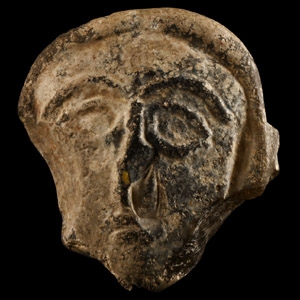
Byzantine Glass Face Appliqué
Circa 6th-10th century A.D. or laterSold for (Inc. bp): £52
Modelled in low relief with band of hair above arched brows and lentoid eyes, transverse bar for the mouth; reputedly the head of Jesus from a Corpus Christi. 7.6 grams, 29 mm
Collected from 1969-1999. From the collection of the late Mr S.M., London, UK. -
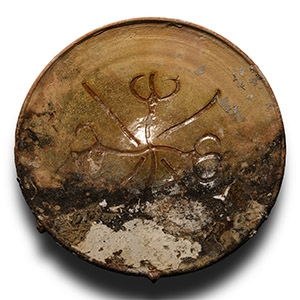
Byzantine Glazed Sgraffito-Ware Shipwreck Bowl
13th-14th century A.D.Sold for (Inc. bp): £195
With glazed upper face and basal ring, incised geometric motif of a cross crosslet with interstitial radiating spurs, with signs of sea encrustations. 562 grams, 22 cm
Private collection of Mr S.A., Switzerland, 1990s, thence by descent. -
.jpg)
Byzantine Silver-Gilt Ring with Saint
Circa 6th-8th century A.D.Estimate: £400 - 600 (+bp*)
Opening Bid: £200
With round-section hoop and integral discoid plaque, tondo with intaglio of a robed nimbate figure with one arm raised facing a similar figure, all between fronds. 3.13 grams, 24.45 mm overall, 20.03 mm internal diameter (approximate size British T, USA 9 1/2, Europe 21.26, Japan 20)
Ex M.N. London collection, 2000s.
