
Loading, please wait...
LOT 0181
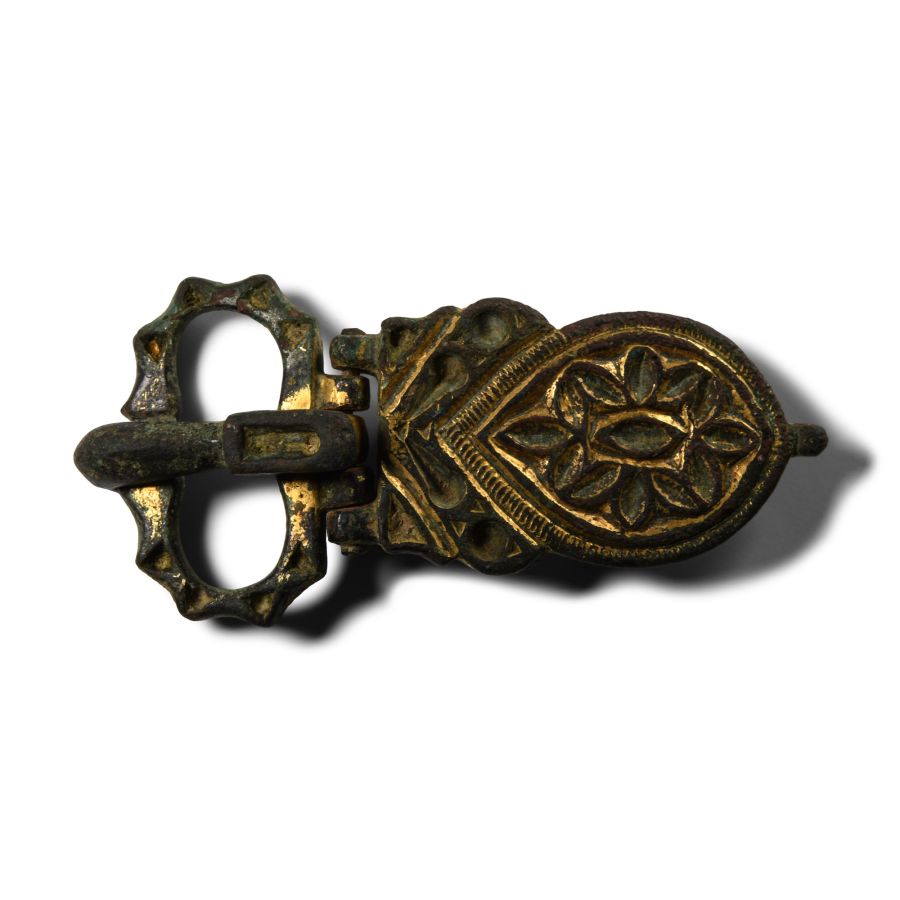
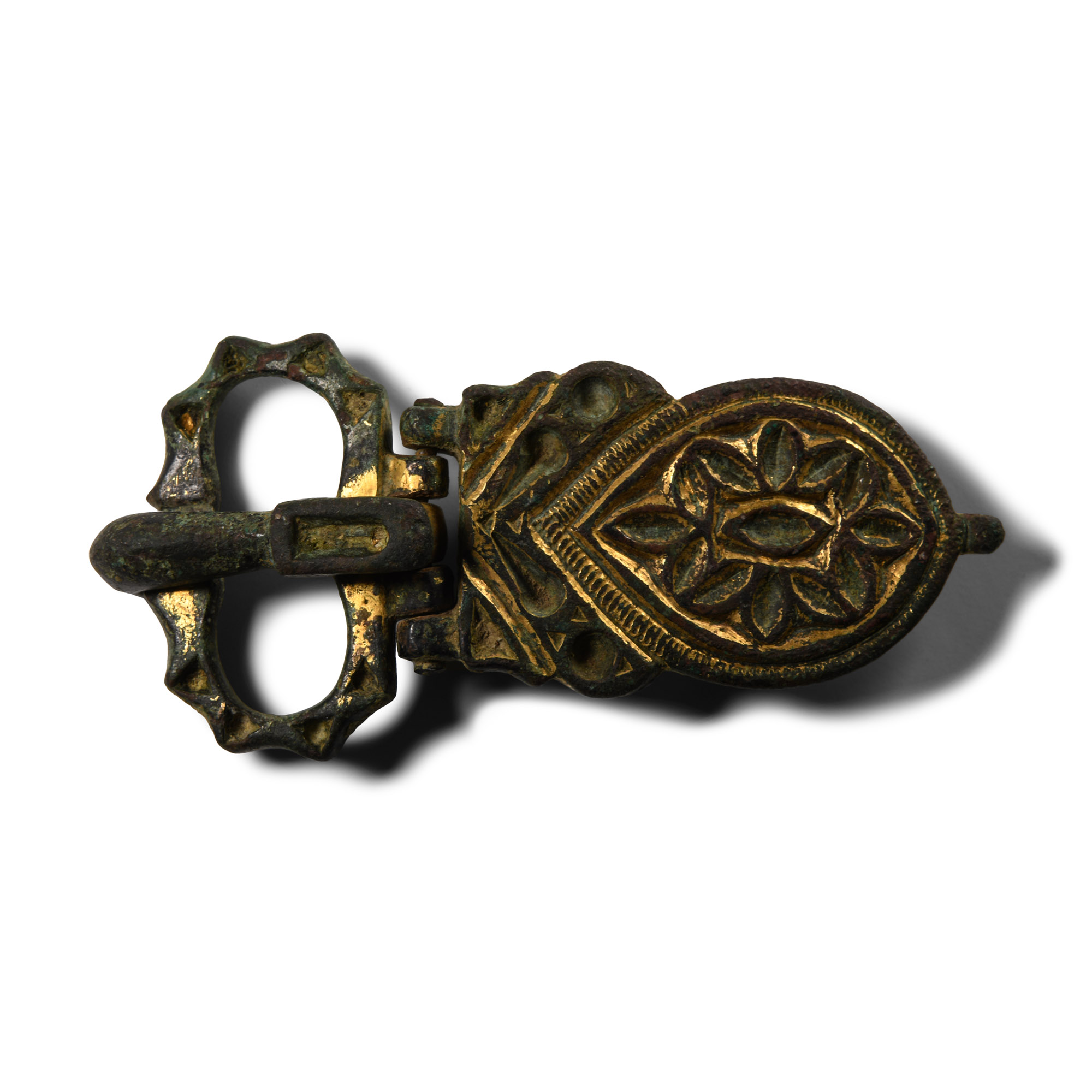
Byzantine Gilt Bronze Decorated Buckle
6TH-7TH CENTURY A.D.
3 1/8 in. (56 grams, 80 mm).
Comprising: buckle loop with dentilled outer edge, impressed triangular cells; D-section tongue curved over the forward edge of the loop, with rectangular shield to the rear with slot; plate formed as a vesica-shaped rear panel with rosette motif and billetted border, forward edge with cells flanking; knop finial to rear edge; obverse with three pierced lugs for attachment to the belt; ferrous hinge-pin.
ProvenancePrivate UK collection.
Acquired in the 1980s.
Property of a Cambridgeshire gentleman.
Cf. Wamser, L., Die Welt von Byzanz - Europas Östliches Erbe, München, 2004, items 439, 442, for type.
CONDITIONTimeLine Auctions follows a vetting process to ensure the authenticity and legality of all items, reinforcing our commitment to integrity and responsible trading. Each antiquity, antique, and coin lot undergoes thorough examination by a vetting committee of at least ten external specialists, professional trade association members, scientists, and archaeologists: Our Vetting Process
AUCTIONS:
TimeLine is a leading auction house specialising in antiquities, ancient art, collectables, natural history, coins, medals, and books. Our auctions offer museums, collectors, historians, and enthusiasts the opportunity to acquire unique and historically significant pieces.
-
.jpg)
Byzantine Cosmatesque Mosaic Panel
11th-13th century A.D.Sold for (Inc. bp): £1,560
Recalling workmanship similar to that found in the floor of the Sistine Chapel and other important Roman churches; comprising a stepped rectangular panel with white marble border, square blocks with cross fourchée motifs on porphyry and other fields; mounted on a custom-made stand. 1.06 kg, 38.5 cm wide (1.4 kg total including stand)
French gallery, Paris, 1990s. From a family collection, London, UK.
The Cosmatesque style was a characteristic type of ornamentation of Eastern Roman origin (opus alexandrinum) used by the Roman marble makers of the 12th and 13th centuries AD. It embellishes floors, ciboriums and cloisters of churches by means of polychrome marble inlays of varied and imaginative geometric shapes. The wider use of this decoration began in the 12th century, at which time techniques were improved: the Cosmati floors were made with pieces of stone cut in various shapes and sizes, a property quite different from the mosaics in opus tessellatum, in which the motifs were made from small units all having the same size and shape, or from the opus sectile, intended to create representations with pieces of multicoloured marble cut out and arranged for this purpose. The stones used by Cosmati artists were often material salvaged from the ruins of ancient Roman buildings. -
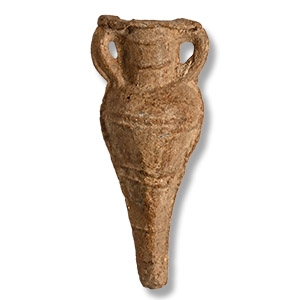
Byzantine Lead Pilgrim's Ampulla
6th-8th century A.D.Sold for (Inc. bp): £20
Modelled as a two-handled amphora with decorative bands to the body. 25.3 grams, 54 mm
Ex German art market, 2000s. Acquired from an EU collector living in London. From the collection of Surrey, UK, gentleman. -
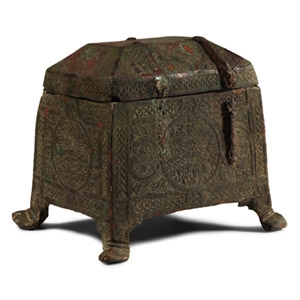
Arab-Byzantine Bronze Casket with Crosses and Naskh Inscription
13th-14th century A.D.Sold for (Inc. bp): £1,170
Rectangular in plan with tapering sides and flared stub feet; separate lid with chamfered sides; sidewalls decorated with low-relief border of knotwork surrounding roundels with geometric and floral ornament, with a cross motif above and below; iron securing strips to the lid and side; underside with knotwork panel. 959 grams, 14.3 cm
UK private collection before 2000. Acquired on the UK art market. Property of a London gentleman.
