
Loading, please wait...
LOT 0965
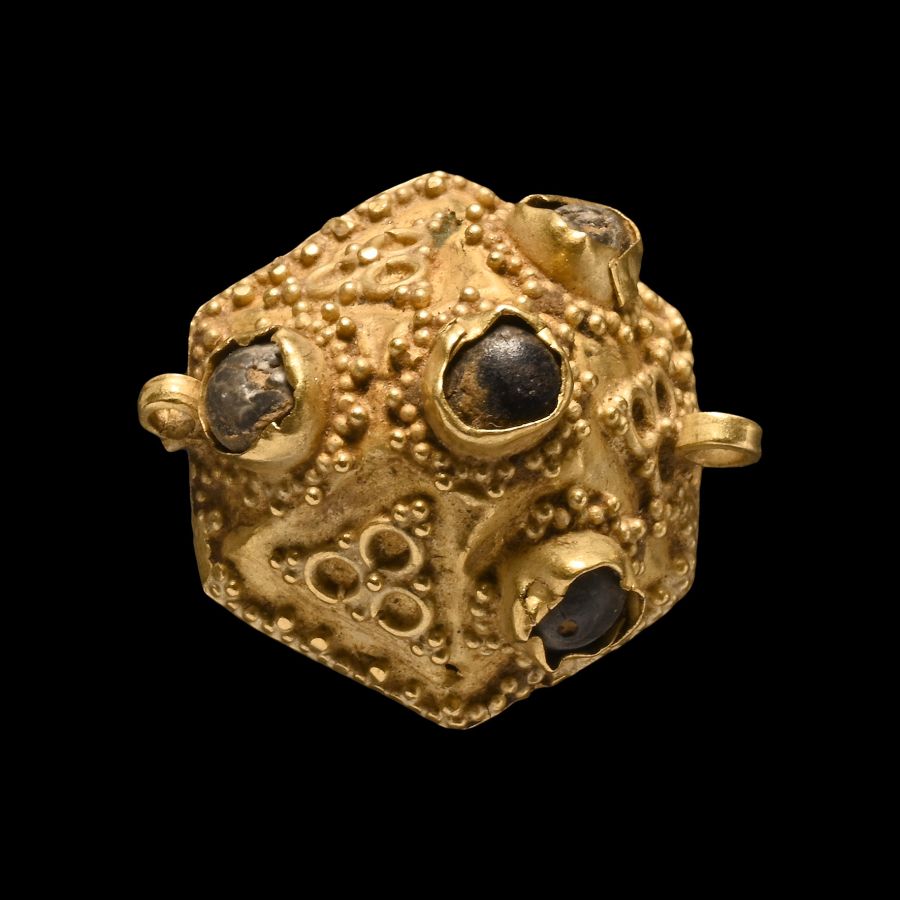
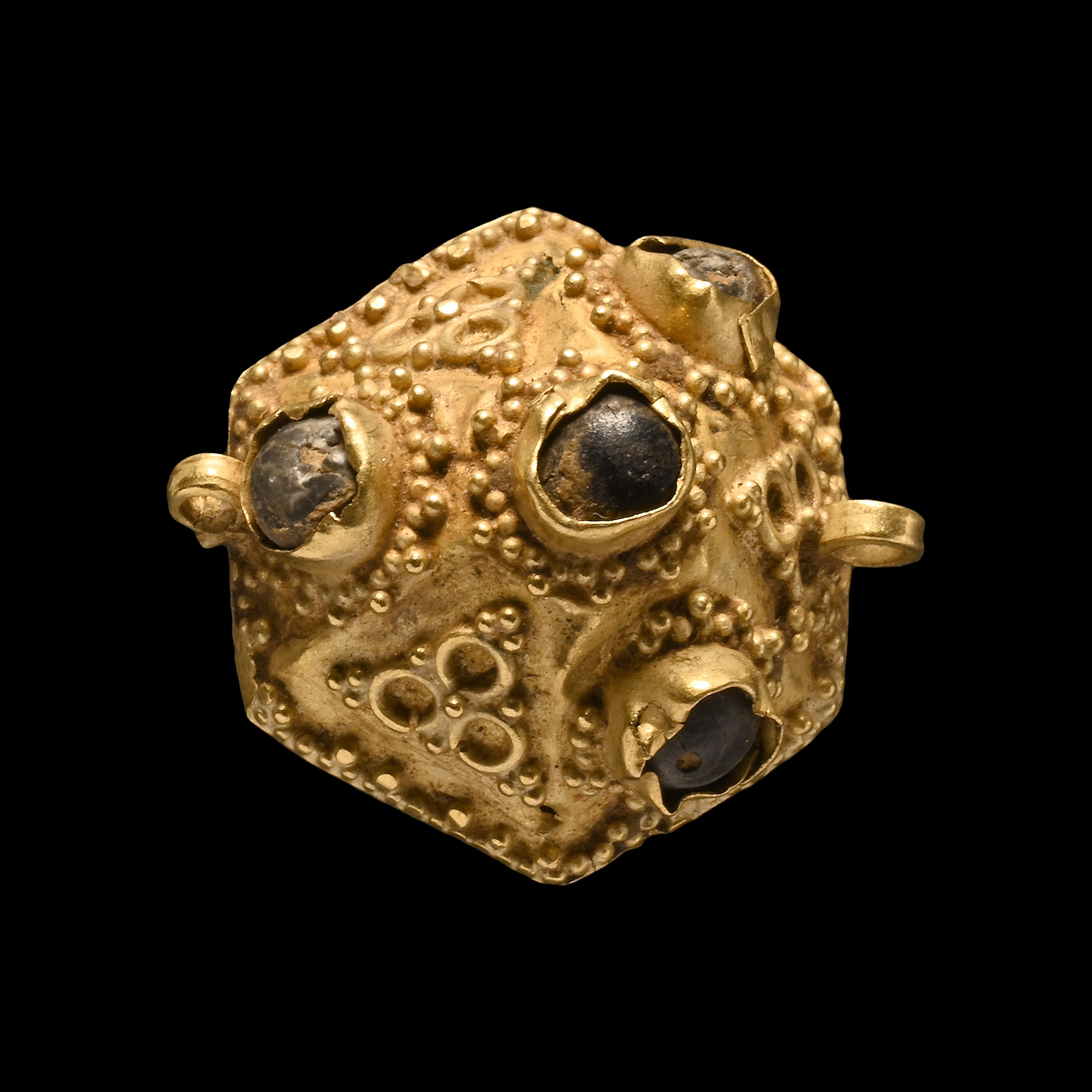
Byzantine Garnet Set Gold Pendant
6TH-8TH CENTURY A.D.
3/4 in. (2.68 grams, 19 mm).
Domed sheet-gold pendant with filigree hoops and granulation, four cells each with a gemstone cabochon, lateral loops.
ProvenanceFrom a late Japanese specialist collector, 1970-2000s.
CONDITIONTimeLine Auctions follows a vetting process to ensure the authenticity and legality of all items, reinforcing our commitment to integrity and responsible trading. Each antiquity, antique, and coin lot undergoes thorough examination by a vetting committee of at least ten external specialists, professional trade association members, scientists, and archaeologists: Our Vetting Process
AUCTIONS:
TimeLine is a leading auction house specialising in antiquities, ancient art, collectables, natural history, coins, medals, and books. Our auctions offer museums, collectors, historians, and enthusiasts the opportunity to acquire unique and historically significant pieces.
LOT 0965
Byzantine Garnet Set Gold Pendant
Estimate £300 - 400€350 - 460 (for guidance only)$410 - 540 (for guidance only)
-
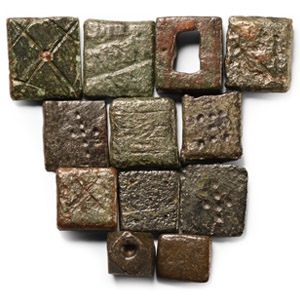
Byzantine Bronze Trade Weight Collection
Circa 6th-12th century A.D.Sold for (Inc. bp): £65
Mixed group of square trade weights with punched and incised detailing. 36.4 grams total, 7-14 mm
Acquired since the 1970s. From the private collection of a Surrey, UK, gentleman. -
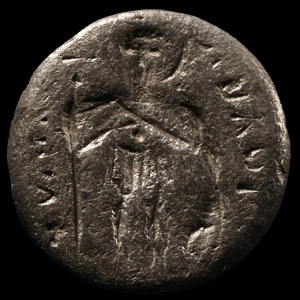
Byzantine Silver Ring Bezel with Inscription
Circa 6th-8th century A.D.Estimate: £200 - 300 (+bp*)
Opening Bid: £100
Central incuse image of a nimbate figure with cloak and staff, text to the border '[.]VA[..]ΛΟΛOP[...]. 1.23 grams, 13 mm
From a late Japanese specialist collector, 1970-2000s. -
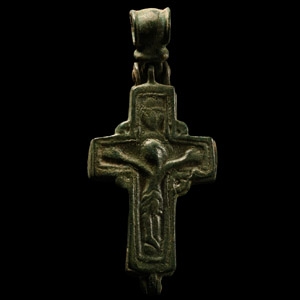
Byzantine Bronze Reliquary Cross Pendant
Circa 12th century A.D.Sold for (Inc. bp): £312
Two-piece enkolpion with hinged suspension loop, to each face a low-relief Corpus Christi with facing mask above. 29.7 grams, 62 mm
Acquired on the London art market in the late 1980s-1990s. From the family collection of an East London, UK, gentleman.
