
Loading, please wait...
LOT 1083
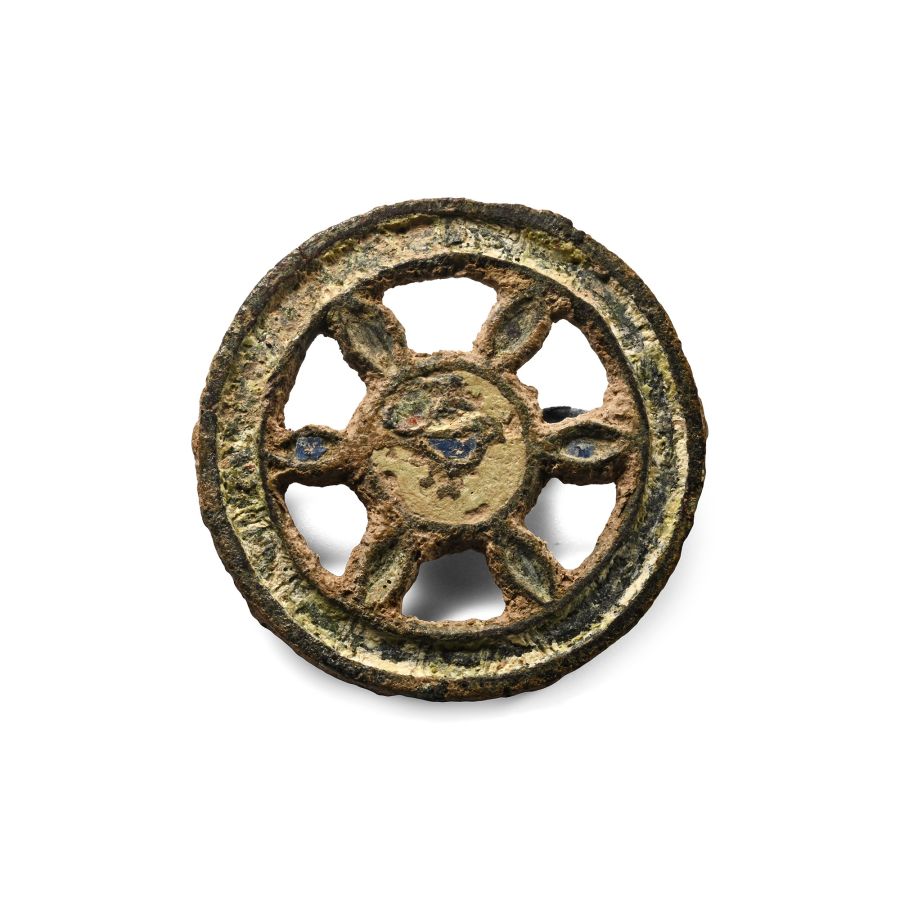
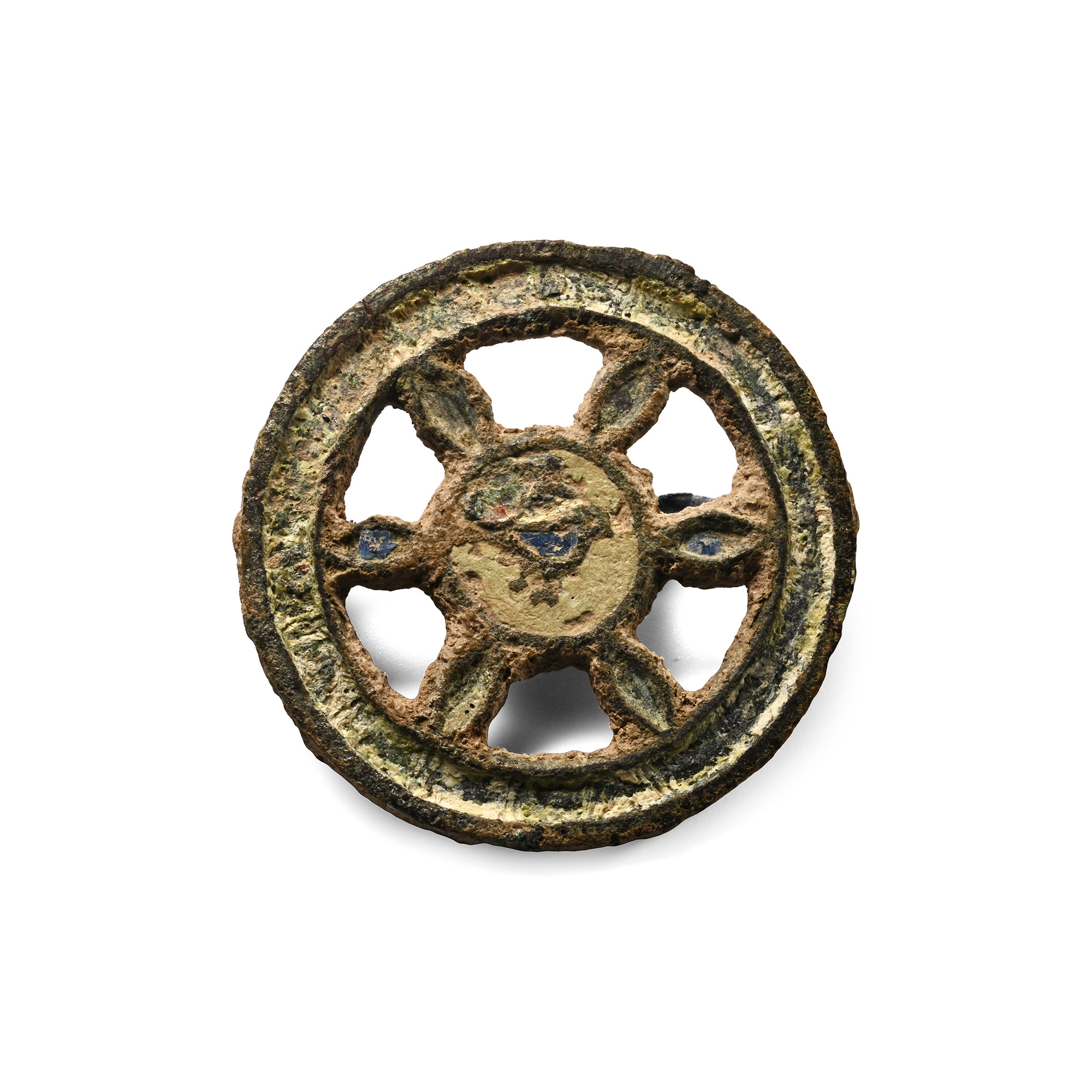
Byzantine Enamelled Brooch with Bird
9TH CENTURY A.D.
1 3/8 in. (9.73 grams, 35 mm).
The outer ring linked by six radiating ellipsoid spokes to a central hub, pin-lug, pin and catch to the reverse; the outer ring with median band of enamel, similar to each of the spokes; the hub with enamel-filled bird motif on a plain, enamelled field. [No Reserve]
ProvenanceAcquired before 1978.
Private collection, UK.
TimeLine Auctions follows a vetting process to ensure the authenticity and legality of all items, reinforcing our commitment to integrity and responsible trading. Each antiquity, antique, and coin lot undergoes thorough examination by a vetting committee of at least ten external specialists, professional trade association members, scientists, and archaeologists: Our Vetting Process
AUCTIONS:
TimeLine is a leading auction house specialising in antiquities, ancient art, collectables, natural history, coins, medals, and books. Our auctions offer museums, collectors, historians, and enthusiasts the opportunity to acquire unique and historically significant pieces.
-
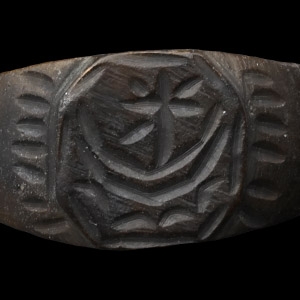
Byzantine Bronze Ring with Boat
Circa 6th-8th century A.D.Sold for (Inc. bp): £52
Comprising an expanding hoop and octanginal raised bezel bearing the image of a sailboat at sea. 5.41 grams, 24.08 mm overall, 19.12 mm internal diameter (approximate size British S, USA 9, Europe 20, Japan 19)
Ex German art market, 2000s. Acquired from an EU collector living in London. From the collection of a Surrey, UK, gentleman. -
.jpg)
Large Byzantine Gold Ring Of Mary and Eutropius
6th-9th century A.D.Sold for (Inc. bp): £5,980
Comprising a D-section hoop with flat sides bearing wave-pattern ornament and legend 'MAPIAC / EYTPOΠIOY' (belonging to Mary and Eutropius); tiered bezel with incised key-pattern and undulating line to the edges; shoulders with palmette motif; discoid plaque with incuse wreath surrounding a bird with star above and lizard; with platinum inclusions. 23.66 grams, 31.00 mm overall, 19.87 mm internal diameter (approximate size British R 1/2, USA 8 3/4, Europe 19.38, Japan 18)
Private English collection, formed between the late 1970s and early 1990s. Private collection, UK. This lot has been checked against the Interpol Database of stolen works of art and is accompanied by search certificate number no.12970-246013. -
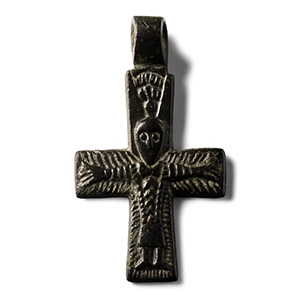
Byzantine Bronze Cross Pendant
Circa 9th-12th century A.D.Sold for (Inc. bp): £202
Cruciform with integral loop; obverse with low-relief Corpus Christi in stavrosis pose with radiating strokes. 9.65 grams, 47 mm
Ex Den of Antiquity, Cambridge, UK. From the private collection of a West London, UK, gentleman, formed since the early 2000s. Accompanied by a typed dealer's identification ticket.
