
Loading, please wait...
LOT 0913
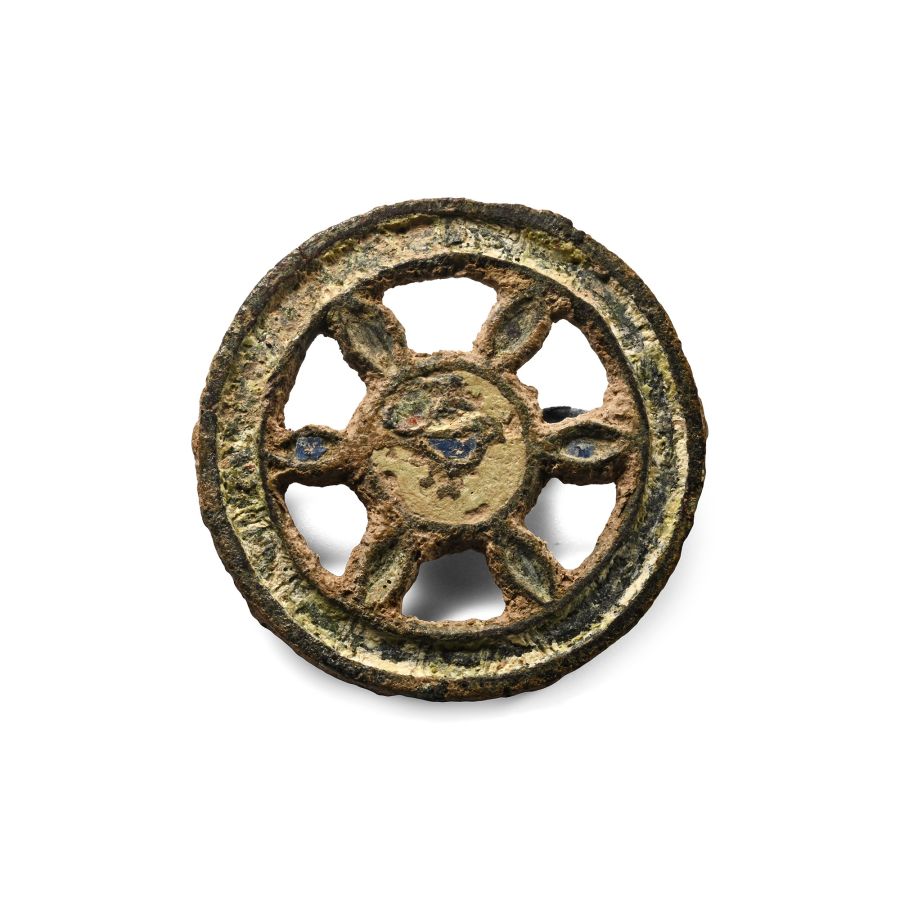
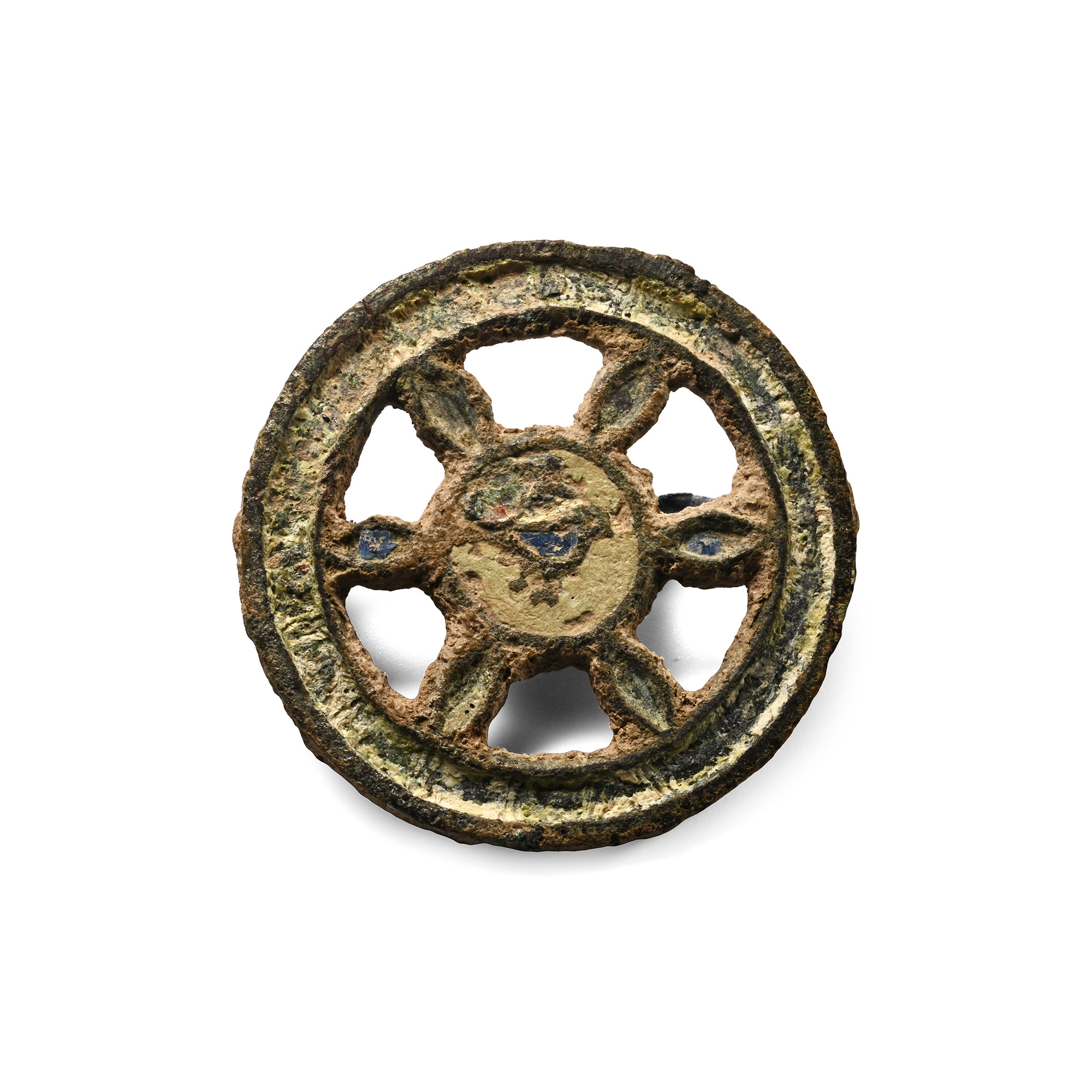
Byzantine Enamelled Brooch with Bird
9TH CENTURY A.D.
1 3/8 in. (9.73 grams, 35 mm).
Comprising: Outer ring linked by six radiating ellipsoid spokes to central hun, pin-lug, pin and catch to the reverse; outer ring with median band of enamel, similar to each of the spokes; hub with enamel-filed bird motif on a plain enamelled field.
ProvenanceAcquired before 1978.
Private collection, UK.
This lot is accompanied by an illustrated lot declaration signed by the Head of the Antiquities Department, Dr Raffaele D'Amato.
TimeLine Auctions follows a vetting process to ensure the authenticity and legality of all items, reinforcing our commitment to integrity and responsible trading. Each antiquity, antique, and coin lot undergoes thorough examination by a vetting committee of at least ten external specialists, professional trade association members, scientists, and archaeologists: Our Vetting Process
AUCTIONS:
TimeLine is a leading auction house specialising in antiquities, ancient art, collectables, natural history, coins, medals, and books. Our auctions offer museums, collectors, historians, and enthusiasts the opportunity to acquire unique and historically significant pieces.
LOT 0913
Byzantine Enamelled Brooch with Bird
Estimate £100 - 140€120 - 160 (for guidance only)$140 - 190 (for guidance only)
-
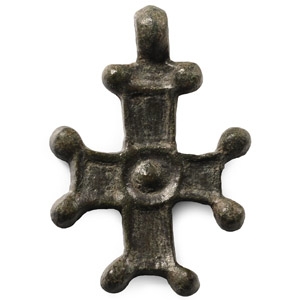
Byzantine Bronze Cross Pendant
10th-12th century A.D.Sold for (Inc. bp): £117
A pair of knops to each arm, a low-relief ring-and-dot motif to the centre. 8.19 grams, 39 mm
Ex German art market, 2000s. Acquired from an EU collector living in London. From the collection of a Surrey, UK, gentleman. This lot is accompanied by an illustrated lot declaration signed by the Head of the Antiquities Department, Dr Raffaele D'Amato. -
.jpg)
Byzantine Stone Oil Lamp
6th-10th century A.D.Estimate: £400 - 600 (‡+bp*)
Opening Bid: £180
Carved slipper-type lamp with its raised triangular-section handle, central socket and short D-shaped nozzle; possibly a stylised bird. 91 grams, 97 mm
Acquired in the 1996. Private collection, Switzerland, thence by descent. Private collection, since the late 1990s. This lot is accompanied by an illustrated lot declaration signed by the Head of the Antiquities Department, Dr Raffaele D'Amato. -
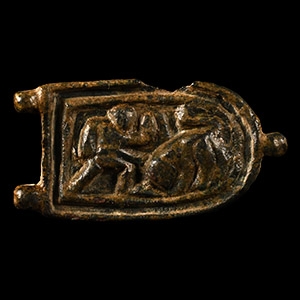
Byzantine Bronze Buckle-Plate with Combat Scene
Circa 6th-7th century A.D.Estimate: £200 - 300 (+bp*)
Opening Bid: £100
Tongue-shaped in plan with knop finial and three pierced lugs to the reverse; raised rim enclosing a scene with advancing gladiator and a lion(?) preparing to attack. 19.1 grams, 49 mm
Ex London and Home Counties gentleman, R.W., 1970s. This lot is accompanied by an illustrated lot declaration signed by the Head of the Antiquities Department, Dr Raffaele D'Amato.
