
Loading, please wait...
LOT 0176
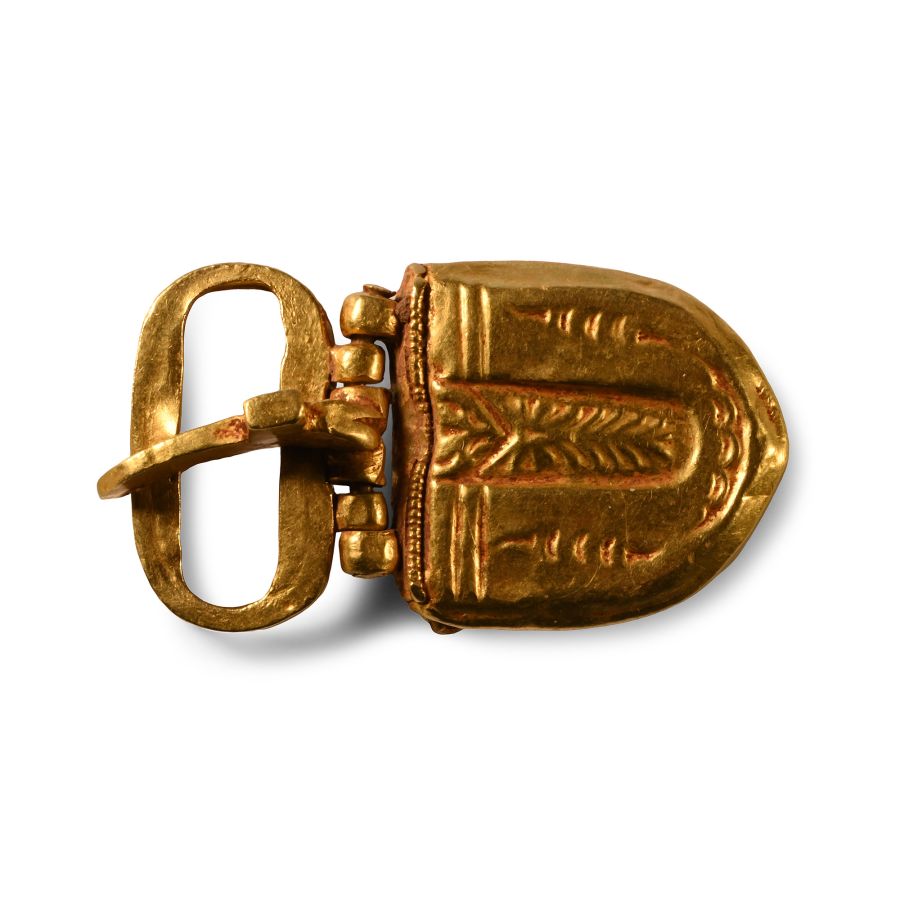
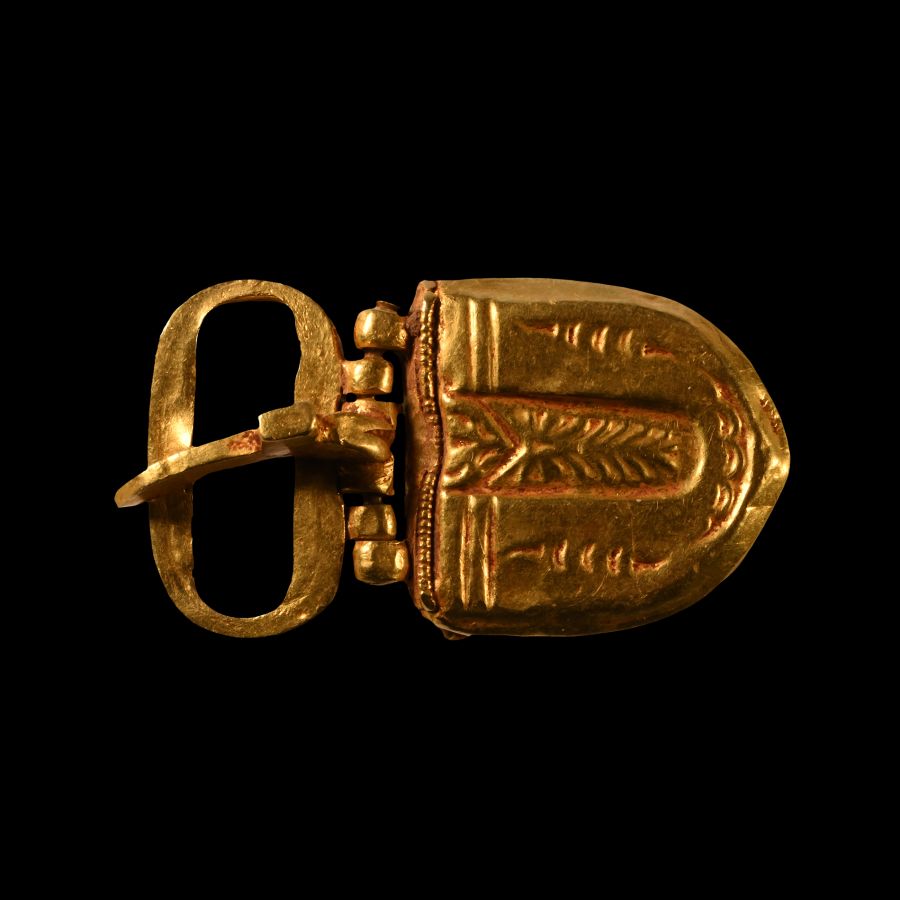
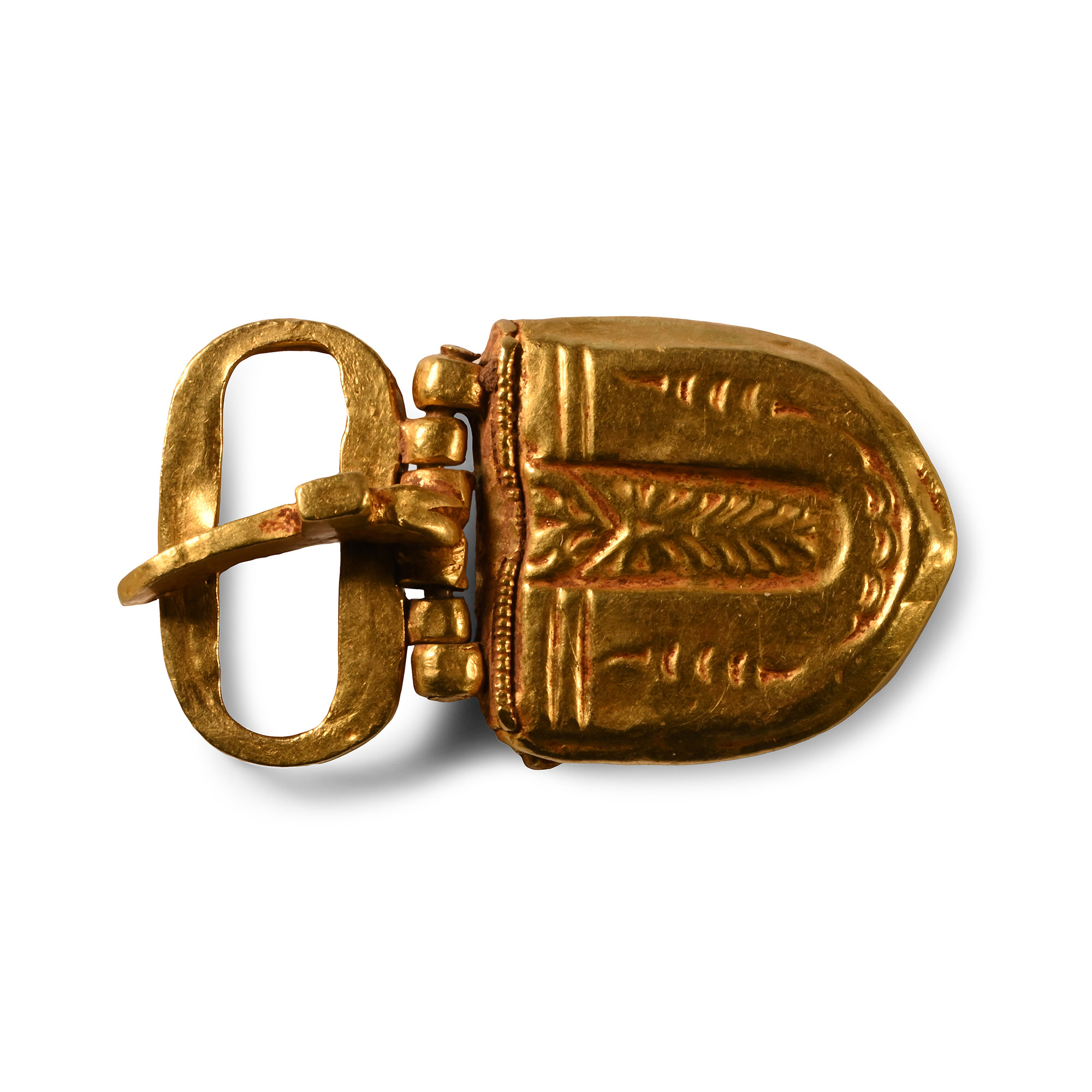
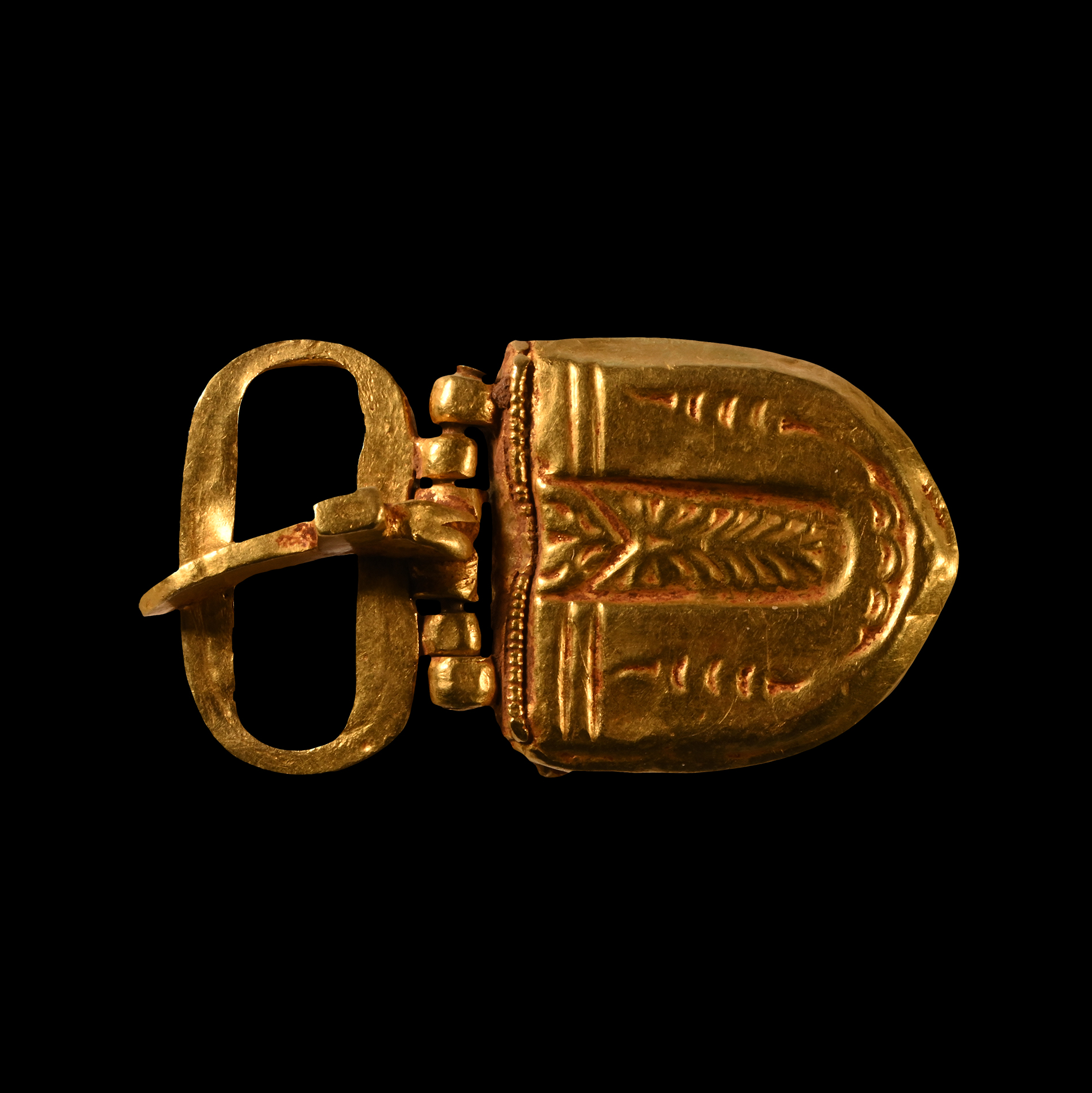
Byzantine Decorated Gold Belt Buckle
8TH CENTURY A.D.
2 1/8 in. (33.02 grams, 55 mm).
Comprising a D-shaped plate with acanthus-leaf motif in low-relief, beaded wire band above the hinge, kidney-shaped rectangular-section loop, flat tongue with spur to the upper face; three mounting studs to reverse.
ProvenanceAcquired from Bernard Hern, 1970s.
From an old UK collection, 1970s-1980s.
This lot has been checked against the Interpol Database of stolen works of art and is accompanied by a search certificate number no.12113-217070.
Cf. Schulze-Dörrlamm, M., Byzantinische Gürtelschnallen und Gürtelbeschläge im Römisch-Germanischen Zentralmuseum, Teil 2. Die Schnallen mit Scharnierbeschläg und Schnallen mit angegossenem Riemendurchzug des 7. bis 10. Jahrhunderts, Mainz, 2009, no.26, fig.4.
CONDITIONTimeLine Auctions follows a vetting process to ensure the authenticity and legality of all items, reinforcing our commitment to integrity and responsible trading. Each antiquity, antique, and coin lot undergoes thorough examination by a vetting committee of at least ten external specialists, professional trade association members, scientists, and archaeologists: Our Vetting Process
AUCTIONS:
TimeLine is a leading auction house specialising in antiquities, ancient art, collectables, natural history, coins, medals, and books. Our auctions offer museums, collectors, historians, and enthusiasts the opportunity to acquire unique and historically significant pieces.
LOT 0176
Byzantine Decorated Gold Belt Buckle
Estimate £4,000 - 6,000€4,640 - 6,960 (for guidance only)$5,400 - 8,100 (for guidance only)
-
Byzantine Bifacial Gemstone with Religious Scenes
6th-8th century A.D.Sold for (Inc. bp): £338
To one face an incuse cross above an agnus dei, to the other Christ enthroned in majesty with worshipper. 2.96 grams, 21 mm
Acquired on the London, UK, art market in the 1990s. From a gentleman's private collection. -
Byzantine Gold Ring with Cabochon
Circa 10th-12th century A.D.Sold for (Inc. bp): £845
Hoop with snakeheads to the shoulders, discoid plaque with beaded collar, cell with claw setting for an amethyst cabochon. 4.93 grams, 19.40 mm overall, 12.57 mm internal diameter
Ex property of a late Japanese collector, 1970-2000s. -
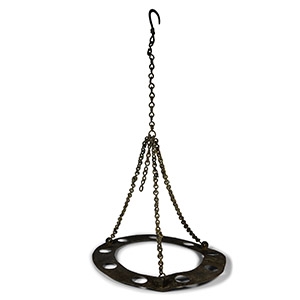
Large Byzantine Hanging Bronze Polycandelon
Circa 8th-10th century A.D.Estimate: £1,800 - 2,400 (+bp*)
Opening Bid: £900
Flat-section ring with nine round holes and attachment fittings for three substantial chains with suspension hook, forming a polycandelon chandelier with multiple candles. 1.52 kg, 68 cm hanging height
Ex Surrey, UK, collection of a gentleman, 1960-2000s. This lot has been checked against the Interpol Database of stolen works of art and is accompanied by a search certificate number no.12111-217545.
In 563 AD, Paul the Silentiary visited Hagia Sophia in Constantinople and described the wondrous lighting effects, ‘Thus is everything clothed in beauty…no words are sufficient to describe the illumination in the evening: you might say that some nocturnal sun filled the majestic church with light.’ The church was lit by polycandela, an early type of candelabra that held glass oil lamps rather than candles. The lamps were either conical or shaped like round bowls with an elongated stem attached beneath. An effective and very atmospheric source of lighting, polycandela required considerable skill in casting and glasswork. Amidst the burning of incense and the chanting of prayers, the flickering light must have helped to inspire pious devotion. Contemporaries certainly attest to this feeling and among the surviving accounts, that of Arculf, Bishop of Gaul, is particularly affecting. In 670 he went on a pilgrimage to Jerusalem and visited the Church of the Ascension, ‘…to the customary light of the eight lamps…on the night of the feast of the Lord’s Ascension it is usual to add innumerable other lamps; and under the terrible and wondrous gleaming of these, pouring out copiously through the shutters of the windows, all Mount Olivet seems not alone to be illuminated, but even to be on fire, and the whole city, situated on the lower ground nearby, seems to be lit up.’
