
Loading, please wait...

LOT 0981
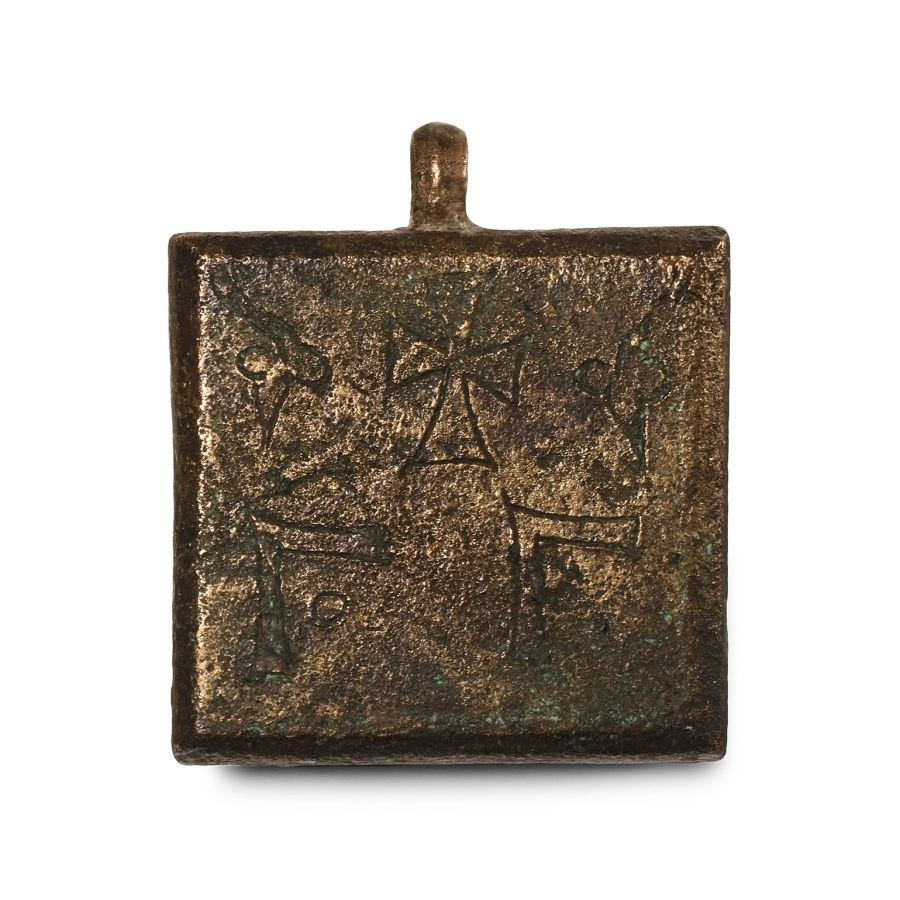
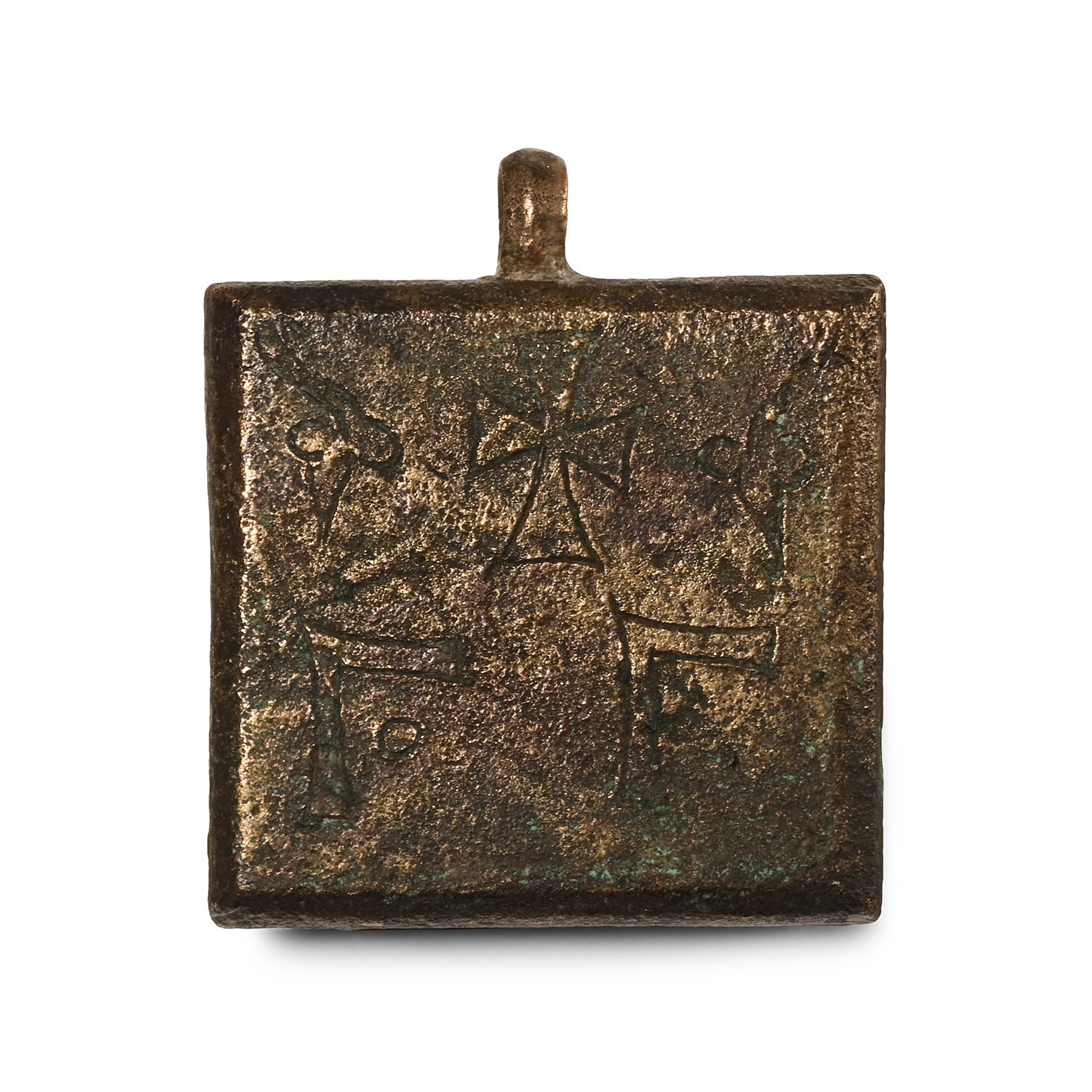
Byzantine Decorated Bronze Weight
CIRCA 6TH CENTURY A.D.
1 3/8 in. (81.9 grams, 37 mm).
Square in plan and with chamfered edges, small bale; low-relief design of a voided cross flanked by curlicues above two voided gamma characters with points. [No Reserve]
ProvenanceUK private collection before 2000.
Acquired on the UK art market.
Property of a London gentleman.
Cf. Weber, K., Byzantinische Münzgewichte: Materialkorpus für 1-Nomisma-Gewichte, Schwelm, 2009, table 4.
CONDITIONTimeLine Auctions follows a vetting process to ensure the authenticity and legality of all items, reinforcing our commitment to integrity and responsible trading. Each antiquity, antique, and coin lot undergoes thorough examination by a vetting committee of at least ten external specialists, professional trade association members, scientists, and archaeologists: Our Vetting Process
AUCTIONS:
TimeLine is a leading auction house specialising in antiquities, ancient art, collectables, natural history, coins, medals, and books. Our auctions offer museums, collectors, historians, and enthusiasts the opportunity to acquire unique and historically significant pieces.
-
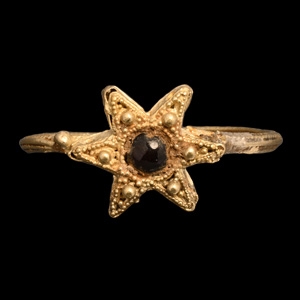
Byzantine Gold Star Ring
Circa 13th-14th century A.D.Sold for (Inc. bp): £780
Composed of a slender carinated hoop adorned with filigree supporting a hollow-formed star-shaped bezel set with central polished cabochon garnet and granules, each of six arms pierced, remaining granule to one shoulder. 1.76 grams, 23.61 mm overall, 20.80 mm internal diameter (approximate size British S 1/2, USA 9 1/4, Europe 20.63, Japan 19)
Acquired 1990s-early 2000s. East Anglian private collection. -
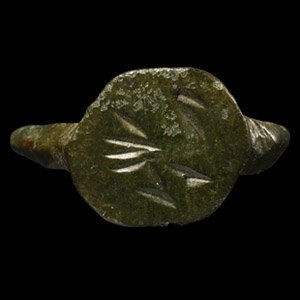
Byzantine Bronze Ring with Dove
6th-8th century A.D.Sold for (Inc. bp): £52
With a slender hoop and discoid bezel, intaglio motif of a standing dove facing right. 1.90 grams, 20.12 mm overall, 15.42 x 17.65 mm internal diameter (approximate size British I, USA 4 1/4, Europe 7.44, Japan 7)
Private collection formed since the 1940s. UK art market. Property of an Essex, UK, gentleman. -
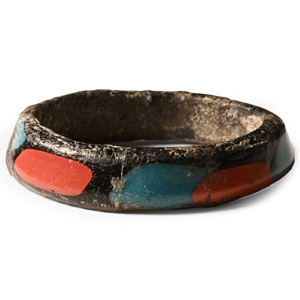
Byzantine Period Child's Glass Bangle
Circa 6th-10th century A.D.Sold for (Inc. bp): £91
Annular black glass shank with marvered panels of blue and red glass. 10.1 grams, 45 mm
UK private collection before 2000. Acquired on the UK art market. Property of a London gentleman.
