Loading, please wait...

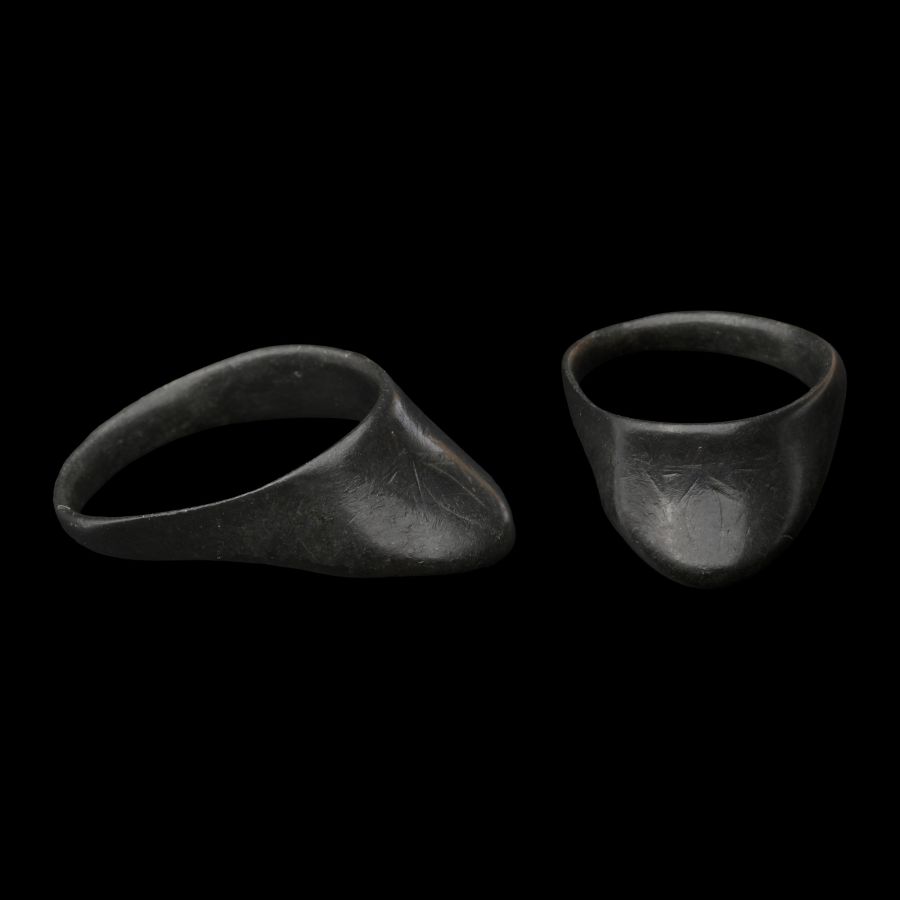
Byzantine Decorated Bronze Archer's Thumb Ring Byzantine Decorated Bronze Archer's Thumb Ring Byzantine Decorated Bronze Archer's Thumb Ring
Use mousewheel to zoom in and out, click to enlarge
Details

LOT 1396

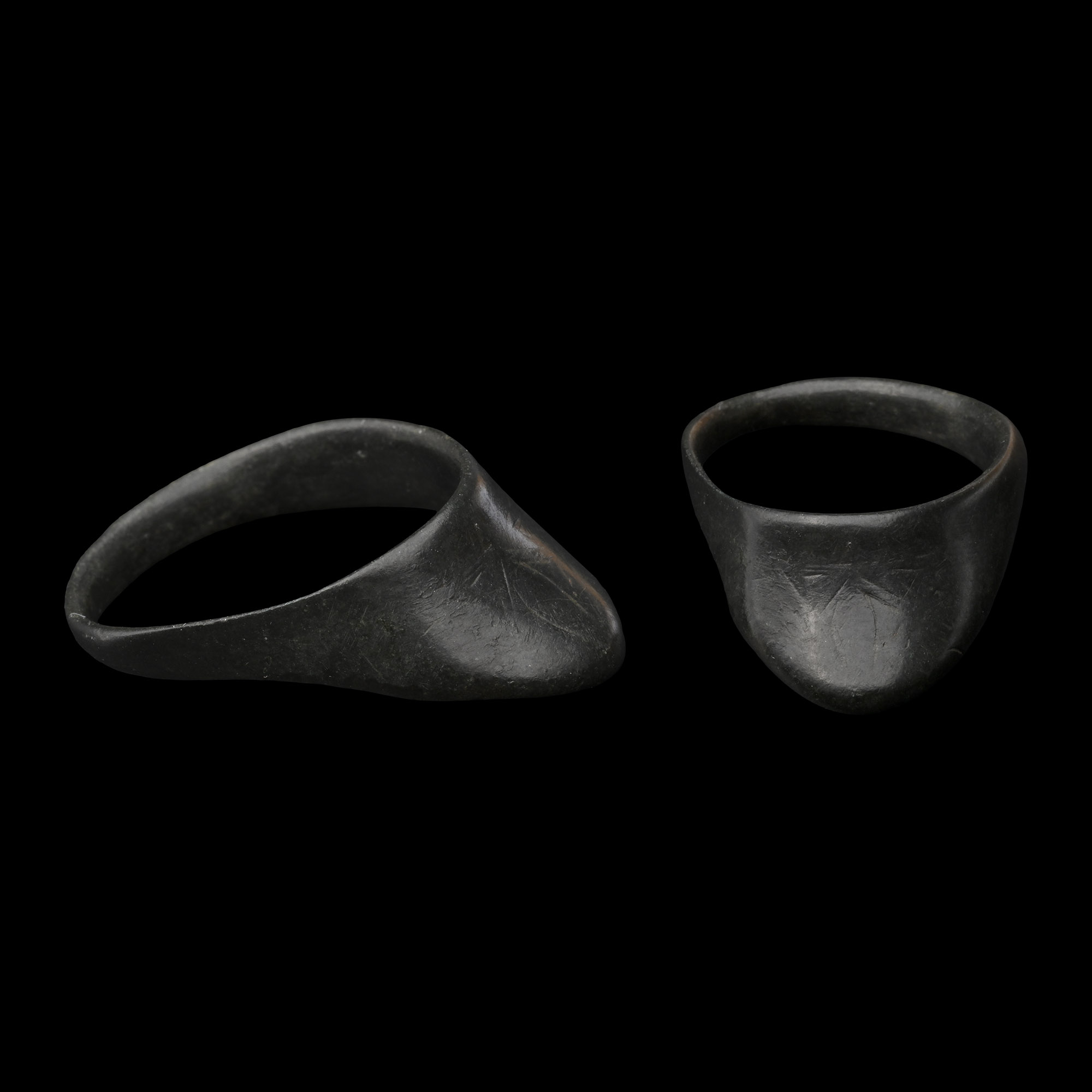
Byzantine Decorated Bronze Archer's Thumb Ring

5TH-7TH CENTURY A.D.

1 3/8 in. (7.57 grams, 35.78 mm overall, 24.38 x 21.54 mm internal diameter (approximate size British Y, USA 12, Europe 27.51, Japan 26)).

With triangular flange extension. [No Reserve]

Provenance

From a private Tyneside collection, formed since the early 2000s.

Literature

Cf. Chadour, A.B., Rings. The Alice and Louis Koch Collection, volume I, Leeds, 1994, items 545, 546, for type.

CONDITION
VETTING:

TimeLine Auctions follows a vetting process to ensure the authenticity and legality of all items, reinforcing our commitment to integrity and responsible trading. Each antiquity, antique, and coin lot undergoes thorough examination by a vetting committee of at least ten external specialists, professional trade association members, scientists, and archaeologists: Our Vetting Process


AUCTIONS:

TimeLine is a leading auction house specialising in antiquities, ancient art, collectables, natural history, coins, medals, and books. Our auctions offer museums, collectors, historians, and enthusiasts the opportunity to acquire unique and historically significant pieces.

LOT 1396

Byzantine Decorated Bronze Archer's Thumb Ring

Sold for (Inc. bp): £52

Print page

RELATED LOTS
  • Merovingian Iron Pattern-Welded Sword
    Merovingian Iron Pattern-Welded Sword
    Circa 6th century A.D.

    Estimate: £2,000 - 3,000 (+bp*)

    Opening Bid: £400

    A double-edged spatha with a lentoid parallel-sided blade and pointed tip; evidence of battle nicks on both cutting edges; long tang and traces of wooden scabbard on the blade; signs of damask pattern running along the length of the blade, especially on the upper part; cleaned and conserved. 694 grams, 86.5 cm


    From the private collection of a London gentleman, from his grandfather's collection formed before the early 1970s. Accompanied by an academic report by Dr Raffaele D’Amato. This lot has been checked against the Interpol Database of stolen works of art and is accompanied by search certificate number no.12919-245174.

    Usually the term ‘damascened’ is only used for blades, describing the way in which their individual rods are forged to create a desired pattern effect that remained visible on the surfaces of the finished product (technique B.II.1.2.). The shape and regularity of the pattern was essentially dependent on the number and nature of the individual rods and on the skills of the blacksmith. The scholars differentiate on this basis more or less careful and complicated variants (e.g. striped, diamond, herringbone, angular, rosette, mosaic, etc.), in which the individual rods from different iron lamellae, which are parallel or twisted (torsion pattern-welding), were built up often in connection with each other (technique B.II.1.2.1-2). Combining striped rods that were partially straight and partially twisted - clockwise or counter-clockwise - allowed the formation of a very decorative blade.

    Lot Details

  • Luristan Bronze Spearhead Group
    Luristan Bronze Spearhead Group
    13th-11th century B.C.

    Sold for (Inc. bp): £46

    Comprising a tanged spearhead with heavily ridged and tapered blade, short collared shaft and square-section tapered tang bent at the tip; a spearhead with foliate narrow blade, short tang with fastening hole. 300 grams total, 26.2-28.7 cm


    Acquired 1980-2015. Ex Abelita family collection. This lot is accompanied by an illustrated lot declaration signed by the Head of the Antiquities Department, Dr Raffaele D’Amato.

    Both types of spearheads were found in Amlash and Marlik, and are connected with the types 1 and 2 of the Khorasani classification. The type 1 is characterised by a bent tang and was the evolution of a typology which began much earlier in Mesopotamia and the fertile crescent, the type 4 of the Stronach classification, with a straight square-section tang, usually thickened at the base with a button tang.

    Lot Details

  • Medieval Iron Swallow-Tailed Arrowhead
    Medieval Iron Swallow-Tailed Arrowhead
    10th-14th century A.D.

    Sold for (Inc. bp): £26

    With narrow curved edges and stepped tang. 17.6 grams, 84 mm


    From the private collection of author and historian Dr DeWitt Bailey, one of the global authorities on the confederate army in the US civil war; thence by descent to his grandson.

    Lot Details

Stay up-to-date with the latest from TimeLine Auctions by joining our mailing list