
Loading, please wait...
LOT 1484
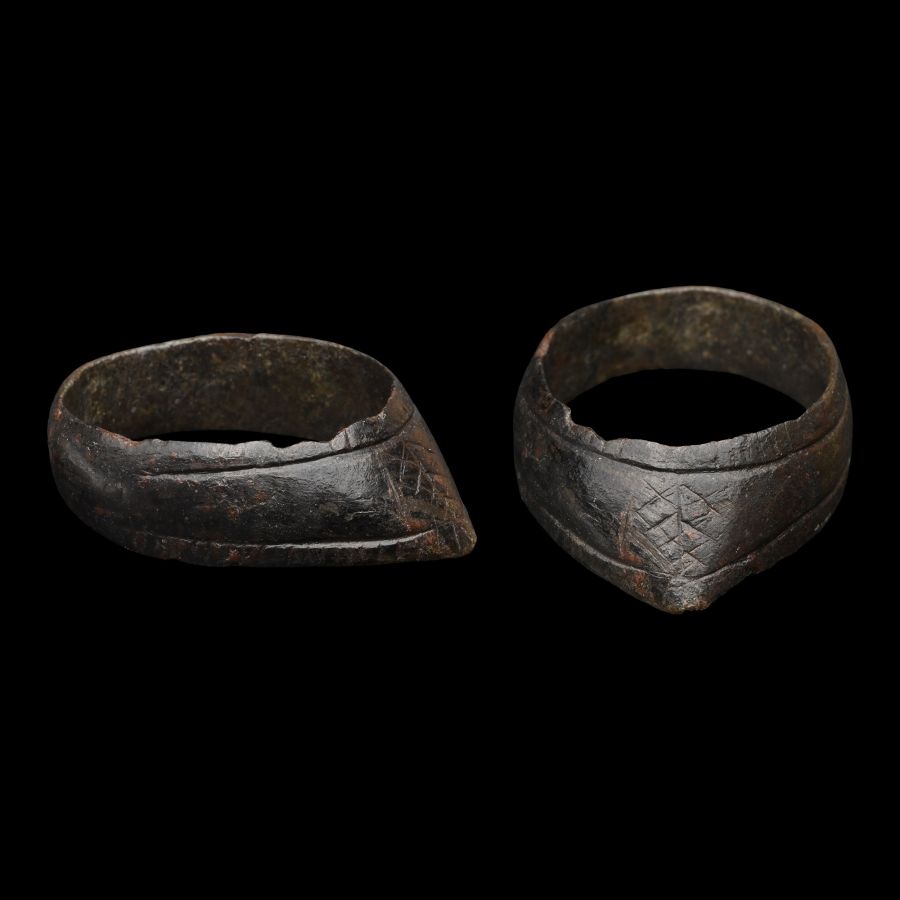
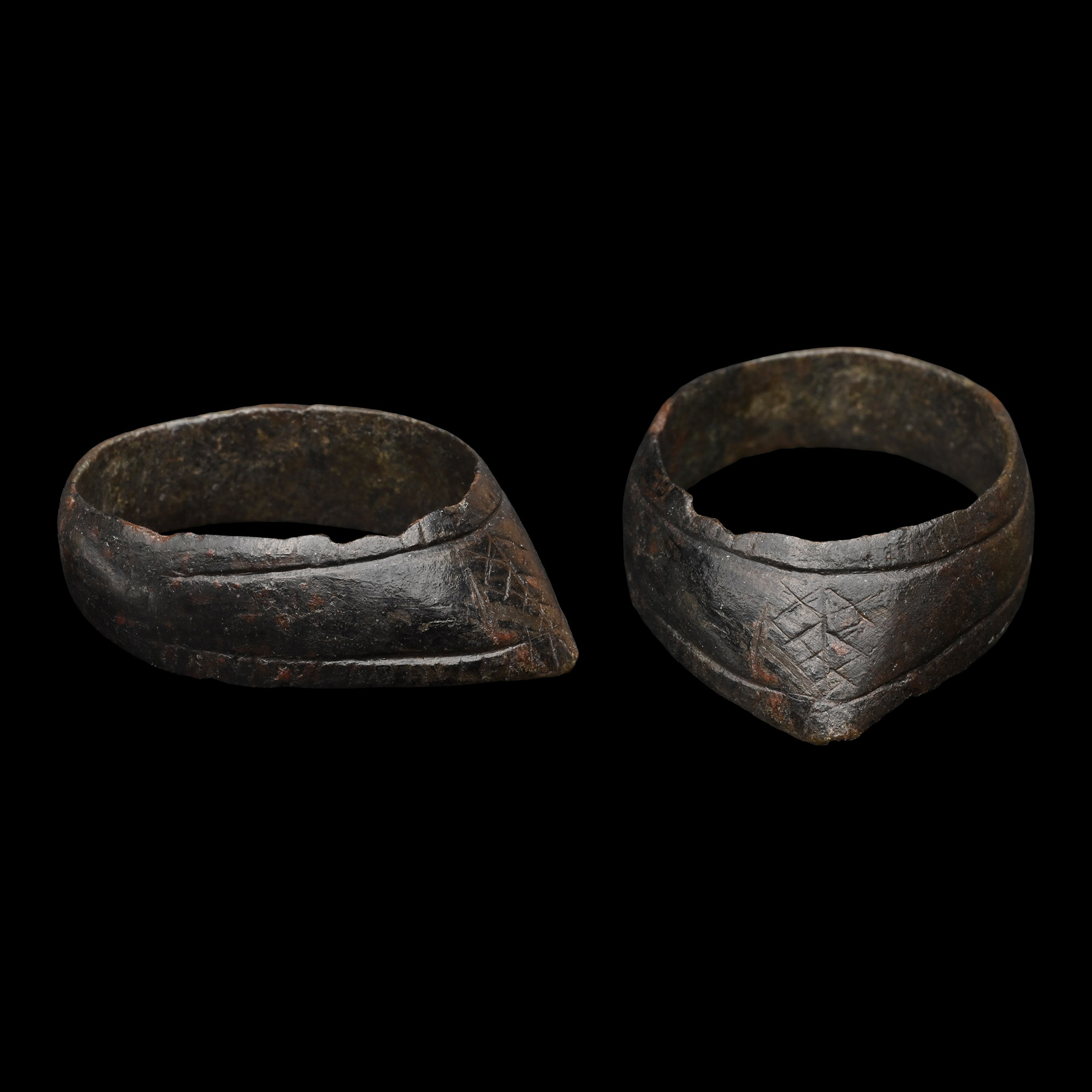
Byzantine Decorated Bronze Archer's Thumb Ring
10TH-15TH CENTURY A.D.
1 3/8 in. (7.35 grams, 34.98 mm overall, 21,50 x 25.28 mm internal diameter (approximate size British Y 1/2, USA 12 1/4, Europe 28.2, Japan 27)).
With triangular flange to one edge, incised hatching. [No Reserve]
ProvenanceFrom a private Tyneside collection, formed since the early 2000s.
LiteratureCf. Chadour, A.B., Rings. The Alice and Louis Koch Collection, volume I, Leeds, 1994, items 545, 546, for type.
CONDITIONTimeLine Auctions follows a vetting process to ensure the authenticity and legality of all items, reinforcing our commitment to integrity and responsible trading. Each antiquity, antique, and coin lot undergoes thorough examination by a vetting committee of at least ten external specialists, professional trade association members, scientists, and archaeologists: Our Vetting Process
AUCTIONS:
TimeLine is a leading auction house specialising in antiquities, ancient art, collectables, natural history, coins, medals, and books. Our auctions offer museums, collectors, historians, and enthusiasts the opportunity to acquire unique and historically significant pieces.
-
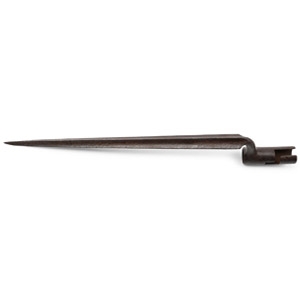
US Confederate Bayonet
19th century A.D.Sold for (Inc. bp): £85
Comprising a tubular socket for fixing to a muzzle of a weapon, long tapering triangular blade with a raised rib on the underside and a rectangular stamp at the base. 390 grams, 46.5 cm
From the private collection of author and historian Dr DeWitt Bailey, one of the global authorities on the confederate army in the US civil war; thence by descent to his grandson. -
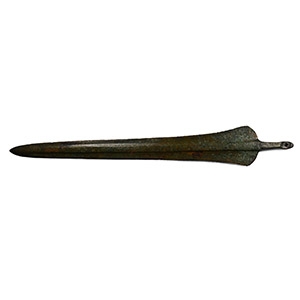
Luristan Bronze Spearhead Blade
14th-10th century B.C.Sold for (Inc. bp): £211
With rounded shoulders and square-sectioned mid-rib running to the blade tip; short tang with fastening hole. 45 grams, 46.5 cm
Acquired 1980-2015. Ex Abelita family collection. This lot is accompanied by an illustrated lot declaration signed by the Head of the Antiquities Department, Dr Raffaele D’Amato. This lot is accompanied by an illustrated lot declaration signed by the Head of the Antiquities Department, Dr Raffaele D'Amato.
The spearhead belongs to the type VI spearhead of the Khorasani classification. It is characterised by a long blade and short tang, slightly rounded shoulders and pronounced midrib. Similar weapons were excavated by Prof. Negahban in the royal cemetery of Marlik. -
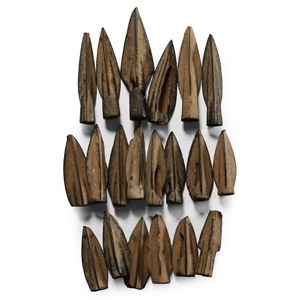
Greek and Other Bronze Arrowhead Collection
Circa 5th-3rd century B.C.Sold for (Inc. bp): £117
The group comprising triangular trilobate types, all socketted. 63.5 grams total, 24-42 mm
Ex London art market, 1980-1990s. This lot is accompanied by an illustrated lot declaration signed by the Head of the Antiquities Department, Dr Raffaele D'Amato.
In the Greek warfare, archers were mainly employed by Scythians and Cretans. Both used composite bows made of wood, horn, bone and sinew. This explains the great range of Scythian arrowheads found on the Greek sites.
