
Loading, please wait...
_900x900.jpg "Byzantine Decorated Bronze Archer's Thumb Ring")
_200x200.jpg "Byzantine Decorated Bronze Archer's Thumb Ring")
.jpg "Byzantine Decorated Bronze Archer's Thumb Ring")
LOT 1392
Byzantine Decorated Bronze Archer's Thumb Ring
5TH-7TH CENTURY A.D.
1 in. (3.72 grams, 24.34 mm overall, 16.19 x 13.95 mm internal diameter (approximate size British F 1/2, USA 3, Europe 4.3, Japan 4)).
Circular in section with triangular flange to one edge, incised ring-and-dot markings. [No Reserve]
ProvenanceFrom a private Tyneside collection, formed since the early 2000s.
LiteratureCf. Chadour, A.B., Rings. The Alice and Louis Koch Collection, volume I, Leeds, 1994, items 545, 546, for type.
CONDITIONTimeLine Auctions follows a vetting process to ensure the authenticity and legality of all items, reinforcing our commitment to integrity and responsible trading. Each antiquity, antique, and coin lot undergoes thorough examination by a vetting committee of at least ten external specialists, professional trade association members, scientists, and archaeologists: Our Vetting Process
AUCTIONS:
TimeLine is a leading auction house specialising in antiquities, ancient art, collectables, natural history, coins, medals, and books. Our auctions offer museums, collectors, historians, and enthusiasts the opportunity to acquire unique and historically significant pieces.
-
.jpg)
Byzantine Decorated Bronze Archer's Thumb Ring
5th-7th century A.D.Sold for (Inc. bp): £46
Circular in section with triangular flange to one edge, incised ring-and-dot markings. 3.72 grams, 24.34 mm overall, 16.19 x 13.95 mm internal diameter (approximate size British F 1/2, USA 3, Europe 4.3, Japan 4)
From a private Tyneside collection, formed since the early 2000s. -
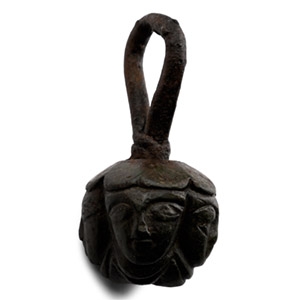
Medieval Bronze Flail Head with Four Heads
14th-15th century A.D.Estimate: £500 - 700 (+bp*)
Opening Bid: £200
Formed as four radiating D-shaped masks beneath a rosette, substantial suspension loop. 114 grams, 60 mm
From the private collection of a London gentleman, from his grandfather's collection formed before the early 1970s. This lot is accompanied by an illustrated lot declaration signed by the Head of the Antiquities Department, Dr Raffaele D'Amato. -
.jpg)
Byzantine Bronze Archer's Thumb Ring Group
10th-15th century A.D.Sold for (Inc. bp): £117
Comprising three variously sized rings, one with floral decoration. 17.4 grams total, 28-30 mm
Ex German art market, 2000s. Acquired from an EU collector living in London. From the collection of a Surrey, UK, gentleman.
