
Loading, please wait...
LOT 1094
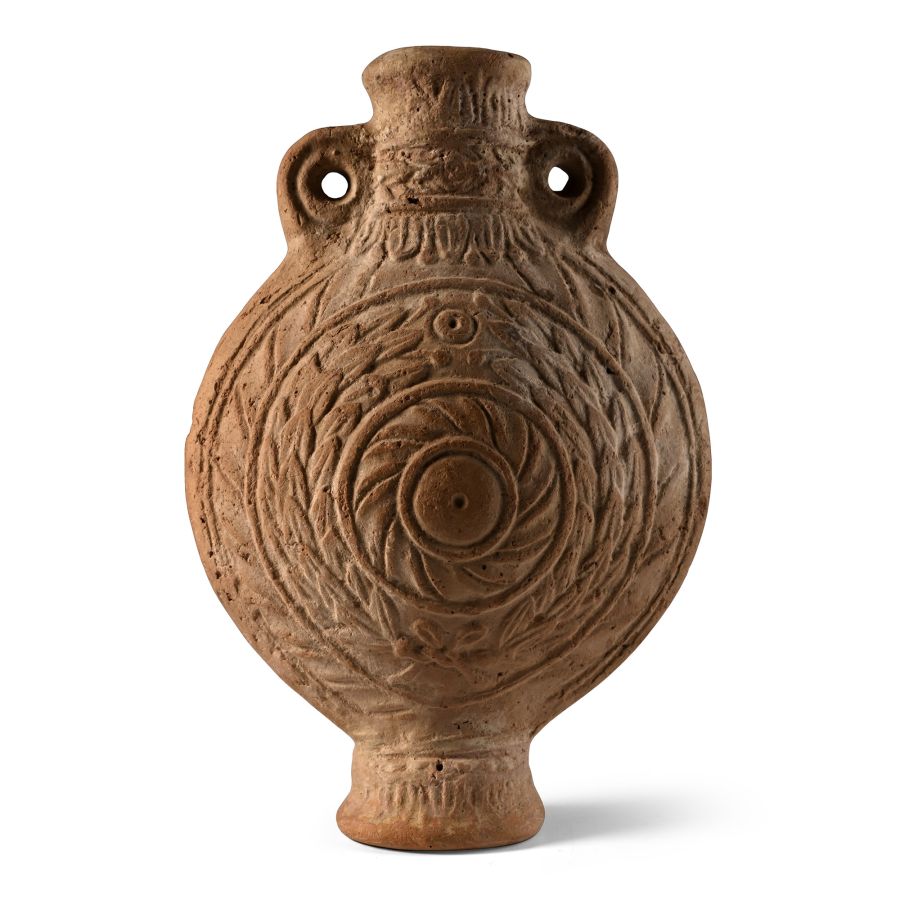
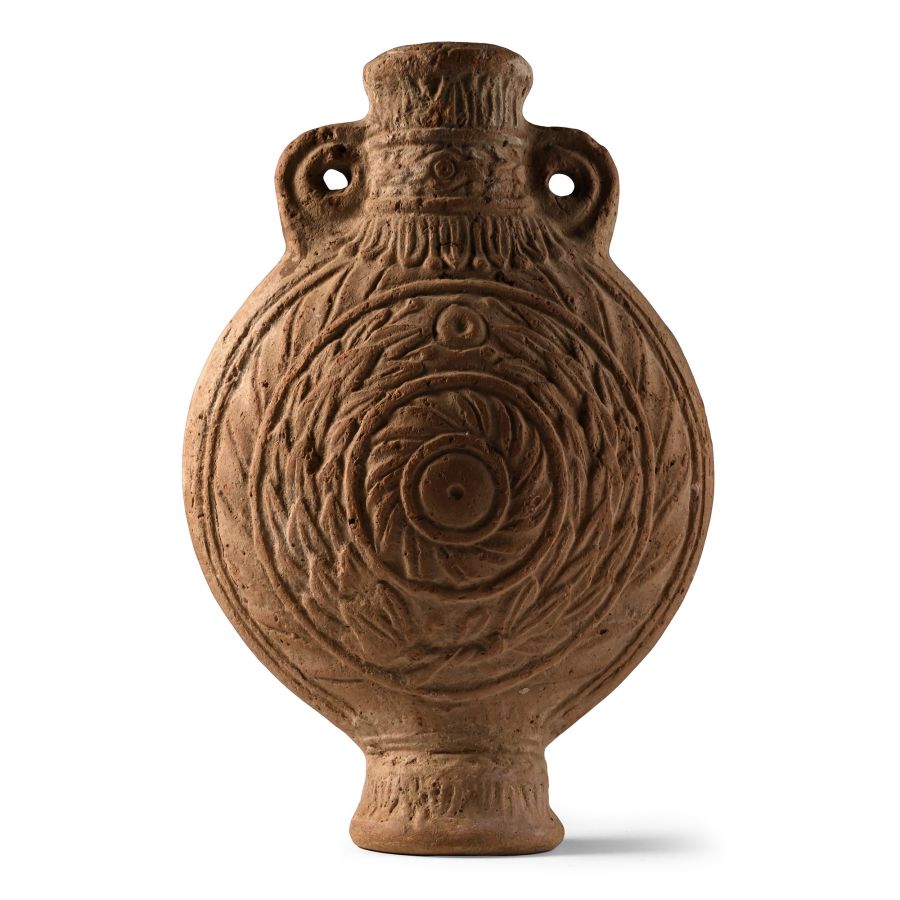
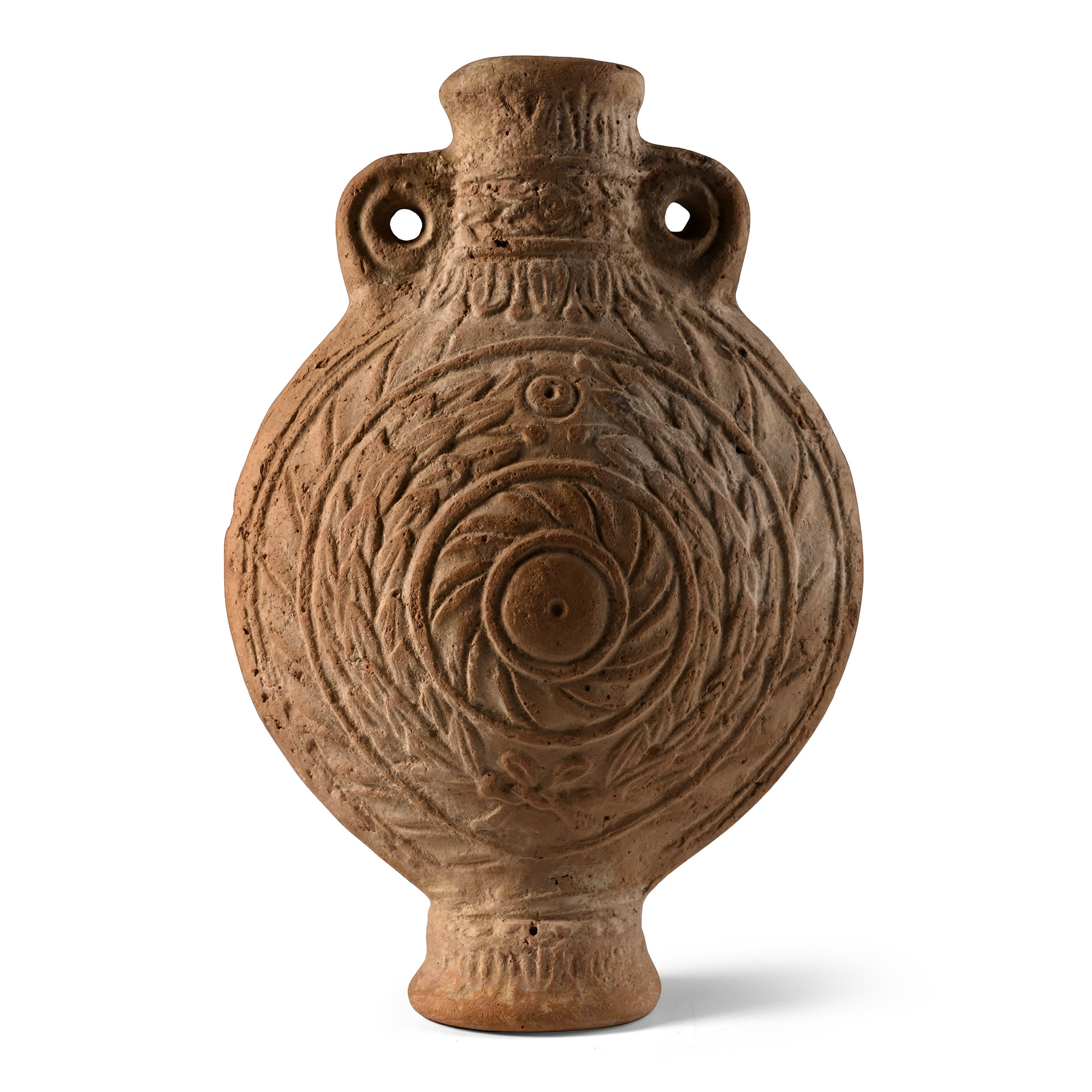
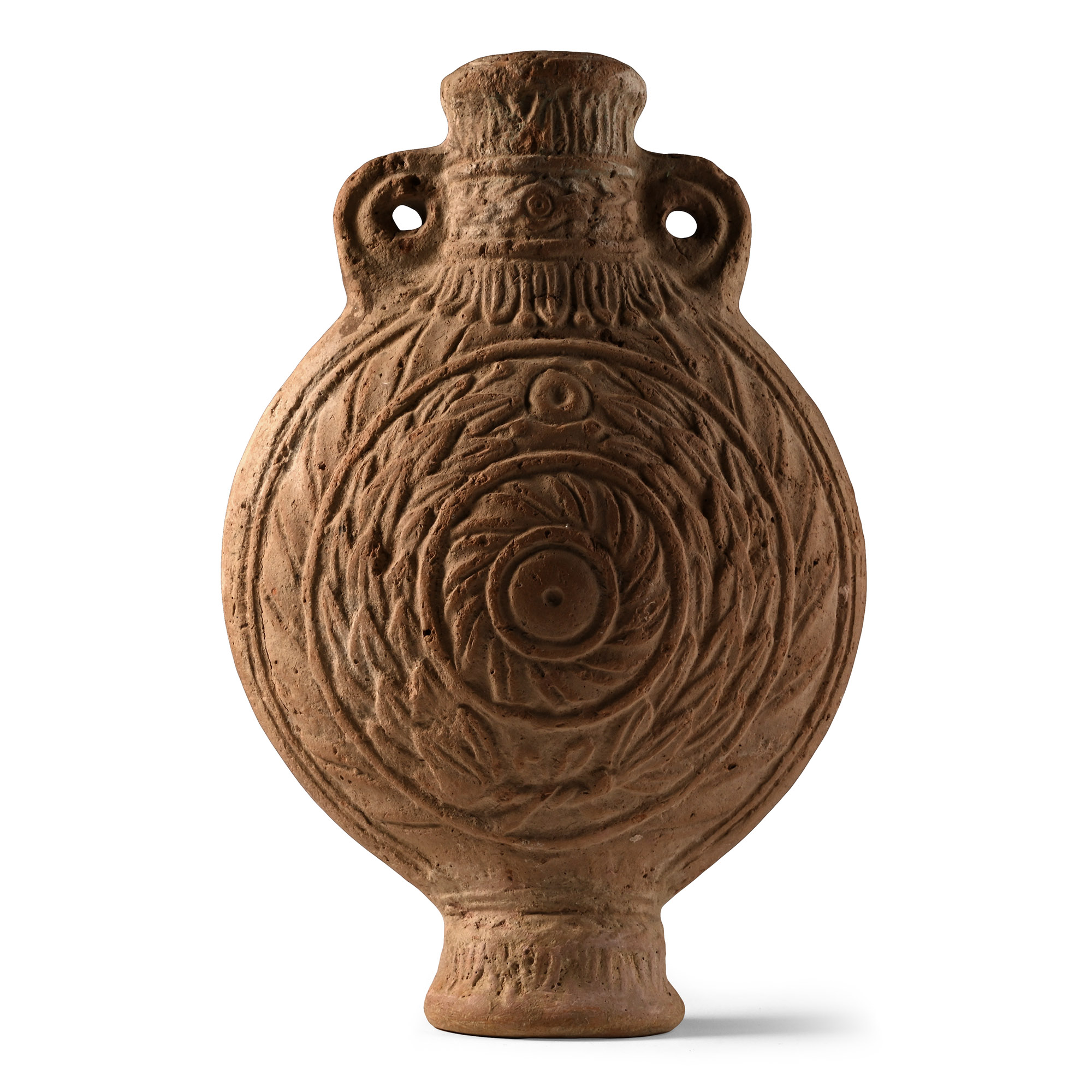
Byzantine Ceramic Pilgrim's Flask with Wreath
CIRCA 6TH-8TH CENTURY A.D.
5 1/2 in. (166 grams, 14.1 cm).
Biconvex in section with flared base and mouth, lateral pierced lugs at the shoulders, low-relief wreath detailing to the body.
ProvenanceEx Mayfair, London, UK, gallery, 2000s.
CONDITIONTimeLine Auctions follows a vetting process to ensure the authenticity and legality of all items, reinforcing our commitment to integrity and responsible trading. Each antiquity, antique, and coin lot undergoes thorough examination by a vetting committee of at least ten external specialists, professional trade association members, scientists, and archaeologists: Our Vetting Process
AUCTIONS:
TimeLine is a leading auction house specialising in antiquities, ancient art, collectables, natural history, coins, medals, and books. Our auctions offer museums, collectors, historians, and enthusiasts the opportunity to acquire unique and historically significant pieces.
-
Byzantine Ceramic Pilgrim's Flask with Wreath
Circa 6th-8th century A.D.Sold for (Inc. bp): £247
Biconvex in section with flared base and mouth, lateral pierced lugs at the shoulders, low-relief wreath detailing to the body. 166 grams, 14.1 cm
Ex Mayfair, London, UK, gallery, 2000s. -
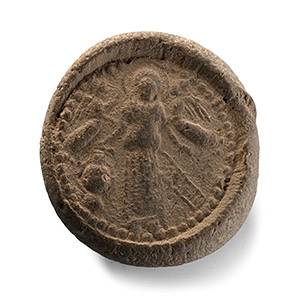
Christian 'Simon Stylite' Terracotta Pilgrim's Token
Circa 6th-8th century A.D.Sold for (Inc. bp): £176
Plano-convex in profile with impressed design of a nimbate figure atop a post with ladder to one side, flanked by levitating angels, all within a pelletted border. 5.82 grams, 26 mm
Ex important Christian collection, 1970s. -
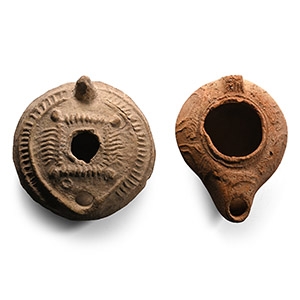
Byzantine Ceramic Oil Lamp Collection
6th-8th century A.D.Estimate: £180 - 240 (‡+bp*)
Opening Bid: £90
Comprising: a piriform lamp with a band of stylised quadrupeds surrounding the large filler hole, ribbed handle; a discoid lamp with raised linear decoration, wheel motif to base. 195 grams total, 9.6-10.1 cm
with Galerie Rhéa, Zurich, Switzerland.
