
Loading, please wait...
LOT 0174
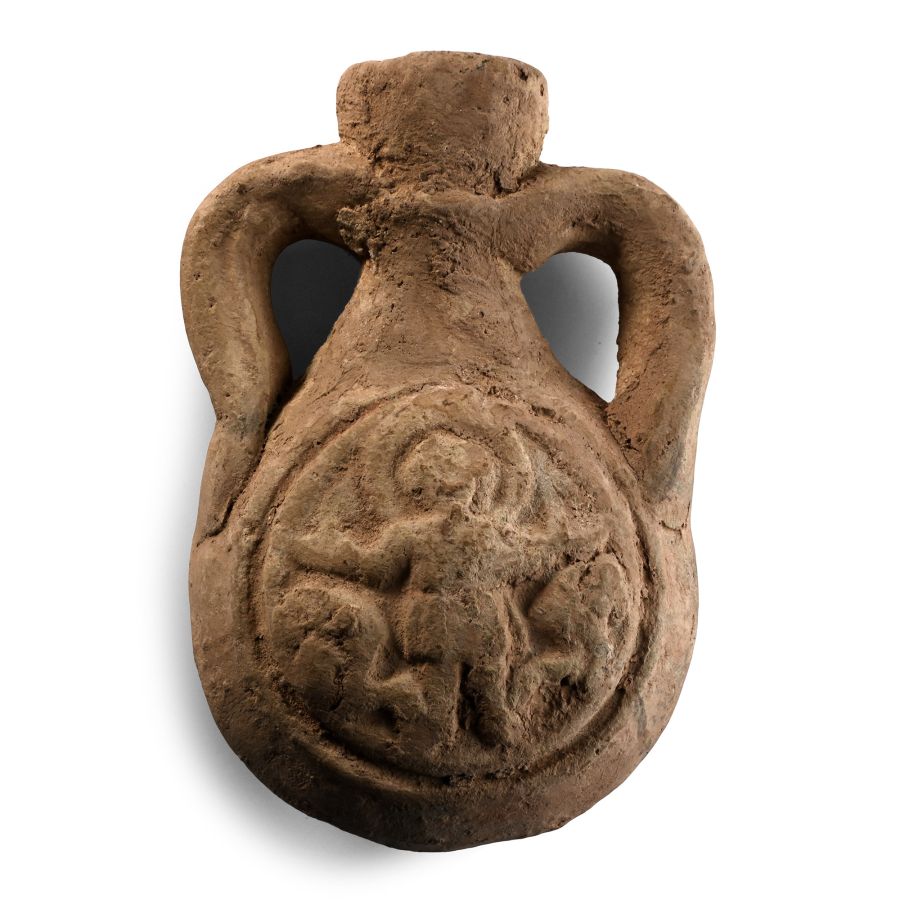
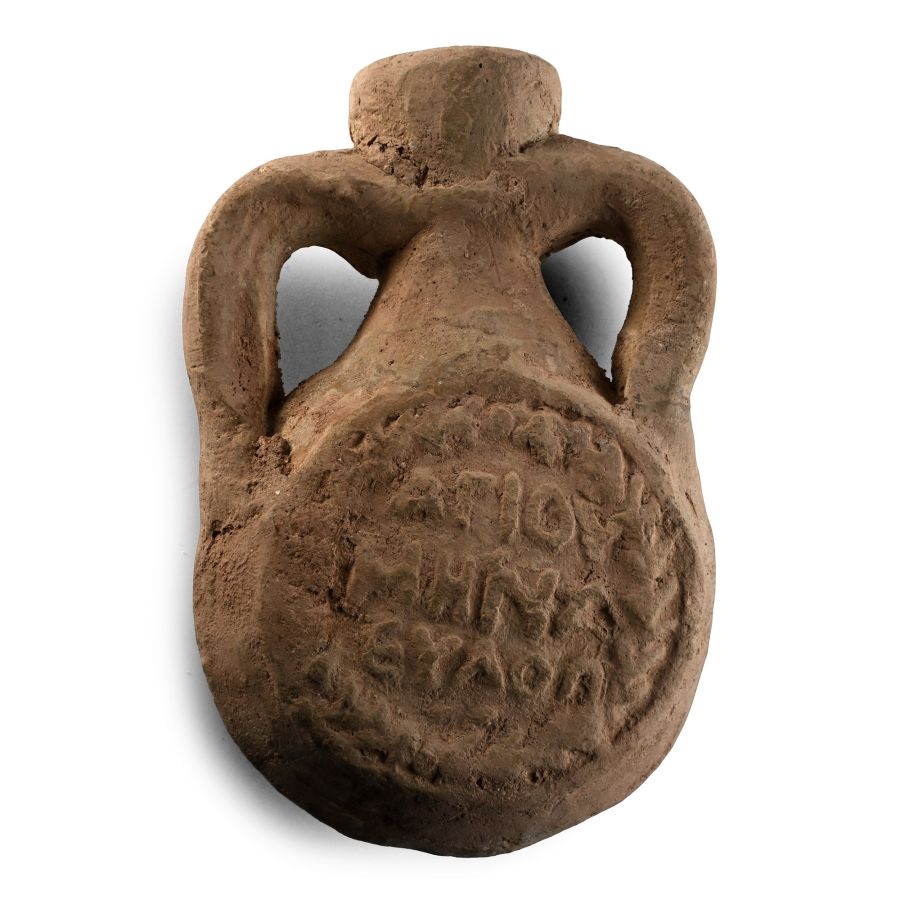
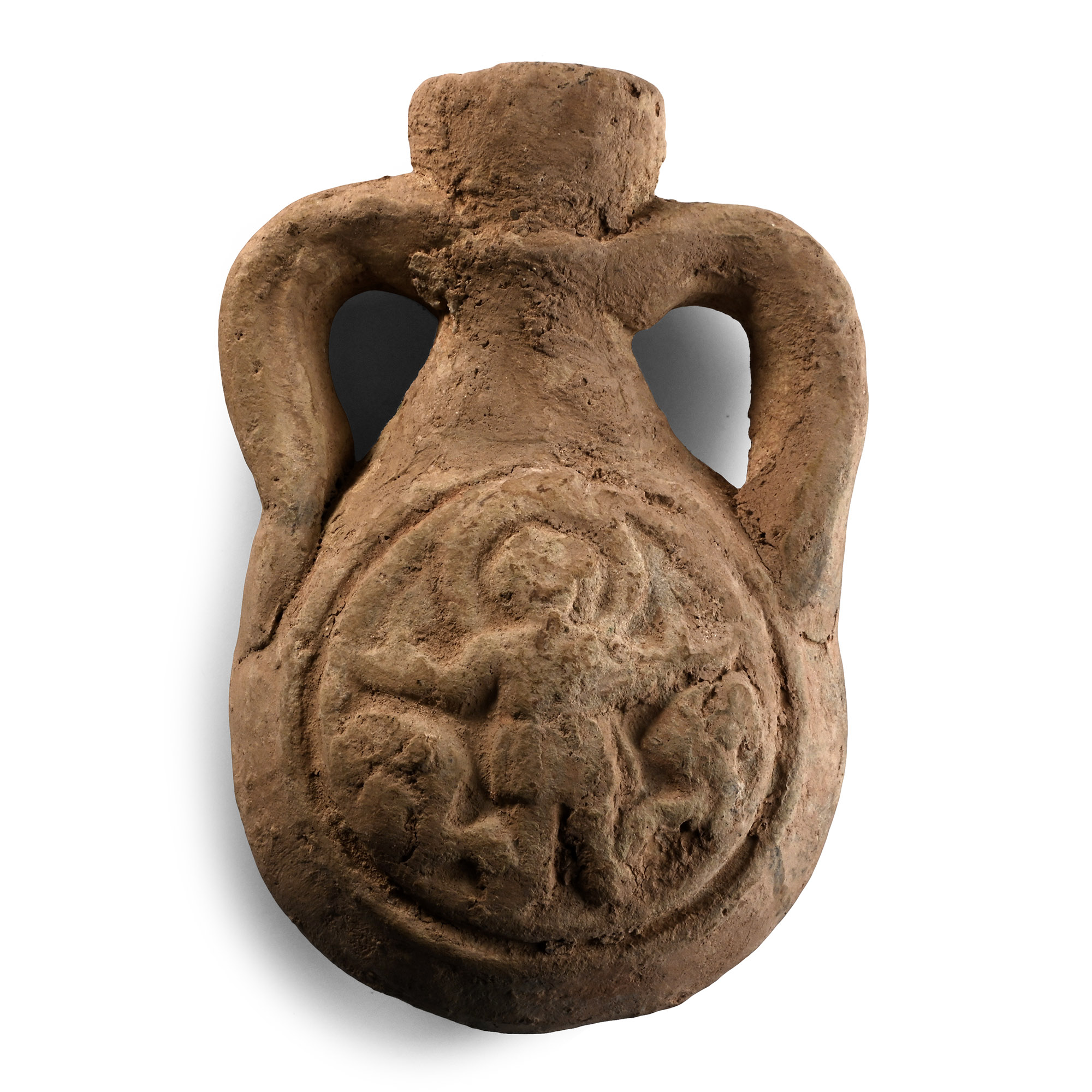
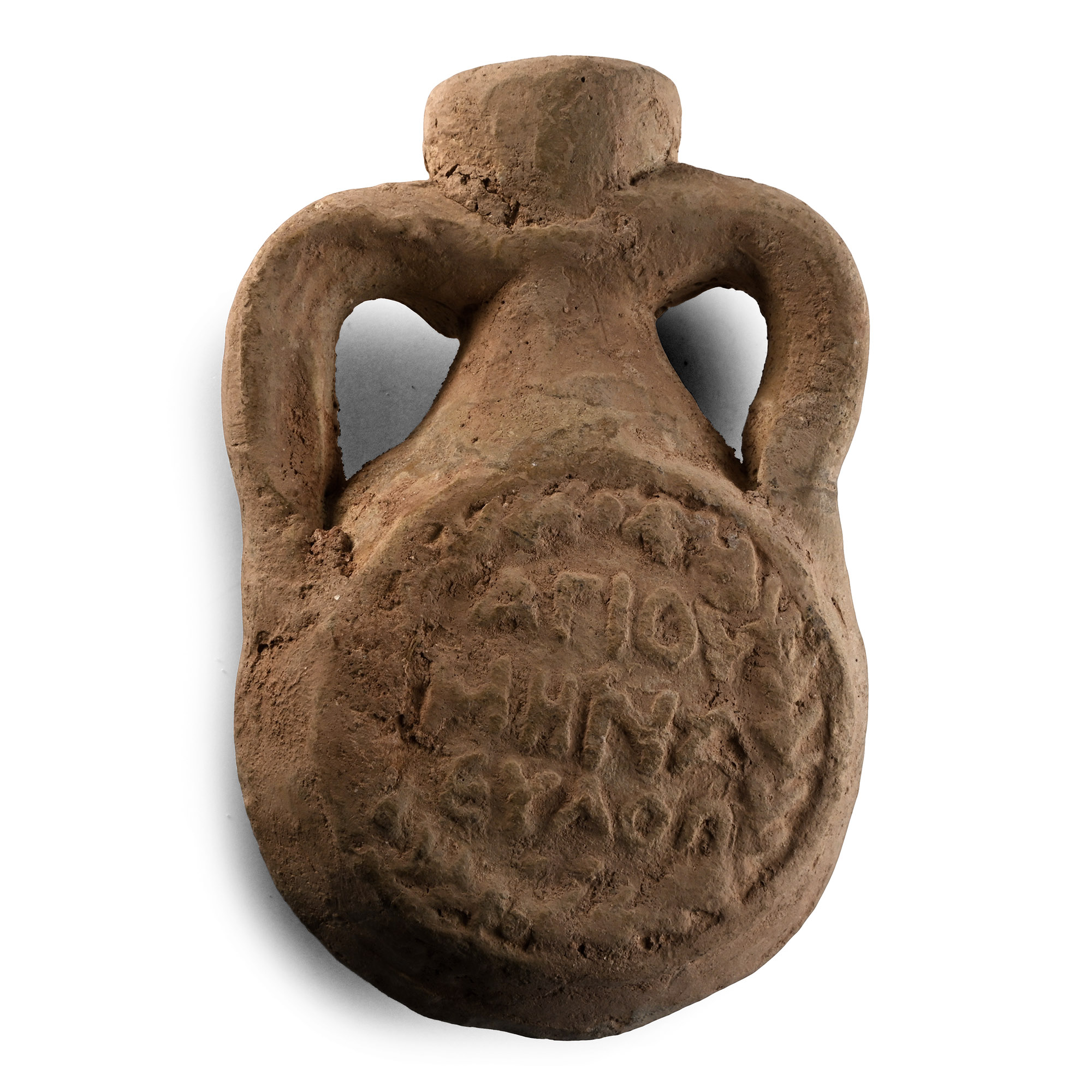
Byzantine Ceramic Pilgrim's Flask with St Menas and Inscription
CIRCA 6TH-8TH CENTURY A.D.
3 1/2 in. (101 grams, 89 mm).
Hollow body discoid in profile and lentoid in section with thick loop handles to the shoulders, low-relief scene of a nimbate man between beasts to obverse, Greek text to reverse 'AΓΙΟΥ / MHNA/EYΛO[ΓΙ]A' (the blessing of Saint Menas).
ProvenanceEx Mayfair, London, UK, gallery, 2000s.
CONDITIONTimeLine Auctions follows a vetting process to ensure the authenticity and legality of all items, reinforcing our commitment to integrity and responsible trading. Each antiquity, antique, and coin lot undergoes thorough examination by a vetting committee of at least ten external specialists, professional trade association members, scientists, and archaeologists: Our Vetting Process
AUCTIONS:
TimeLine is a leading auction house specialising in antiquities, ancient art, collectables, natural history, coins, medals, and books. Our auctions offer museums, collectors, historians, and enthusiasts the opportunity to acquire unique and historically significant pieces.
LOT 0174
Byzantine Ceramic Pilgrim's Flask with St Menas and Inscription
Sold for (Inc. bp): £234
-
Byzantine Bronze Ring with Spread Eagle
12th-15th century A.D.Sold for (Inc. bp): £39
Wide hoop with starburst motifs on the shoulders, discoid bezel with stylised eagle with open wings. 4.29 grams, 22.10 mm overall, 20.54 mm internal diameter (approximate size British R, USA 8 1/2, Europe 18 3/4, Japan 18)
Ex German art market, 2000s. Acquired from an EU collector living in London. From the collection of a Surrey, UK, gentleman. -
Byzantine Ceramic Pilgrim's Flask with St Menas and Inscription
Circa 6th-8th century A.D.Sold for (Inc. bp): £234
Hollow body discoid in profile and lentoid in section with thick loop handles to the shoulders, low-relief scene of a nimbate man between beasts to obverse, Greek text to reverse 'AΓΙΟΥ / MHNA/EYΛO[ΓΙ]A' (the blessing of Saint Menas). 101 grams, 89 mm
Ex Mayfair, London, UK, gallery, 2000s. -
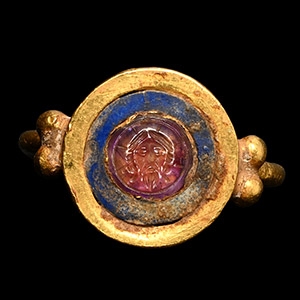
Byzantine Gold Ring with Head of Christ Gemstone
Circa 6th-8th century A.D.Estimate: £4,500 - 6,500 (+bp*)
Opening Bid: £2,250
Round-section hoop with granules to the shoulders, discoid bezel with inset lapis lazuli circle enclosing a later amethyst gemstone with facing bust of Christ Pantocrator. 10.36 grams, 25.80 mm overall, 20.26 mm internal diameter (approximate size British S, USA 9, Europe 19, Japan 18).
Ex collection of a London lady, 1980s. This lot has been checked against the Interpol Database of stolen works of art and is accompanied by search certificate number no.12968-246371.
